Keith Haring in Barcelona: Die Brücke zwischen Kunst und Öffentlichkeit
Entdecken Sie das Erbe von Keith Harings Kunst und Aktivismus in Barcelona. Dieser Guide führt Sie zu seinem MACBA-Wandbild und erklärt seinen Einfluss auf die Stadt.
history • culture • tours • 5 Min. Lesezeit
Keith Haring remains one of the most defining artists of his generation. Known for his free-wheeling and expressive style, his work transcended traditional gallery walls to become a globally recognized visual language. Yet beneath the vibrant colors and dynamic figures lay a profound commitment to social activism. Haring used his art to address some of the most pressing social issues of the 1980s, leaving behind a legacy that continues to resonate on the streets of cities like Barcelona and beyond.
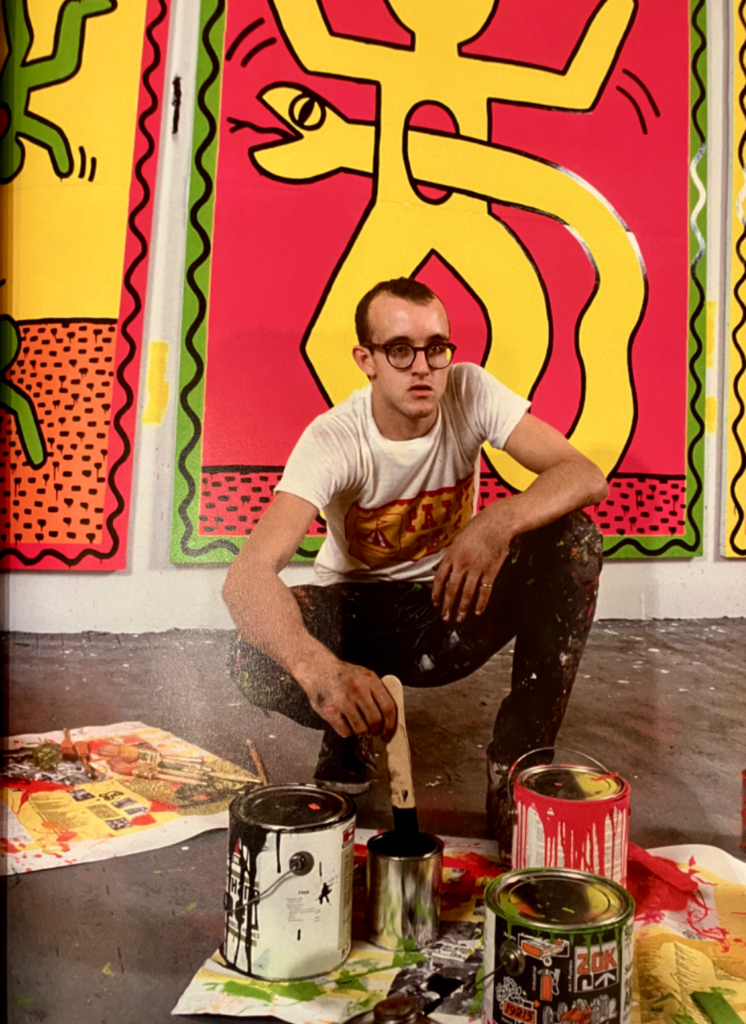
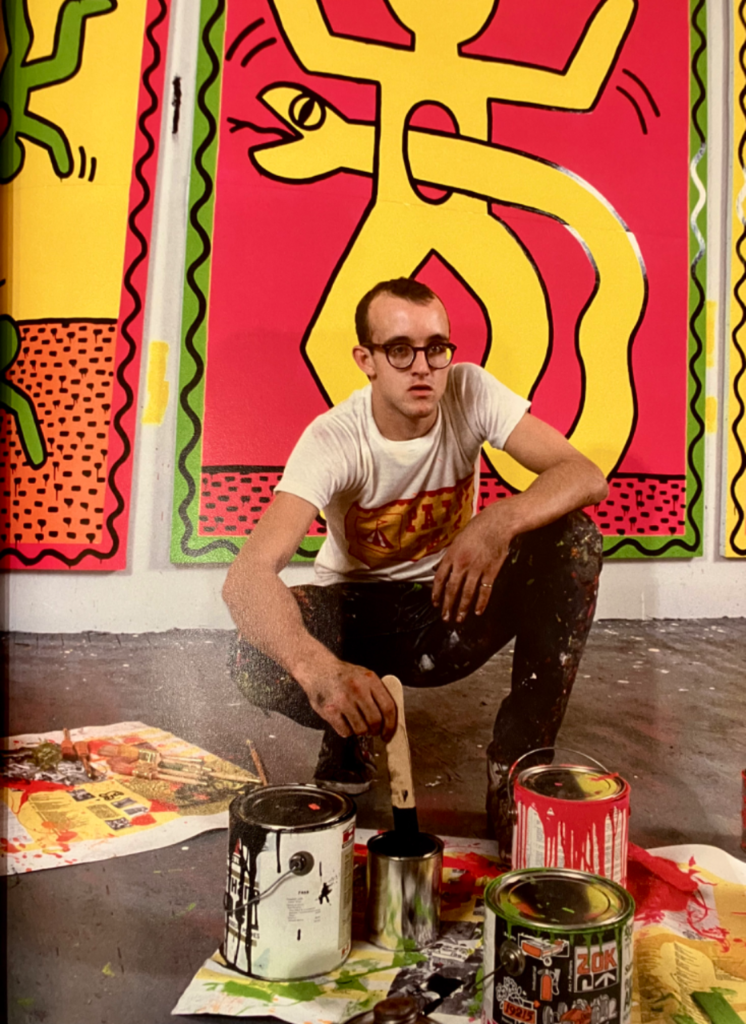
📝 Caption: Keith Haring at work in his studio, surrounded by the vibrant, expressive canvases that would make him a global icon.
Keith Haring: Bridging the Gap Between Art and the Public
Anyone familiar with Haring's work recognizes his signature motifs: radiant babies, cheerful dogs, and spirited dancing figures. However, his true innovation was democratizing art. Haring acted as a strong catalyst for dissolving the boundaries between the exclusive art elite and everyday people. His personal style morphed into a widely accessible brand, an approach that was highly innovative for its time.
A prime example of this was his Pop Shop on Lafayette Street in New York City. This storefront served as a deliberate bridge, bringing high-end art and low art together. By making his imagery affordable and available on everyday items, Haring ensured his creations could be enjoyed by a multitude of casual art lovers, rather than remaining confined to private collections.

📝 Caption: A reflection on Haring's core philosophy that art should be accessible and created with the public in mind.
Art as Activism: Confronting the 1980s AIDS Epidemic
Despite the evident charm of his aesthetic, Haring's work consistently addressed heavy social issues, including racism, homophobia, and urban police brutality. His most urgent focus became the unprecedented AIDS epidemic, which claimed the lives of many friends and, ultimately, his own. After learning of his diagnosis, Haring noted in his journal that he did not know if he had five months or five years left, but he knew his days were numbered.
Determined to effect change, he heavily involved himself in activism. Haring joined the AIDS Coalition to Unleash Power (ACT UP), participating in demonstrations, blocking traffic, and facing arrest. He created iconic posters declaring "Ignorance = Fear, Silence = Death, Fight AIDS, ACT UP" and joined 3,000 protesters at New York City Hall to demand urgent action on AIDS policies from the local government.
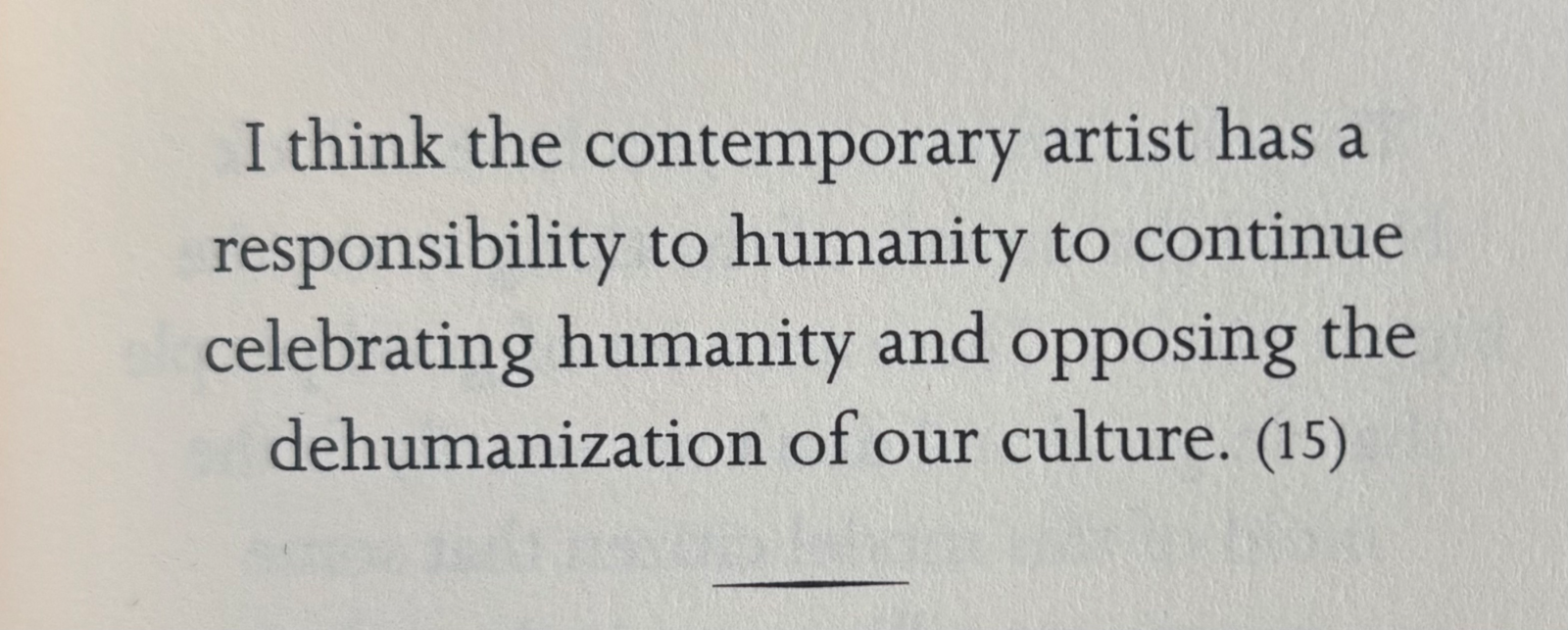
📝 Caption: Haring's unwavering commitment to activism was deeply intertwined with his belief in the artist's social responsibility.
A Lasting Legacy: The Keith Haring Foundation
To ensure his activism would continue, he established the Keith Haring Foundation. He appointed his longtime friend and manager, Julia Gruen, as its director. The foundation's clear mandate was to provide funding and imagery to AIDS organizations while supporting marginalized youth, expanding the audience and impact of his work.
While setting up the foundation, Haring continued to create and protest in equal measure. He traveled extensively across Europe, showing his pieces in solo gallery exhibitions. In June of 1989, just months before his death, Haring painted his final outdoor public artwork—a striking mural on the exterior wall of a church in the historic city center of Pisa.
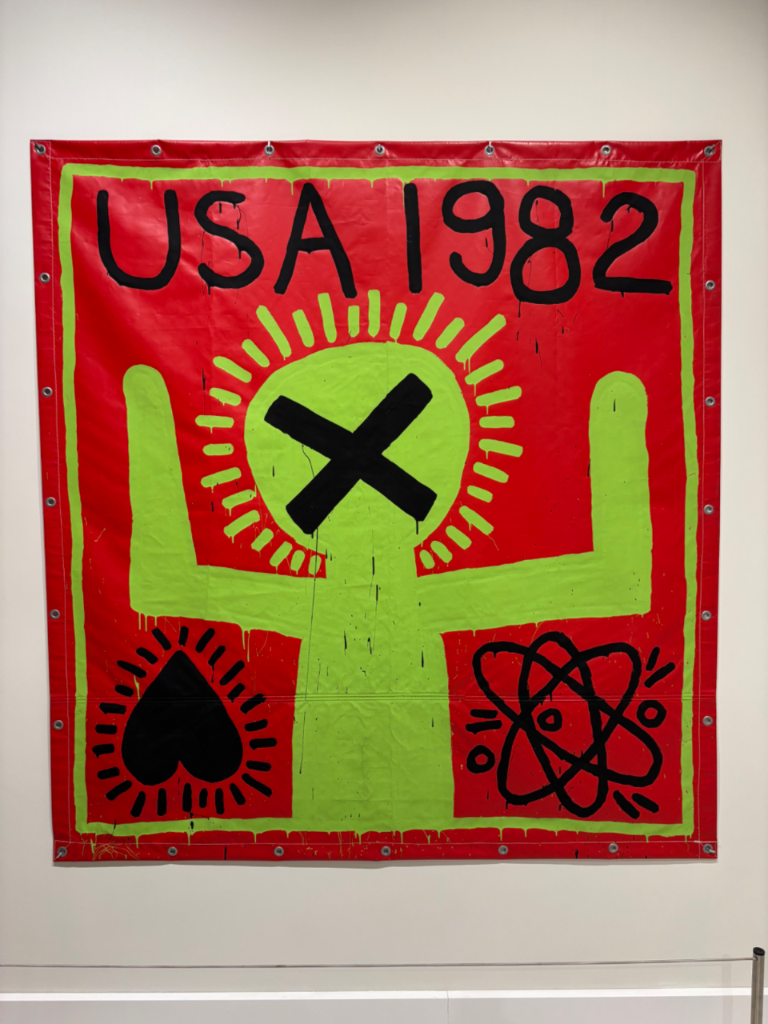
📝 Caption: Early gallery works from 1982 showcase the raw, energetic symbolism that Haring later translated into widespread activism. You can find this piece in the MOCO museum in Barcelona.
Where to See Keith Haring's Work in Barcelona
Haring also left a lasting mark on the streets of Barcelona. In 1989, he created a vibrant red mural in Barcelona's Raval neighborhood bearing the message Todos juntos podemos parar el SIDA ("Together We Can Stop AIDS"). Originally painted on a deteriorating wall, the piece was carefully preserved and is now visible on a concrete surface next to MACBA (Museum of Contemporary Art of Barcelona).
Beyond the streets, contemporary art enthusiasts can find more of his legacy indoors. The Moco Museum in Barcelona regularly features rotating exhibitions of his works, bringing different pieces into the city and offering visitors a closer look at his vibrant pop art canvases.
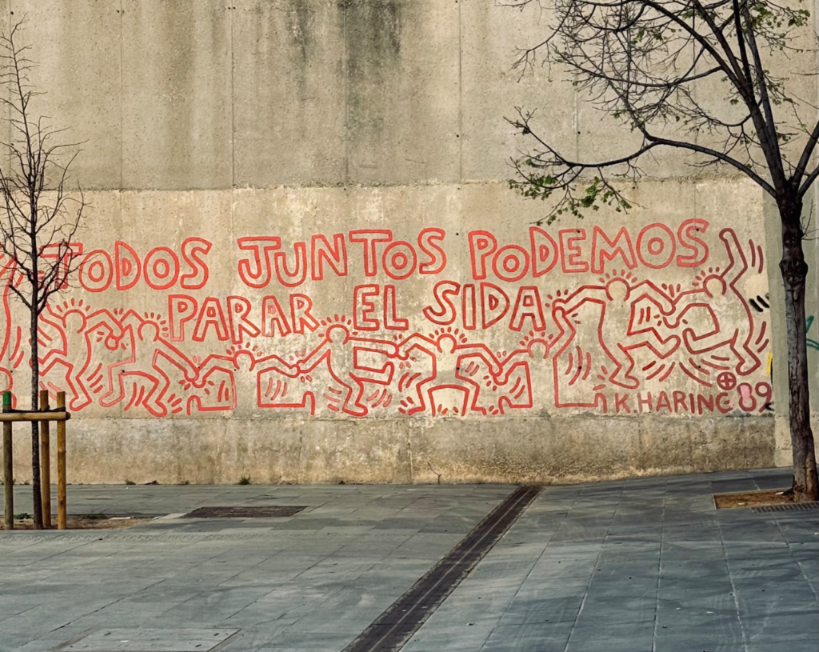
📝 Caption: The preserved 1989 AIDS awareness mural, serving as a permanent reminder of Haring's visit to Barcelona.
Exploring Alternative Barcelona: Rebels and Hidden History
Haring's rebellious spirit and outspoken activism perfectly align with the gritty, counter-cultural identity of Barcelona's Raval neighborhood. The area has long been a haven for artists, outcasts, and revolutionary thinkers. Today, the streets themselves act as an open-air gallery, telling raw and unapologetic stories of the city's past and present.
For those wanting to experience this firsthand, visitors can explore the neighborhood's underground history on our Alternative Barcelona: Rebels, Art and Hidden History walking tour. It offers an excellent opportunity to view Haring's iconic MACBA mural in person while discovering the many other rebellious figures and movements that have shaped the vibrant streets of modern Barcelona.
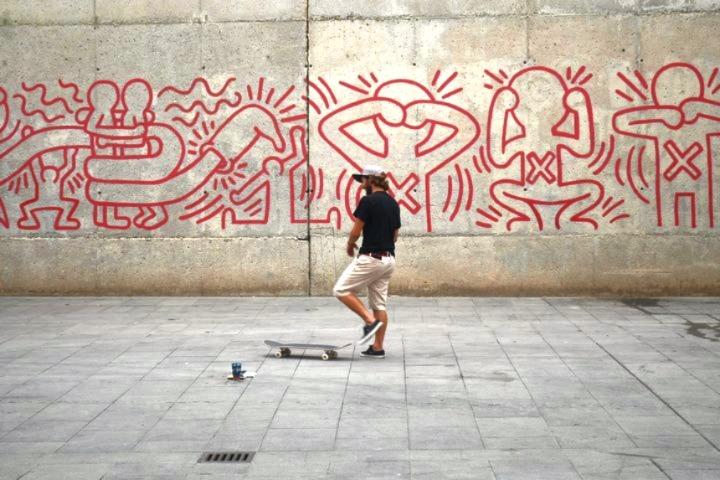
📝 Caption: Haring's mural next to MACBA remains a vibrant part of Barcelona's modern street culture and skateboarding scene.
From the galleries of New York to the historic walls of European cities, Keith Haring proved that art could be universally accessible and deeply impactful. By refusing to separate his creative process from his social conscience, he transformed public spaces into platforms for education and empathy. His work remains a vivid reminder that artistic expression has the power to unite communities and inspire lasting change.
Researched and written by Filipa Guide, Barcelona