
Tagesausflüge ab Rom: Kaiservillen, Seen und historische Orte
Entdecken Sie die Region um die Hauptstadt. Unser Guide umfasst Tivolis Villen, Castel Gandolfo und historische Orte, die leicht per Zug ab Rom erreichbar sind.
Culture • Practical Tips • History • Food • 8 Min. Lesezeit
Rom steckt voller Geschichte, Kunst und faszinierender Erzählungen. Manchmal lohnt es sich aber, die trubeligen Straßen hinter sich zu lassen, um das echte italienische Lebensgefühl zu spüren. Nur eine kurze Fahrt von der Hauptstadt entfernt warten echte Geheimtipps auf uns: charmante mittelalterliche Bergdörfer, sonnenverwöhnte Strände und antike Ruinen. Egal, ob Sie Geschichte, Natur oder einfach nur Entspannung suchen - diese Ziele sind perfekt für einen Tagesausflug und bieten eine herrliche Abwechslung zum Stadtleben.
Tivoli: Villen und historische Gärten
Etwas östlich von Rom liegt Tivoli. Der Ort ist berühmt für seine drei spektakulären Villen und ein echtes Paradies für Geschichts- und Naturliebhaber. Das absolute Highlight ist die Villa d'Este mit ihren kunstvollen Renaissance-Terrassengärten und hunderten von Brunnen. Ganz in der Nähe erkunden wir die riesigen antiken Ruinen der Villa Hadriana, der einstigen Sommerresidenz von Kaiser Hadrian. Oder wir spazieren durch die üppige, bewaldete Landschaft der Villa Gregoriana und bewundern ihre beeindruckenden Wasserfälle.
Anreise: Am bequemsten erreichen Sie Tivoli mit dem Regionalzug. Er fährt vom Bahnhof Roma Tiburtina in etwa 45 bis 60 Minuten direkt nach Tivoli. Vom dortigen Bahnhof ist die Villa Gregoriana nur einen kurzen Spaziergang entfernt. Zur Villa Hadriana bringt Sie ganz einfach ein lokaler Bus.
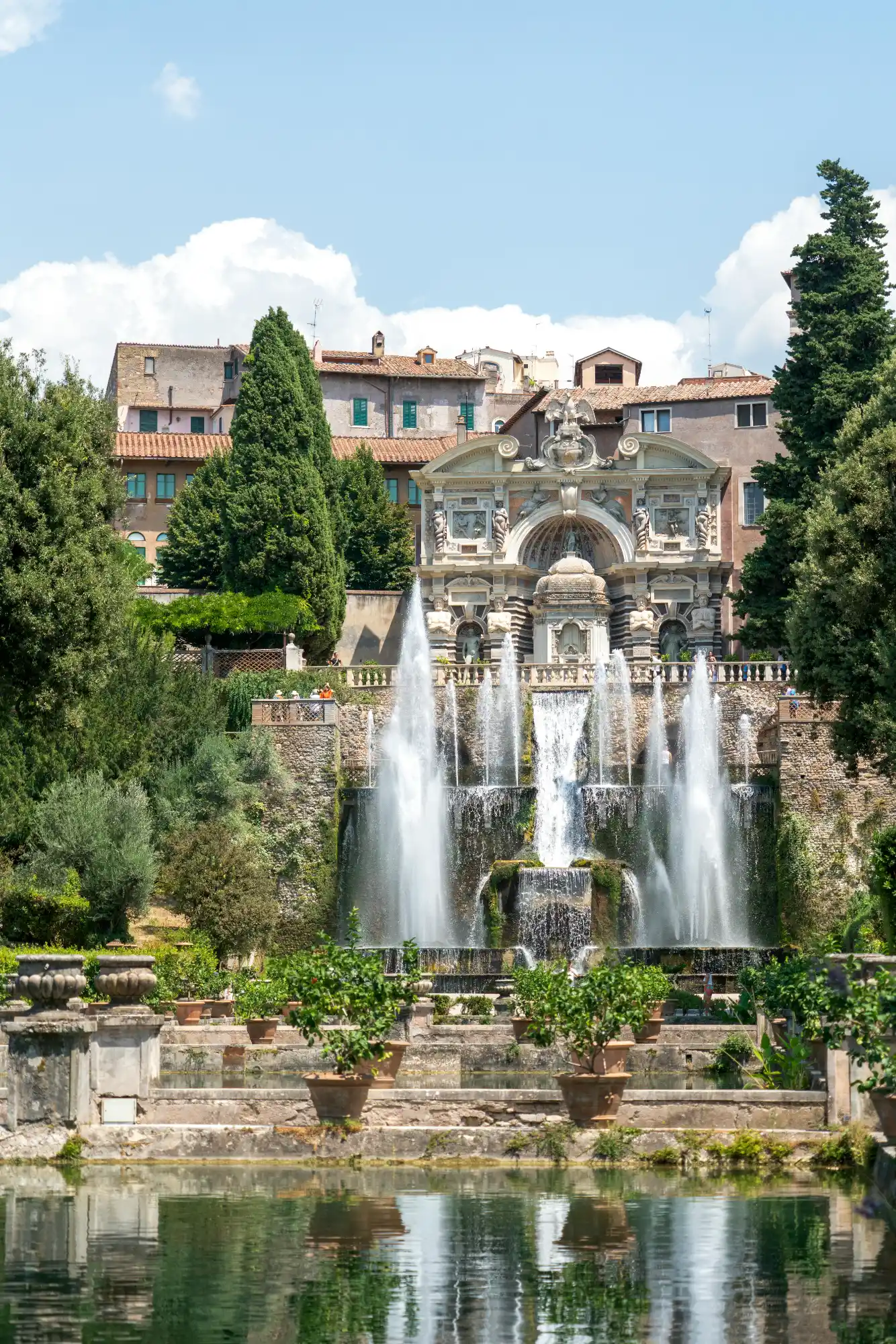
Der prächtige Neptunbrunnen (Fontana di Nettuno) der Villa d'Este. Umgeben von Renaissancegärten beeindruckt er mit einem hochentwickelten hydraulischen Wassersystem - ein echtes Meisterwerk der italienischen Gartenkunst.
Die Castelli Romani: Bergdörfer und Weinregion
Die Castelli Romani (die "Römischen Schlösser") vereinen Natur, Geschichte, gutes Essen und lokale Kultur. Obwohl die Region nur 20 bis 30 Minuten entfernt ist, tauchen wir hier in eine völlig andere Welt ein. Uns erwartet eine Ansammlung charmanter Bergdörfer, eingebettet in vulkanische Hügel, Weinberge und dichte Wälder. Es ist grüner, kühler und viel entspannter als in Rom - das wussten die Römer schon in der Antike zu schätzen. Der Name Castelli Romani erinnert an die Zeit, als aristokratische Familien hier ihre Sommerresidenzen bauten, um der drückenden Hitze der Stadt zu entfliehen.
Frascati - Wein und weiße Villen
Frascati ist das bekannteste Dorf der Castelli Romani - berühmt für seinen spritzigen Weißwein und die eleganten Villen. Wir schlendern durch das historische Zentrum und essen in einer traditionellen Fraschetta-Taverne. Oder wir besuchen ein lokales Weingut für eine Weinprobe direkt beim Erzeuger. Die sonnigen Plätze und der tolle Panoramablick machen den Ort bei Einheimischen und Reisenden so beliebt.
Castel Gandolfo - Päpstlicher Charme am See
Hoch über dem Albaner See liegt Castel Gandolfo, vor allem bekannt als päpstliche Sommerresidenz. Wir erkunden die engen Gassen, charmanten Cafés und die üppigen Barberini-Gärten. Die Wanderwege rund um den See bieten atemberaubende Ausblicke. Im Sommer ist das klare Wasser außerdem perfekt für ein erfrischendes Bad.
Marino - Feste und Tradition
Marino ist bekannt für seine kulinarischen Traditionen und lebhaften Feste. Im Oktober feiern wir hier das berühmte Weinfest Sagra del Vino. Früher floss zu diesem Anlass sogar Wein statt Wasser aus den Brunnen - eine tolle Hommage an die lange Weinbautradition des Ortes. In den mittelalterlichen Gassen und auf den belebten Plätzen spüren wir die authentische italienische Dorfatmosphäre.
Nemi - Die Stadt der Erdbeeren
Das kleine, malerische Nemi thront über dem gleichnamigen See und ist berühmt für seine Walderdbeeren. Wir spazieren gemütlich durch idyllische Gassen, vorbei an mittelalterlicher Architektur und genießen die herrlichen Aussichtspunkte. Ein besonderes Highlight ist der Juni: Dann lockt das Erdbeerfest Sagra delle Fragole mit lokalen Köstlichkeiten und toller Stimmung.
Anreise: Am einfachsten erreichen wir die Castelli Romani mit dem Zug vom Bahnhof Roma Termini. Frascati: Etwa 30 Minuten mit dem Regionalzug FL4. Der Bahnhof ist nur einen kurzen Spaziergang vom Zentrum entfernt. Castel Gandolfo: Etwa 45 Minuten mit dem direkten FL4-Zug. Das Zentrum liegt oberhalb des Bahnhofs - wir nehmen einfach einen lokalen Bus, ein Taxi oder spazieren gemütlich den Berg hinauf. Marino: Etwa 40 Minuten mit der Linie FL4. Nemi: Wir nehmen den FL4-Zug nach Velletri oder Genzano und fahren von dort mit einem lokalen Bus oder Taxi hinauf ins Dorf.
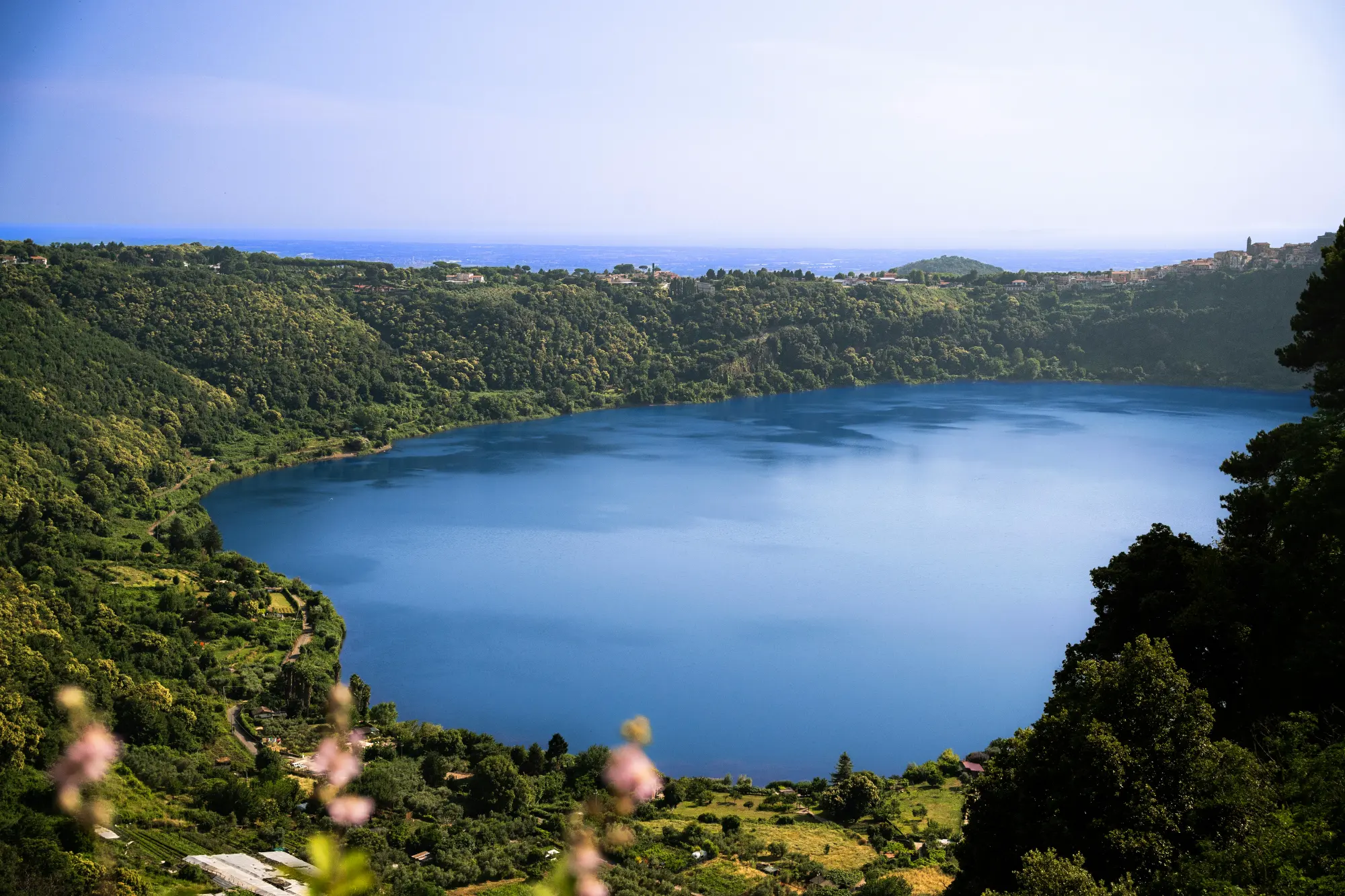
Die atemberaubende Aussicht auf den Lago di Nemi.
Ostia Antica - Das "Pompeji Roms"
Ostia Antica wird oft das „Pompeji Roms“ genannt. Wir besuchen hier eine der am besten erhaltenen antiken Städte und den ehemaligen Hafen des kaiserlichen Roms. Beim Spaziergang durch die Straßen entdecken wir bemerkenswert intakte Mosaike, Badehäuser, Tavernen, Tempel und ein beeindruckendes Amphitheater. So bekommen wir einen lebendigen Eindruck vom römischen Alltag vor fast 2.000 Jahren.
Von der römischen Innenstadt aus ist die Anreise ganz einfach: Nehmen Sie die Linie Roma-Lido (Metromare) ab dem Bahnhof Piramide und steigen Sie in Ostia Antica aus. Von dort ist es nur ein kurzer Spaziergang über eine Fußgängerbrücke bis zum Eingang der Ausgrabungsstätte.
Bracciano: Mittelalterliche Geschichte und Seeblick
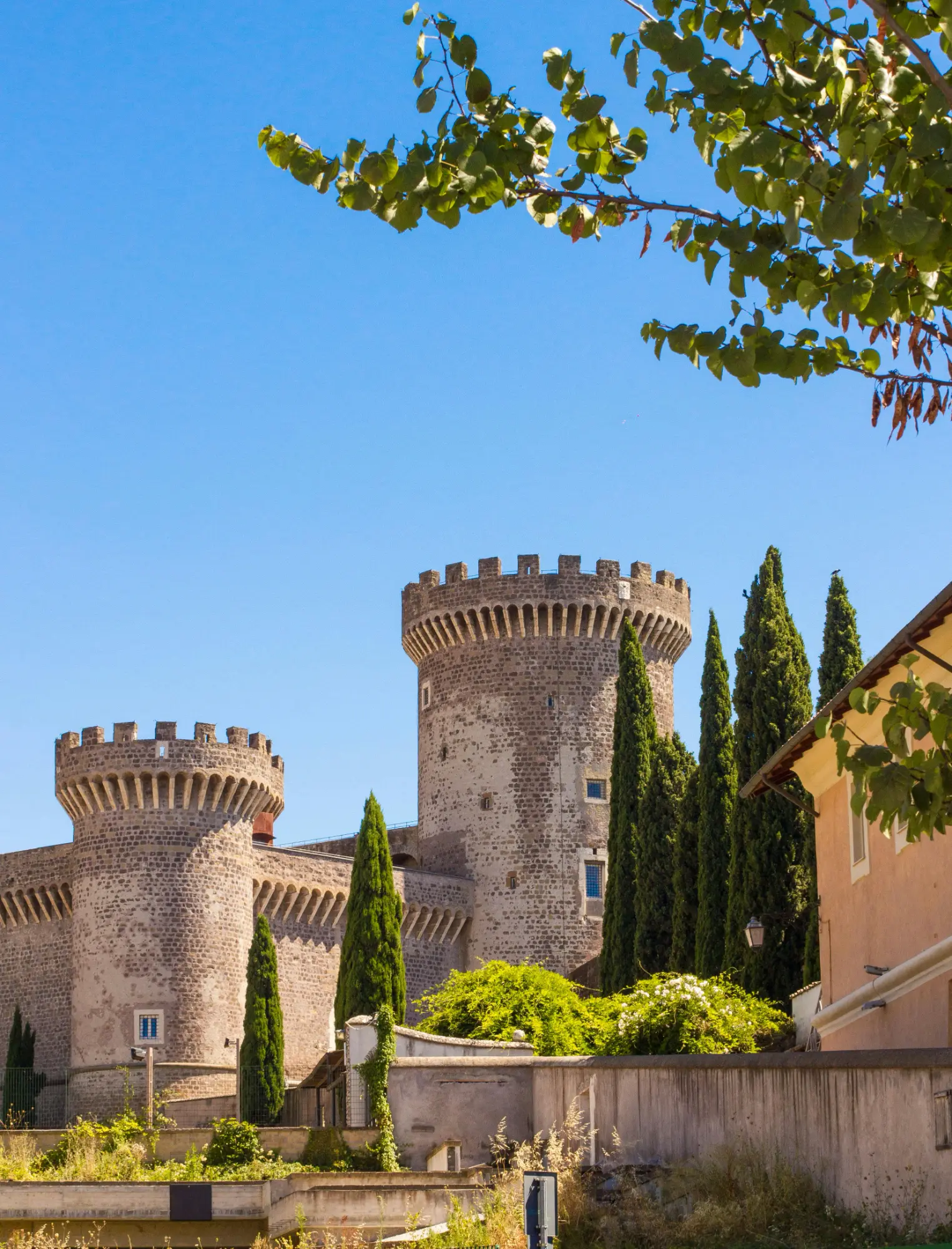
Die Silhouette dieser Stadt am See wird vom Castello Orsini-Odescalchi dominiert - einer der am besten erhaltenen mittelalterlichen Burgen Italiens. Wir können die Festung mit ihren großen Sälen und Waffenkammern erkunden, bevor wir ans Wasser hinabsteigen. Der Braccianosee ist ein Vulkansee mit strengen Regeln für Motorboote. Das macht ihn zu einem außergewöhnlich sauberen und ruhigen Ort zum Schwimmen, Segeln oder Entspannen am Ufer.
Anreise: Nehmen Sie den Regionalzug FL3 (Linie Roma-Viterbo) von Bahnhöfen wie Roma Ostiense oder Valle Aurelia direkt nach Bracciano. Die malerische Fahrt dauert etwa eine Stunde, und Sie steigen nur wenige Gehminuten von der Burg entfernt aus.
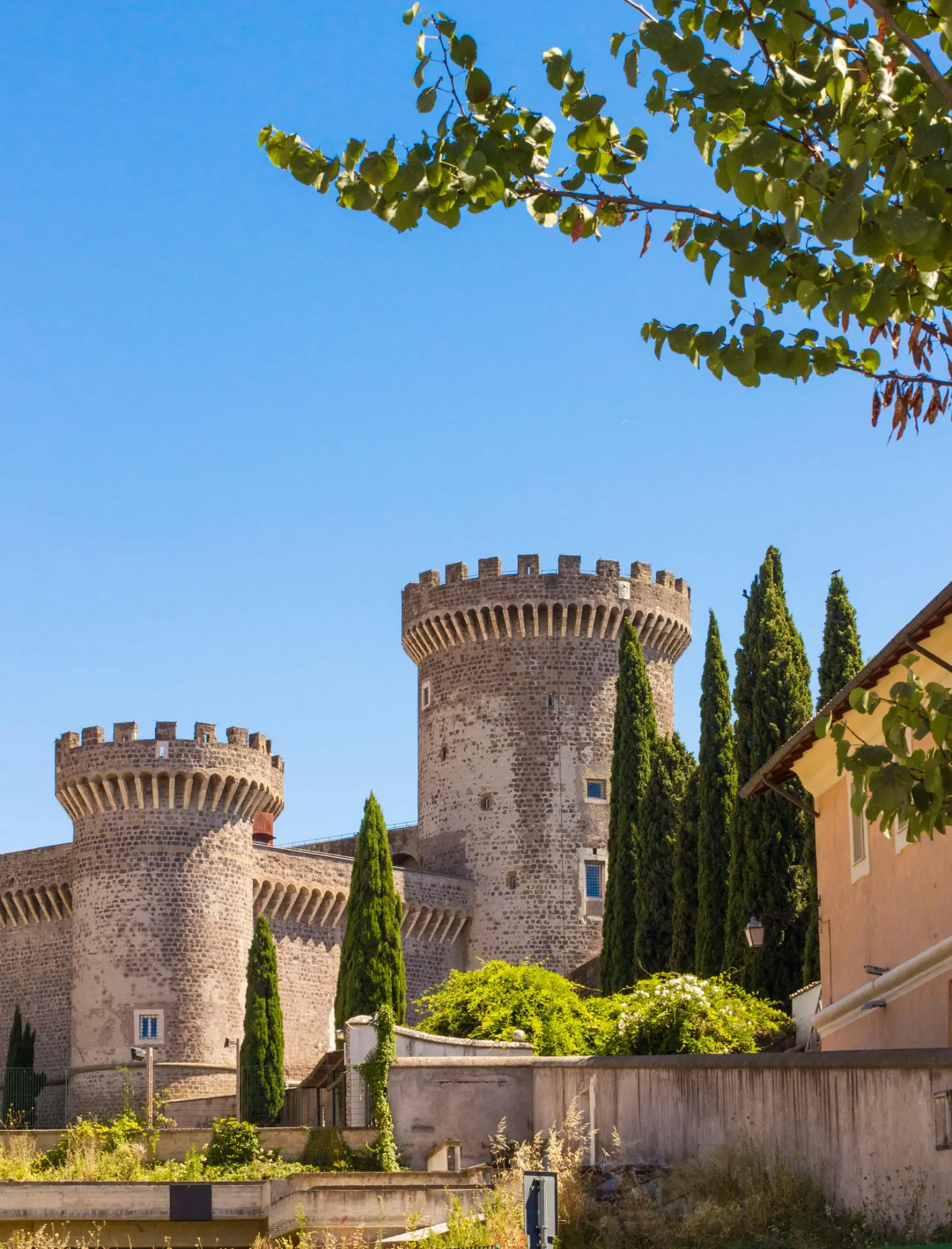
Das Castello Orsini-Odescalchi ist eine imposante mittelalterliche Burg mit Blick auf Bracciano. Als eine der am besten erhaltenen Renaissancefestungen Italiens ist sie bekannt für ihre großen Säle, Wehrtürme und den herrlichen Panoramablick über den Vulkansee.
Cerveteri: Eine Reise in die etruskische Geschichte
Wer in die vorrömische Geschichte eintauchen möchte, findet in Cerveteri ein einzigartiges Erlebnis: die Nekropole von Banditaccia. Diese UNESCO-Welterbestätte gleicht einer echten Totenstadt. Wir sehen hier große Tumuli (Grabhügel) und aus dem Fels gehauene Gräber, die etruskischen Häusern nachempfunden sind. Das bietet uns einen faszinierenden Einblick in die Zivilisation, die Mittelitalien vor dem Aufstieg Roms beherrschte.
Anreise: Nehmen Sie den Regionalzug von Rom (Termini oder Ostiense) in Richtung Civitavecchia/Pisa und steigen Sie am Bahnhof Ladispoli-Cerveteri aus. Von dort bringen Sie lokale Busse direkt zum Eingang der Nekropole.
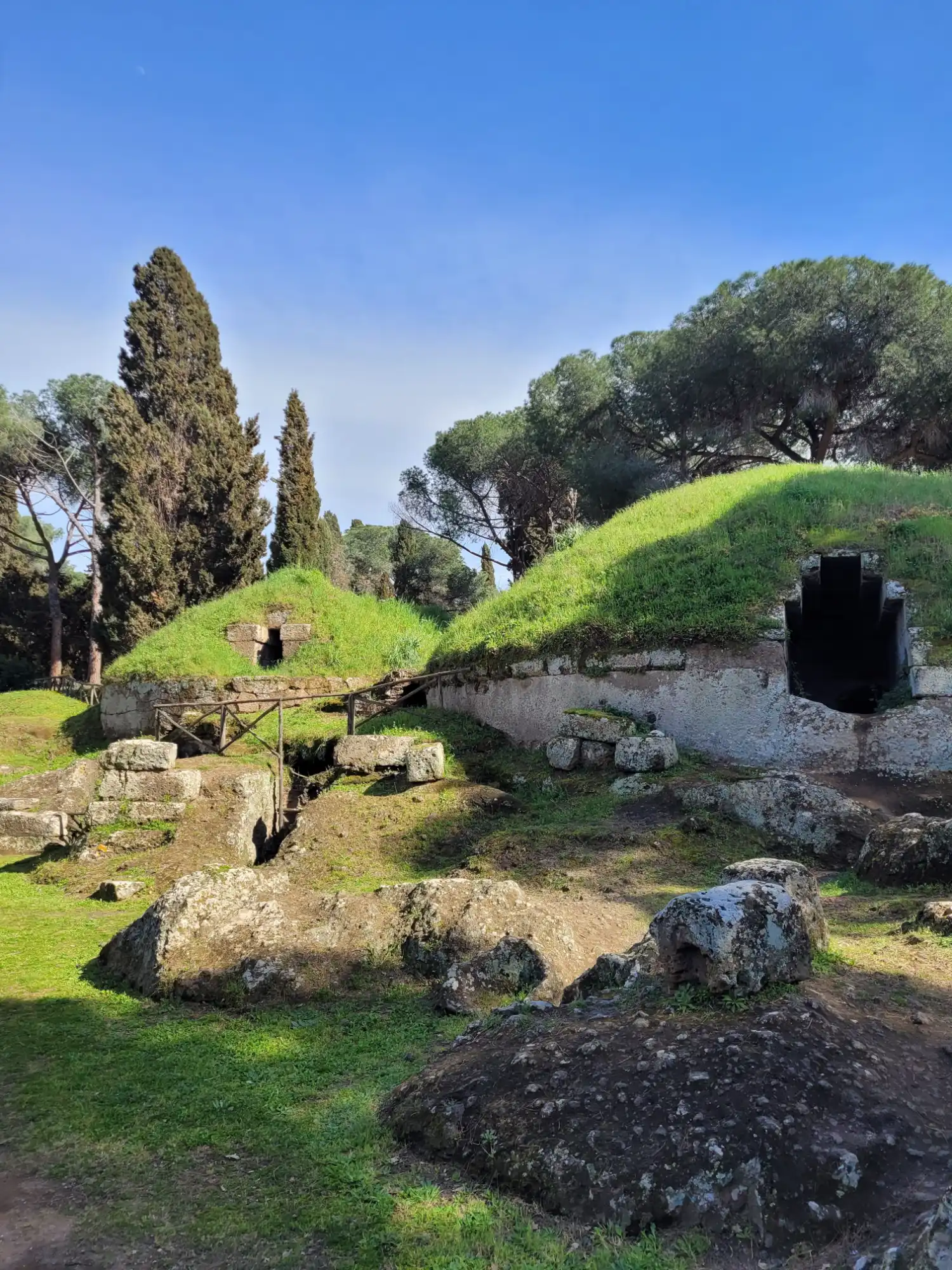
Die antiken Tumuli der Nekropole von Banditaccia in Cerveteri sind monumentale, in den Fels gehauene etruskische Grabhügel. Sie gehören zu den größten und wichtigsten Nekropolen der antiken Mittelmeerwelt.
Ausflüge ans Meer: Die besten Strände in der Nähe von Rom
Wenn die Hitze in der Stadt zu groß wird, flüchten die Römer an die Küste. Santa Marinella ist wegen seines Sandstrandes und des klaren Wassers extrem beliebt. Fregene ist dagegen für seine coolen Strandclubs und das pulsierende Leben bekannt. Ladispoli mit seinem dunklen Vulkansand und Santa Severa mit seiner mittelalterlichen Strandfestung sind weitere tolle Ziele an derselben Bahnstrecke. Weiter südlich am Tyrrhenischen Meer liegt das malerische Sperlonga. Der Ort verzaubert uns mit weiß getünchten Häusern, verwinkelten Gassen, tollen Sandstränden und kristallklarem Wasser. Die charmante Altstadt und das antike römische Erbe machen Sperlonga zum perfekten Ziel für einen Tages- oder Wochenendausflug. Wer Strandurlaub mit Geschichte verbinden möchte, ist in Anzio und Nettuno genau richtig. Hier finden wir breite Strände und bedeutende Schauplätze des Zweiten Weltkriegs. Nettuno punktet zudem mit einer hübschen, befestigten Altstadt, die wir uns unbedingt ansehen sollten.
Anreise: Die meisten dieser Ziele erreichen wir ganz bequem mit dem Zug. Nach Santa Marinella und Ladispoli nehmen wir einfach die Linie FL5 in Richtung Pisa. Nach Anzio und Nettuno bringt uns die Linie FL8 ab Roma Termini in etwa einer Stunde. Der einfachste Weg nach Sperlonga führt mit dem Zug von Roma Termini nach Fondi-Sperlonga. Von dort aus geht es mit dem lokalen Bus oder Taxi in wenigen Minuten direkt in den Ort. Die gesamte Fahrt dauert etwa 1,5 bis 2 Stunden.
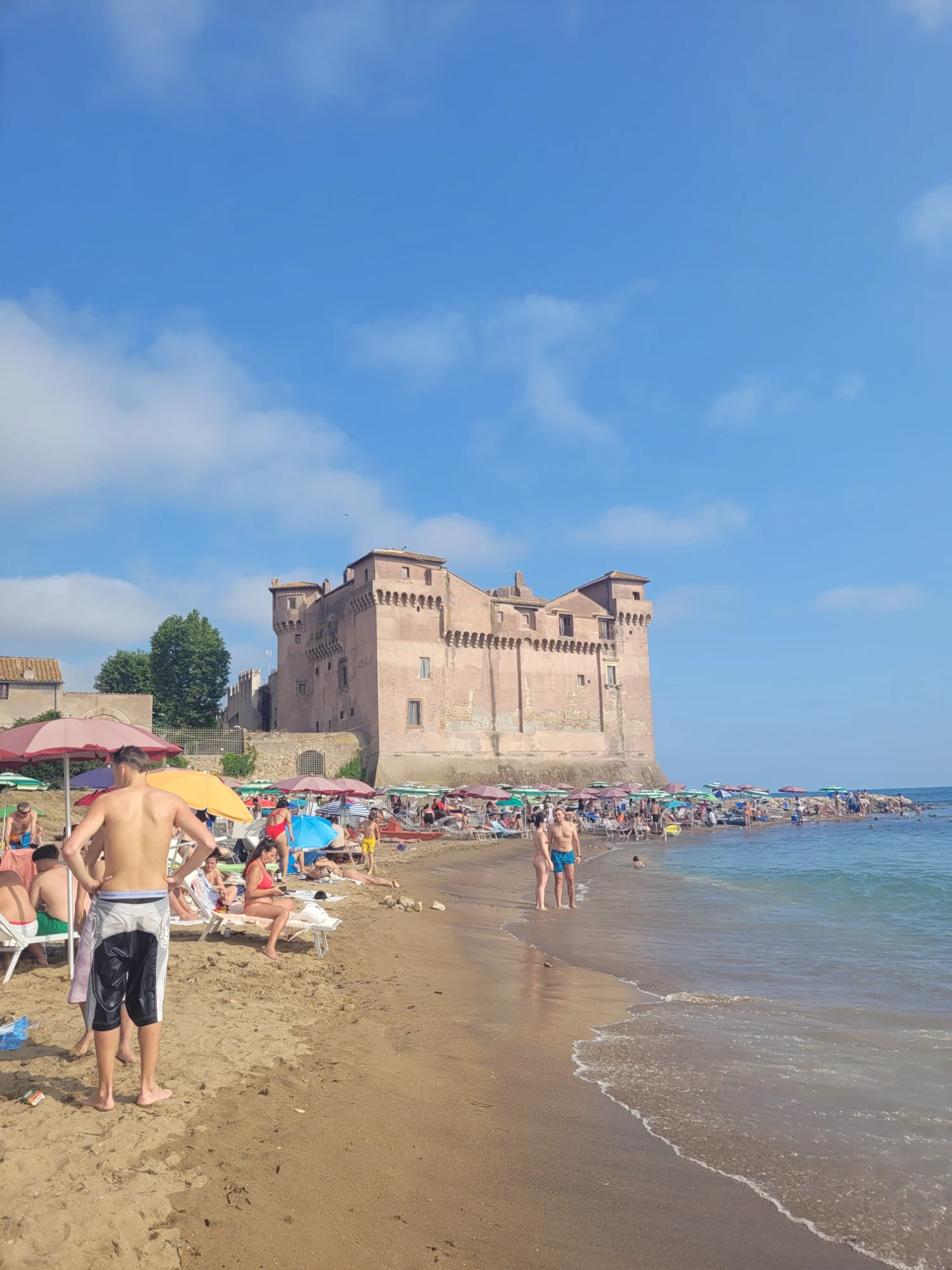
Direkt über dem Strand von Santa Severa thront die historische Küstenfestung. Im Inneren können wir spannende Museen zur antiken Seefahrt besuchen.
Ob wir durch die Renaissancegärten in Tivoli spazieren, in den Dörfern der Castelli Romani Wein probieren, die mittelalterliche Burg von Bracciano erkunden oder einfach an der Küste entspannen - diese Tagesausflüge beweisen, wie unglaublich vielfältig die Region um Rom ist. Jeder Ort offenbart eine ganz andere Seite Italiens - voller Geschichte, lokaler Traditionen, atemberaubender Landschaften und authentischer Erlebnisse abseits der großen Touristenmassen.
Jedes große Abenteuer beginnt natürlich in Rom selbst. Bevor Sie das Umland erkunden, sollten Sie sich Zeit für die Ewige Stadt nehmen. Entdecken Sie Rom durch die Augen unserer engagierten, lokalen Walkative-Guides und erleben Sie die Stadt noch intensiver und authentischer. Begleiten Sie uns auf einem Spaziergang durch die Geschichte, die Kultur und den römischen Alltag - so wird Ihre Zeit in Italien unvergesslich!
Verwandte Geschichten

Culture • Practical Tips • History • 6 Min. Lesezeit
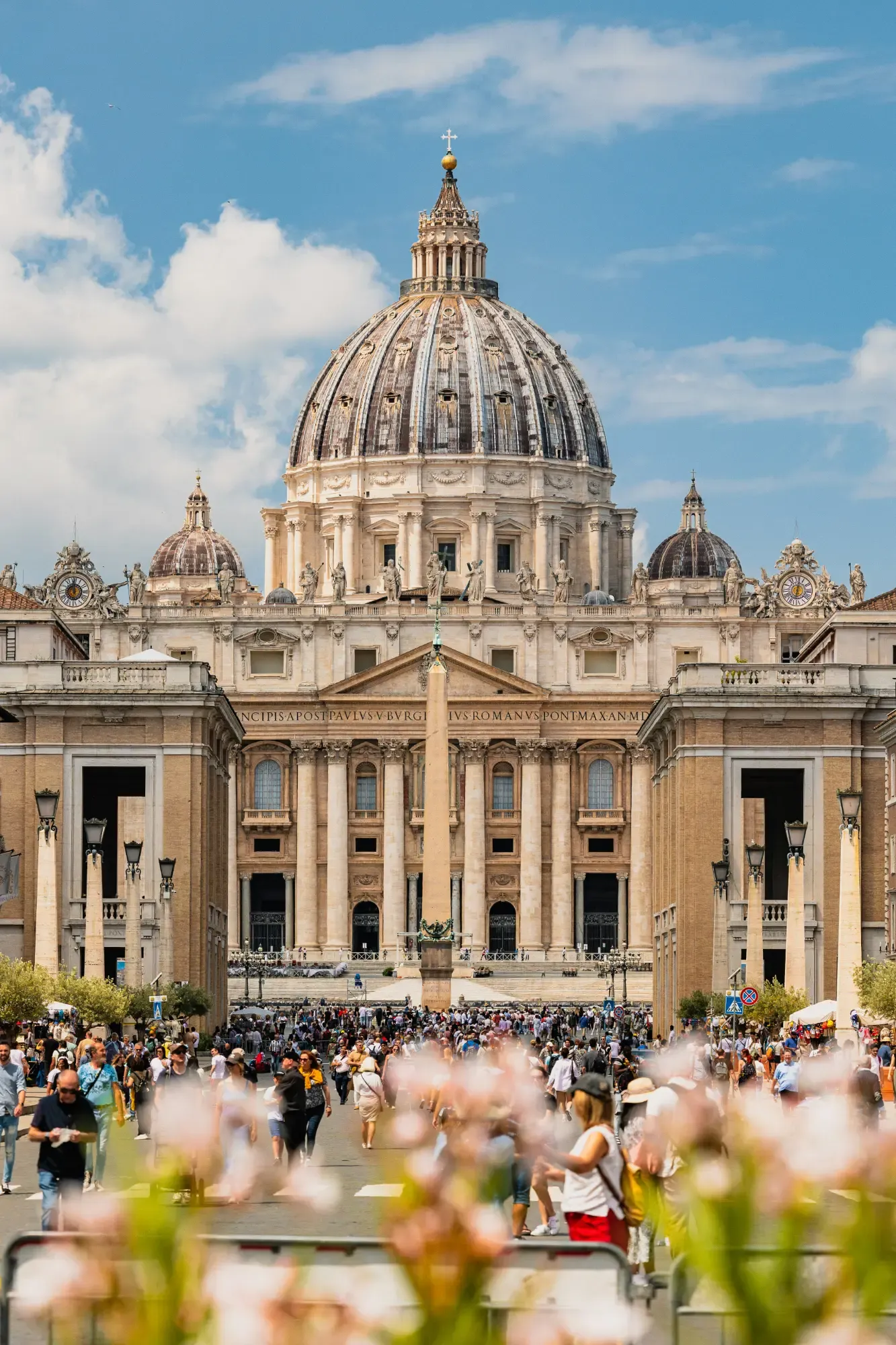
Der praktische Leitfaden für Ihren Vatikanbesuch: Tipps von Ihrem lokalen Walkative Guide
Planen Sie eine Reise in die Vatikanstadt und wissen nicht, wo Sie anfangen sollen? Dann sind Sie hier genau richtig!
Culture • Practical Tips • 5 Min. Lesezeit
Wann ist Ostern in Rom 2026? Ein Guide zur Karwoche
Erfahren Sie die wichtigsten Termine und Traditionen für Ostern in Rom 2026. Vom Kreuzweg am Kolosseum bis zur Messe im Vatikan: Bereiten Sie sich mit unserem Ratgeber auf die Karwoche vor.
Culture • Practical Tips • History • 6 Min. Lesezeit
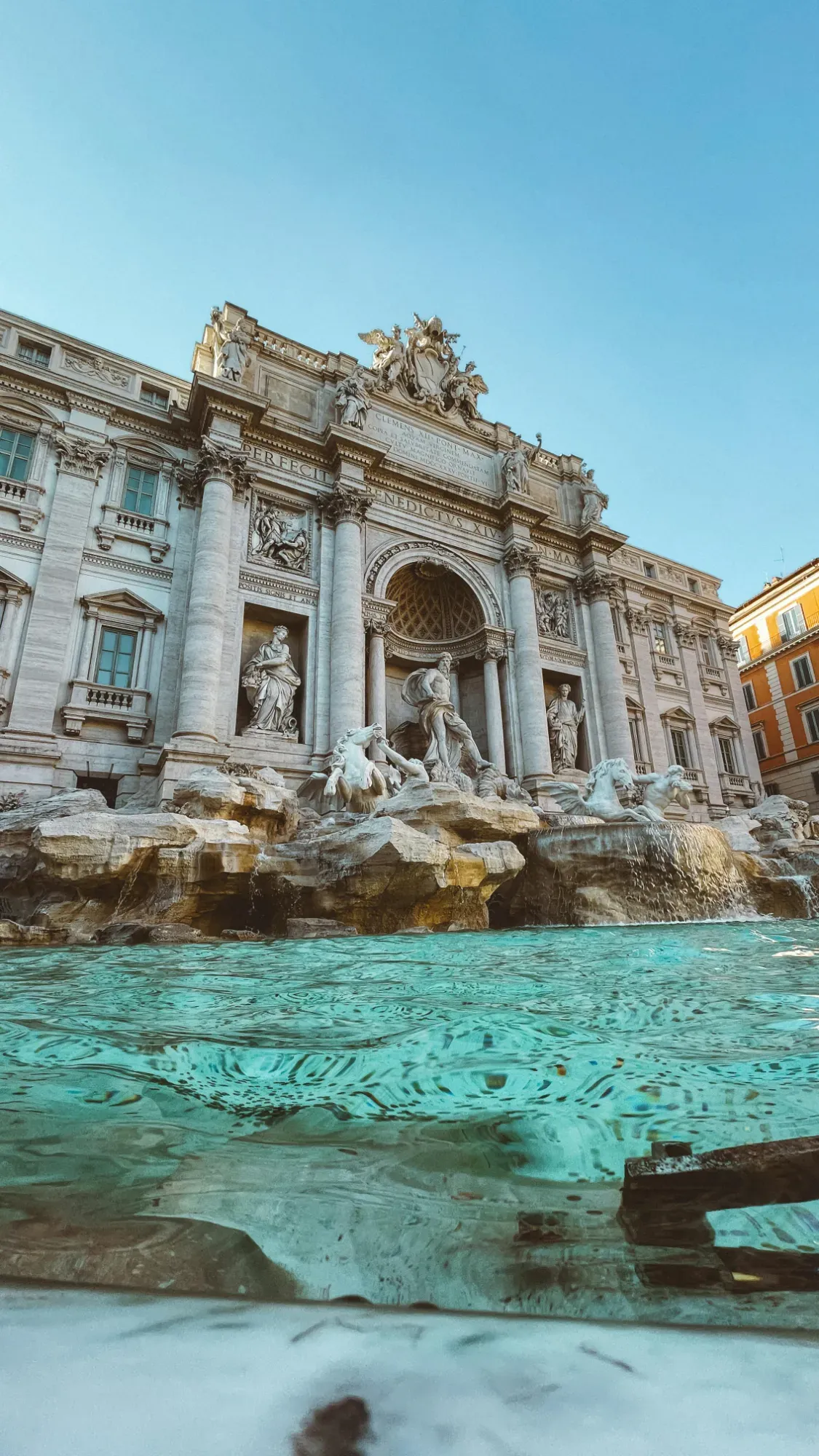
Die antiken Wurzeln des römischen Wassersystems und der Nasoni-Brunnen
Erfahren Sie mehr über Roms historisches Wassernetzwerk. Von antiken Aquädukten bis zu kostenlosen Nasoni-Brunnen versorgt diese beständige Ingenieurstradition die Stadt bis heute mit Trinkwasser.
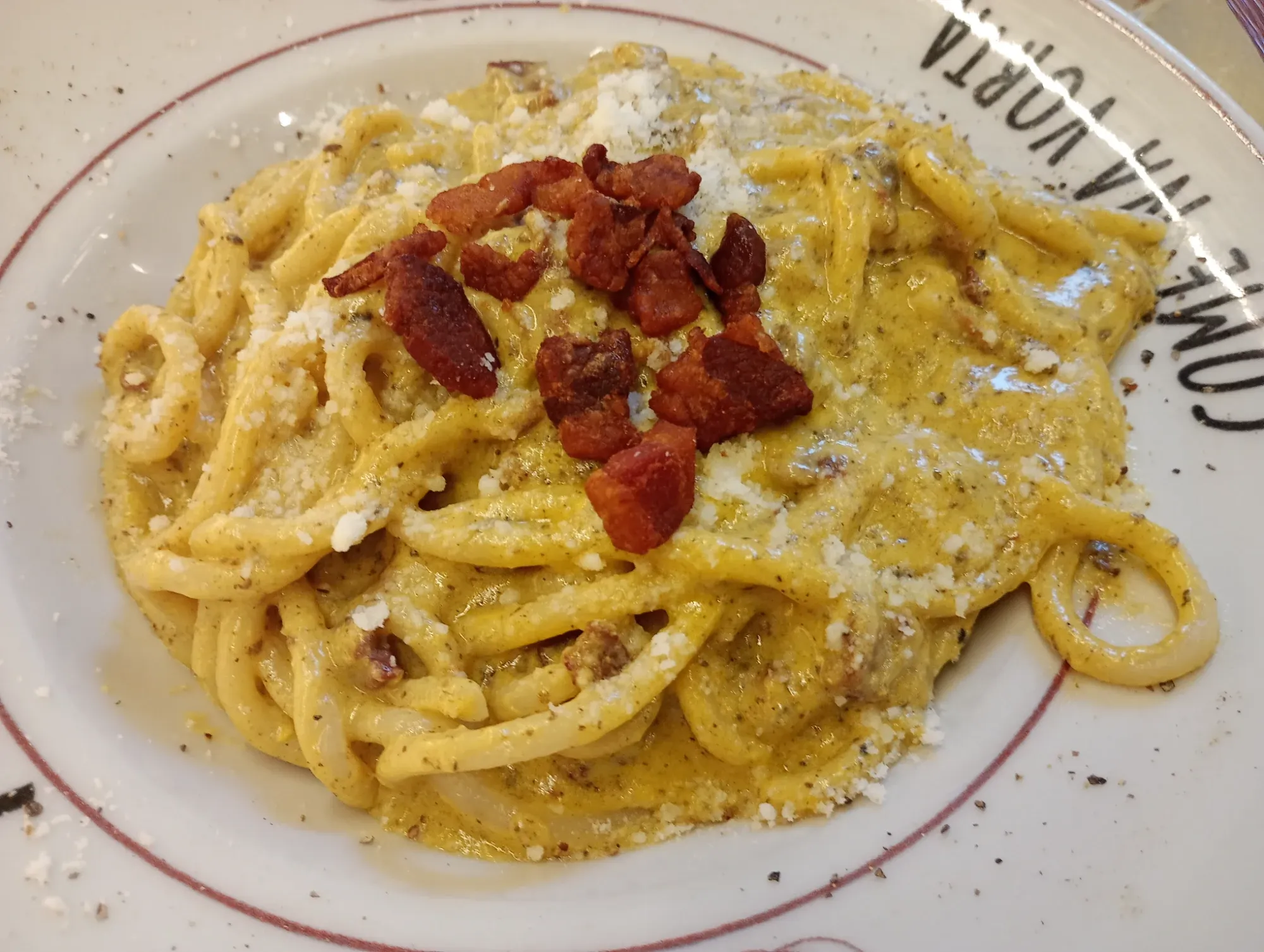
Practical Tips • Food • 10 Min. Lesezeit
Kulinarisches Rom – Ein Wegweiser für Genießer durch die Ewige Stadt
Entdecken Sie das kulinarische Rom! Dieser Food-Guide führt Sie zu authentischen Trattorien, über die Märkte der Stadt und stellt Ihnen die traditionelle Küche vor.
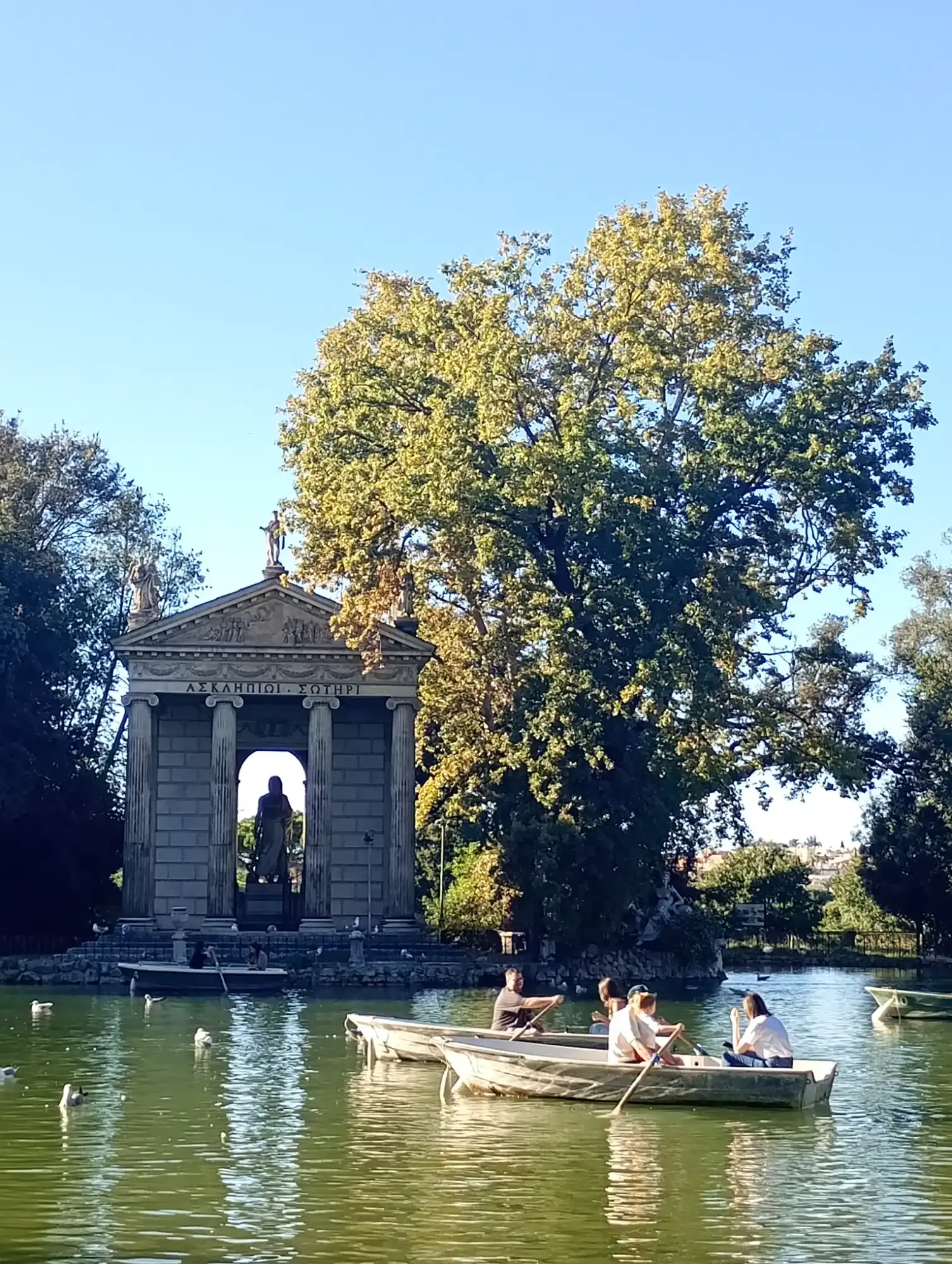
Culture • Practical Tips • History • 7 Min. Lesezeit
Roms grüne Geheimtipps - Entdecken Sie die schönsten Parks, Gärten und Naturreservate der Ewigen Stadt.
Wussten Sie, dass Rom zu den grünsten Hauptstädten Europas zählt? Die Ewige Stadt ist berühmt für ihr antikes Zentrum, ihre malerischen Gassen, prächtigen Barockbrunnen und lebhaften Plätze. Abseits der bekannten Monumente zeigt Rom ein anderes Gesicht - grüner, ruhiger und überraschend weitläufig. Hier breiten sich die Gärten prachtvoller Adelsvillen unter Pinien aus, Hügel bieten weite Panoramablicke und antike Straßen schlängeln sich durch Wiesen voller Wildblumen vorbei an verfallenen Gräbern. Wir sehen die gepflegte Eleganz der Villa Borghese, die duftenden Rosen- und Zitrusgärten des Aventins, die atemberaubenden Terrassen des Gianicolo und des Monte Mario sowie die zeitlosen Wege des Regionalparks Appia Antica. Überall spürt man einen sanften, entspannten Lebensrhythmus. Die Geschichte ist hier nicht auf Museumswände beschränkt - sie wächst aus dem Gras unter unseren Füßen, rahmt den Horizont beim Sonnenuntergang und säumt die Wege, auf denen die Römer joggen, picknicken und Zeit mit ihren Familien verbringen.
Unsere Städte
57Die besten kostenlosen und bezahlten Walking‑Touren
Unternehmen

Rechtliches