Munich's Liquid Bread: A Guide to Strong Beer Festivals
Join the locals at Munich's Strong Beer Festivals, the traditional start to beer season. Enjoy strong beer, live music, and authentic Bavarian culture way before the Oktoberfest crowds arrive.
history • culture • practical-tips • 4 min. read
Kicking Off Munich's Beer Season: The Starkbierfeste
Spring in Munich signals the awakening of a very special time: the start of the city's legendary beer festival season. Long before the massive international crowds arrive for Oktoberfest in autumn, Bavarians celebrate their beloved "fifth season" known as the Starkbierfeste, or Strong Beer Festivals. Kicking off in March, the beer festival season stretches all the way until the final tents close at Oktoberfest.
If you want an authentic Bavarian experience that rivals the energy of Oktoberfest, but with a predominantly local crowd, the Starkbier season is an absolute must-do. You will find roaring oompah bands, traditional singing, and an unmatched festive atmosphere that truly captures the heart of Munich.
Monks, Fasting, and Liquid Bread: The History of Strong Beer
Munich, famously known as the "city of monks" (the name München even derives from the Latin word for monks), has deep historical and Catholic roots. The tradition of strong beer was born right in the Munich region's monasteries some centuries ago. During the 40 days of Lenten fasting leading up to Easter, strict religious rules forbade the brothers from consuming solid food.
To sustain themselves, the monks brewed a highly caloric, extra-malty beer. They famously declared that "liquid does not break the fast." This dark, rich, and hearty brew acted as "liquid bread," providing essential nutrients and calories to get them through the difficult fasting period. Today, this monastic loophole has evolved into one of Bavaria's best cultural celebrations.
The First Strong Beer and Where to Celebrate Today
The origins of Munich's strong beer trace back to the Paulaner monks, who first began brewing their famous Salvator Doppelbock in the 17th century. They were the pioneers of this potent style in Bavaria, and their legacy lives on. Today, Paulaner am Nockherberg is the absolute epicenter of the Starkbierfeste, famously kicking off the season with the traditional tapping of the first keg.
But the celebration extends beyond just Paulaner. You can also experience the lively strong beer atmosphere at all of the other big Munich beer halls, for example Augustiner-Keller or Löwenbräukeller. For a full overview of locations and dates see this page. Each of these iconic beer halls hosts incredible events complete with live music, hearty Bavarian food, and giant communal tables filled with cheerful locals.
Practical Tips: Prost!
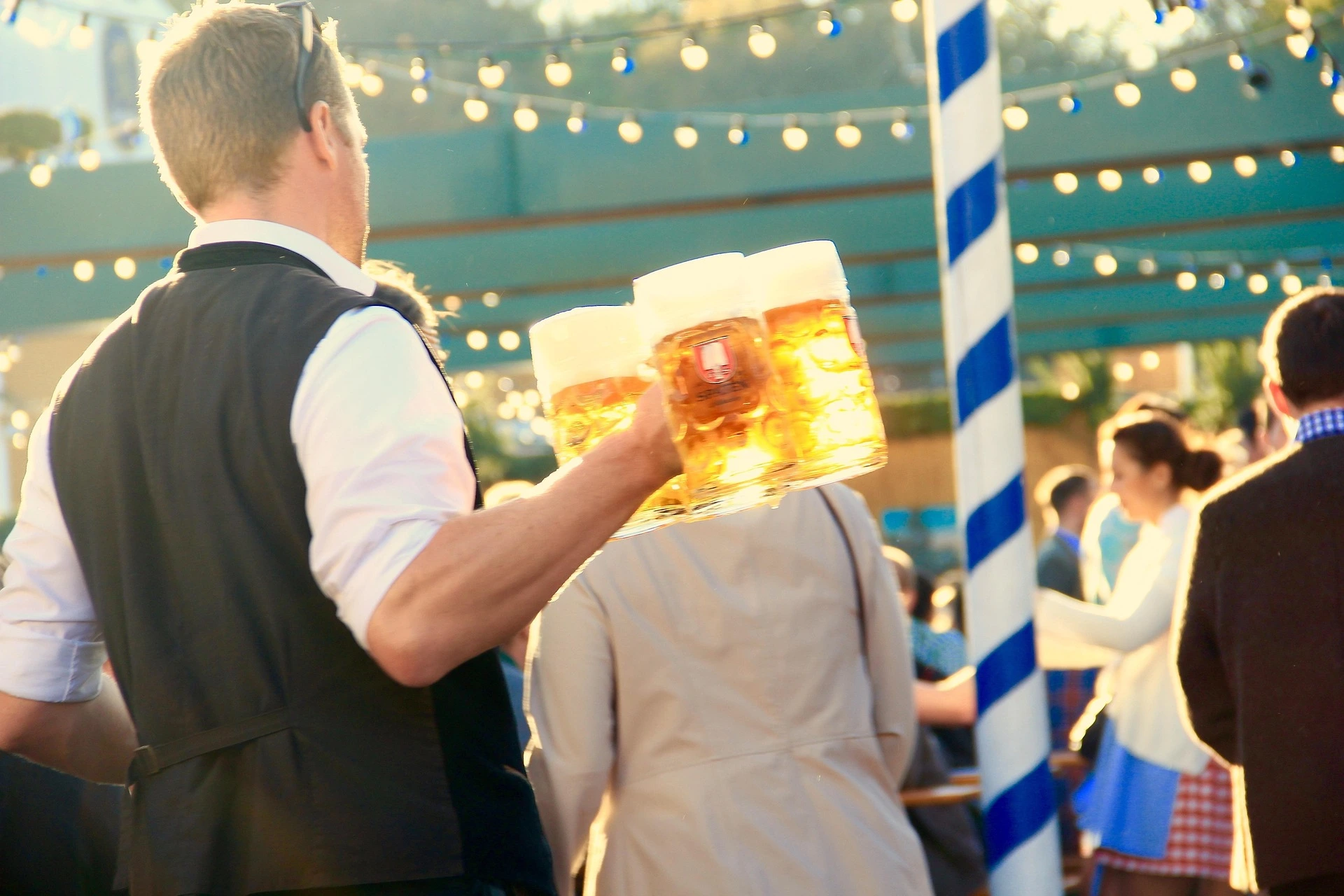
📝 Caption: A waiter expertly carrying large glass mugs of beer, a common and welcome sight during Munich's festival season.
The Strong Beer Festival season typically takes place during Lent, running for about three to four weeks between late February and late March. While the atmosphere is incredibly fun, a word of caution is highly necessary for newcomers.
Starkbier is served in massive one-liter glass mugs, known as a Maß, and it packs a serious punch. These special Doppelbock brews boast an alcohol content usually between 7% and 9%, significantly higher than your average beer. Because the dark beer is exceptionally smooth and sweet, it is incredibly easy to drink quickly. Take your time, eat plenty of heavy food like roast pork or pretzels, and pace yourself to fully enjoy the festivities safely.
What to Wear: Finding Lederhosen and Dirndls in Spring
To fully immerse yourself in the Starkbierfeste experience, wearing traditional Bavarian Tracht is no must, but highly encouraged if you are curious about it. While it is easy to find outfits during the autumn Oktoberfest rush, locating modestly priced Lederhosen and Dirndls in the early spring can be slightly more challenging.
Fortunately, several specialty shops in Munich operate year-round. Dedicated rental shops allow you to rent a complete, acceptable outfit for around €40 to €70 per day, which is a decent option for curious travelers. If you prefer to buy, year-round stores like Angermaier or Lodenfrey offer stunning, authentic pieces. A good quality new outfit will typically set you back anywhere from €150 to over €300. Dressing the part guarantees you will feel right at home among the celebrating locals!