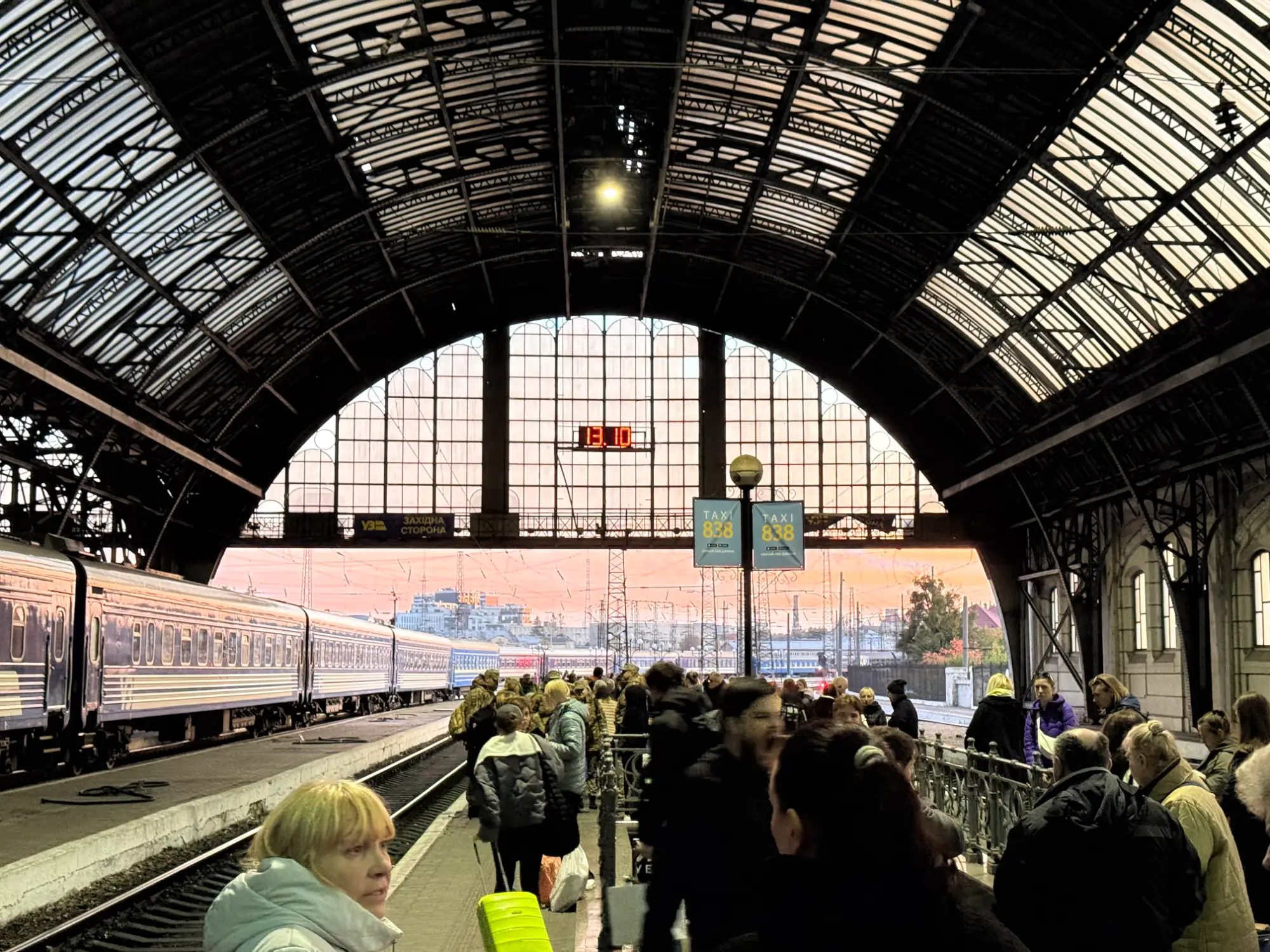
Travelling from Kraków to Lviv: Trains, Buses, and Border Crossings
Planning a trip to Ukraine? Discover the best routes from Kraków to Lviv. We compare trains, buses, and the pedestrian border crossing to help you choose the right option.
practical-tips • 5 min. read
Travelling from Kraków to Lviv: An Overview
Embarking on a journey from Kraków to Lviv is more than just a transit between two nations; it is a transition into a land of resilience and history. While the logistical landscape has changed, the route remains a well-trodden path for volunteers, locals, and tourists alike. Getting from Poland to Ukraine currently requires a bit more strategic planning than in the past, but it is an entirely manageable experience. The most typical and efficient route funnels travellers through the Polish border city of Przemyśl, acting as the primary gateway to western Ukraine.
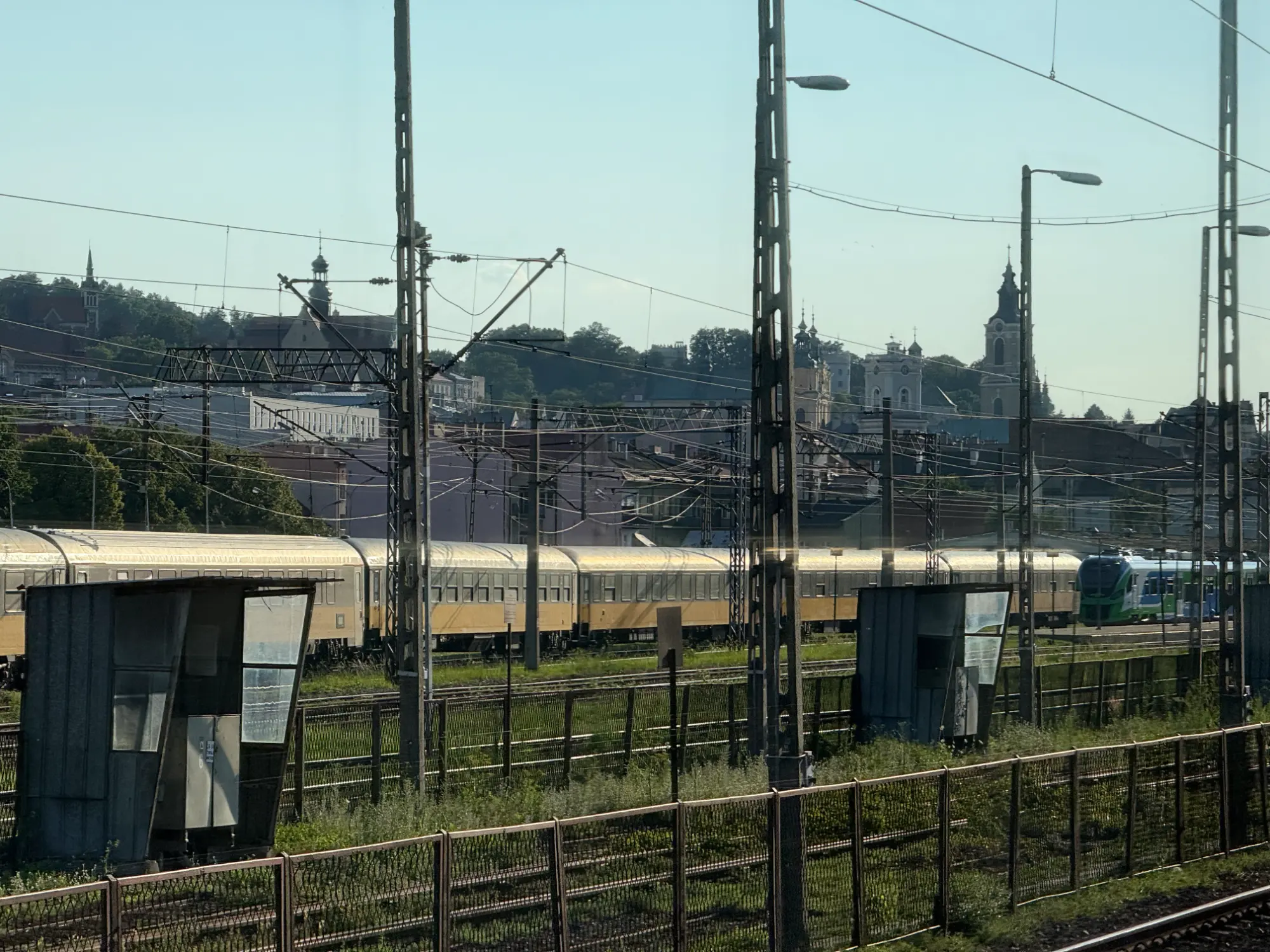
Passenger trains arriving in Przemyśl, a key gateway city in southeastern Poland known for its historical architecture.
Whether you prioritize comfort, budget, or speed, knowing your options—train, bus, or the "mixed mode" pedestrian crossing—is essential. While the border controls introduce variables to your travel time, particularly during peak seasons, thousands of people make this crossing daily. With the right information, navigating the shift from the European Union into Ukraine can be smooth and straightforward.
The Most Comfortable Option: Direct Train via Przemyśl
For many travellers, the most stress-free method is utilizing the railway network. The journey involves two distinct legs. First, you take a Polish PKP train from Kraków to Przemyśl Główny station (Buy tickets here). From there, you transfer to a Ukrainian Intercity+ train (Buy tickets here). This second leg utilizes "white gauge" (broad gauge) tracks, which allow the Ukrainian train to pull directly into Przemyśl, facilitating an easy transfer. Be aware, that even though Ukrainian railways are heroically keeping punctuality inside Ukraine, sometimes, either due to war-related damage of the infrastructure specifically Intercity trains to Przemyśl might be delayed.
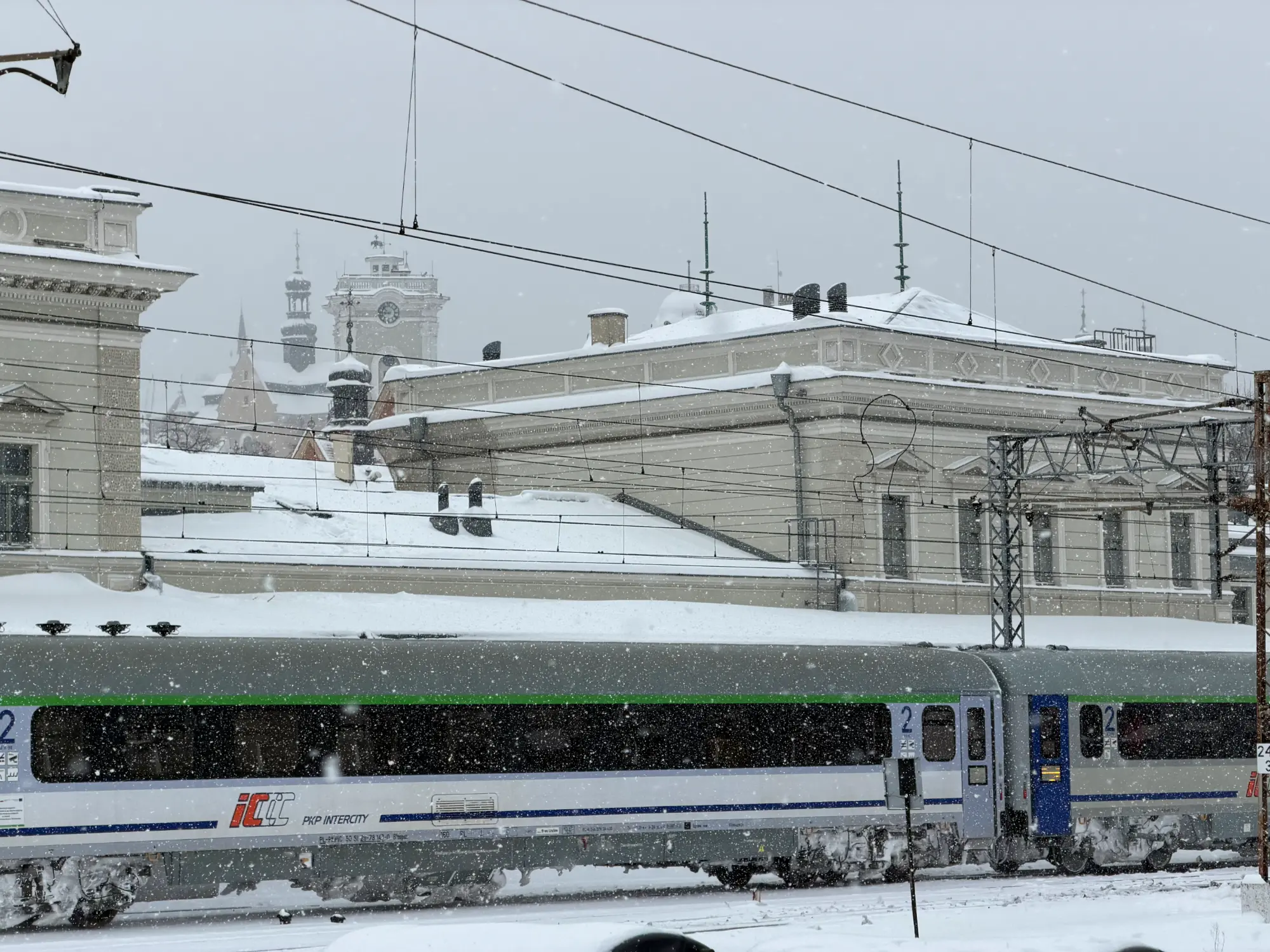
A winter scene at Przemyśl Główny station, showing a PKP Intercity train during heavy snowfall.
The primary advantage of the train connection is the streamlined border control, which often takes place while the train is in motion or during a fixed stop, making it more predictable than road travel. Once you board the comfortable Intercity train, it helps you bypass the often unpredictable traffic queues at the border, delivering you directly to the heart of Lviv.
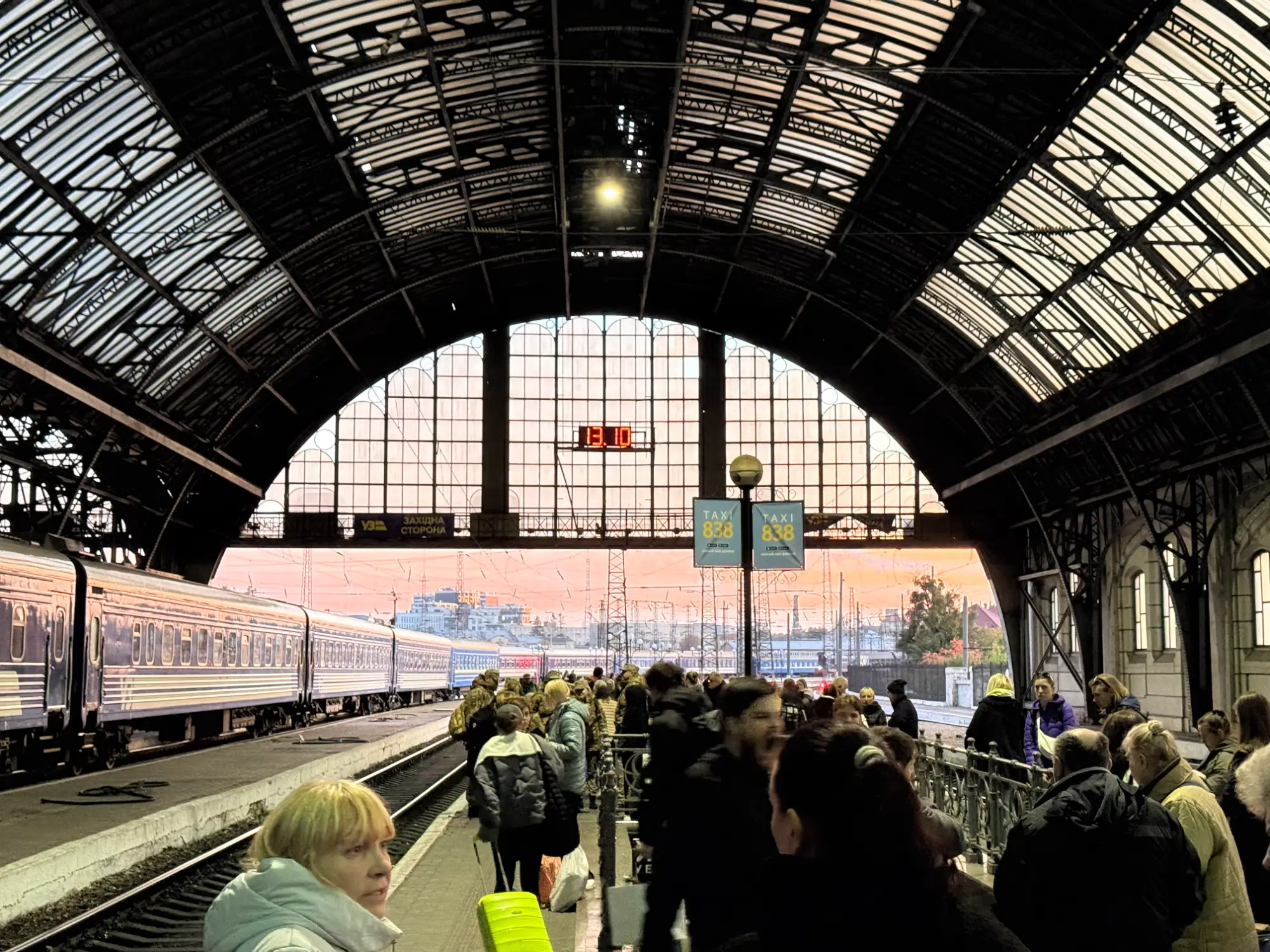
The historic arched terminal of Lviv Railway Station provides a dramatic backdrop for arriving travelers at sunset.
By Bus across the Border: What to Expect and When to Go
Taking a bus, such as FlixBus, is the second main option and offers the convenience of a direct ticket from Kraków to Lviv. However, patience is a necessary packing item for this mode of transport. The defining feature of bus travel is the unpredictable wait time at the border. While sometimes efficient, queues can become quite long, making it difficult to pinpoint an exact arrival time in Ukraine.
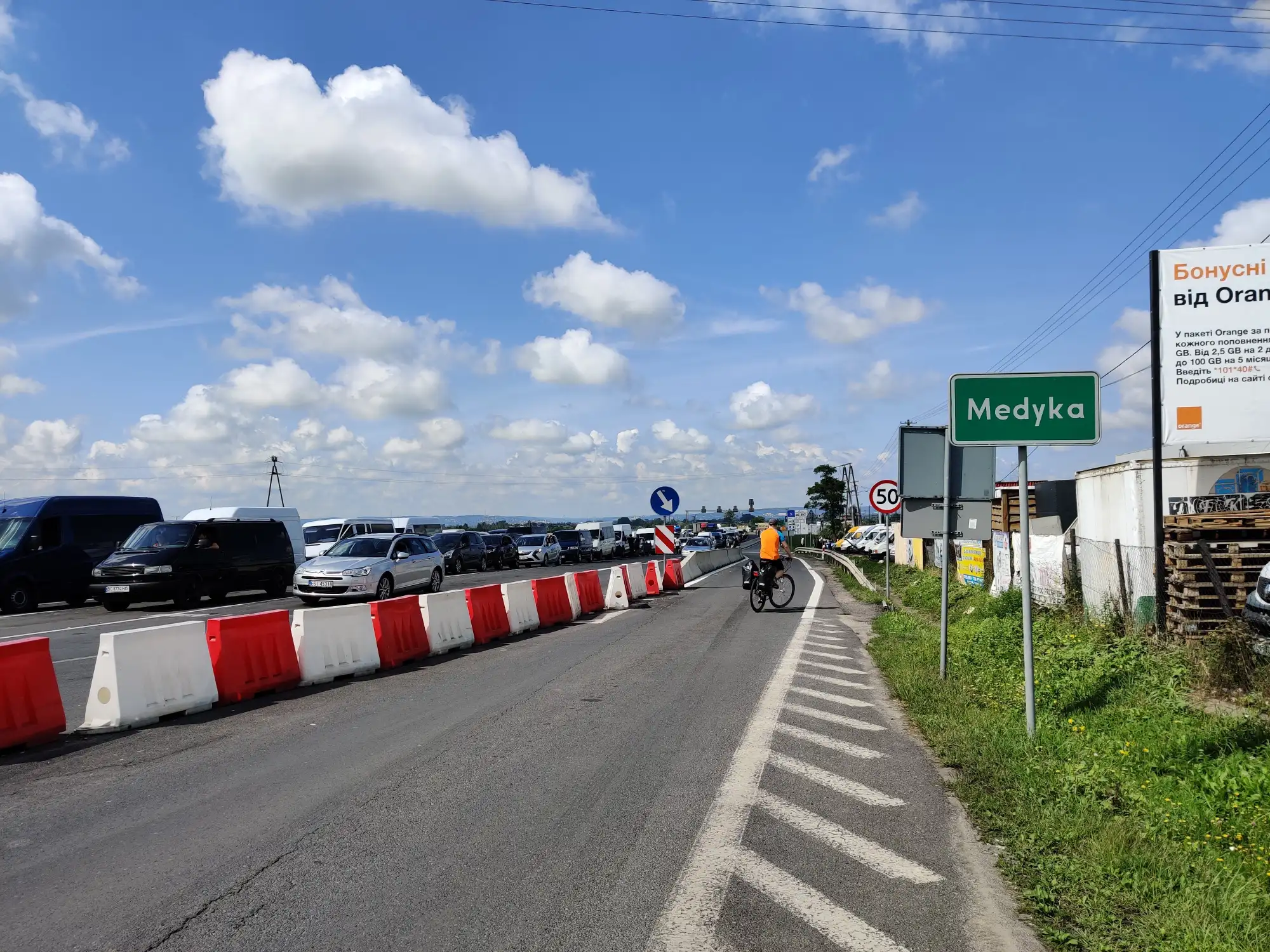
The road approach to the Medyka border crossing between Poland and Ukraine, showing traffic and local signage.
To avoid spending excessive hours in a stationary vehicle, it is wise to plan your trip around the calendar. Border traffic spikes significantly during major holidays, Christmas, and the peak summer tourist season, specifically between June and late September. If you are travelling during these windows, be prepared for longer waits, as the line for vehicles can stretch considerably compared to the off-season.
Crossing on Foot: How to Use the Pedestrian Border at Medyka
For the adventurous or budget-conscious traveller, crossing the border on foot via Medyka is a highly effective "travel hack." This method involves taking a domestic train or bus to Przemyśl and then catching one of the frequent local minibuses that shuttle passengers to the exact border point in Medyka. The actual crossing involves walking several hundred meters through a fenced corridor.
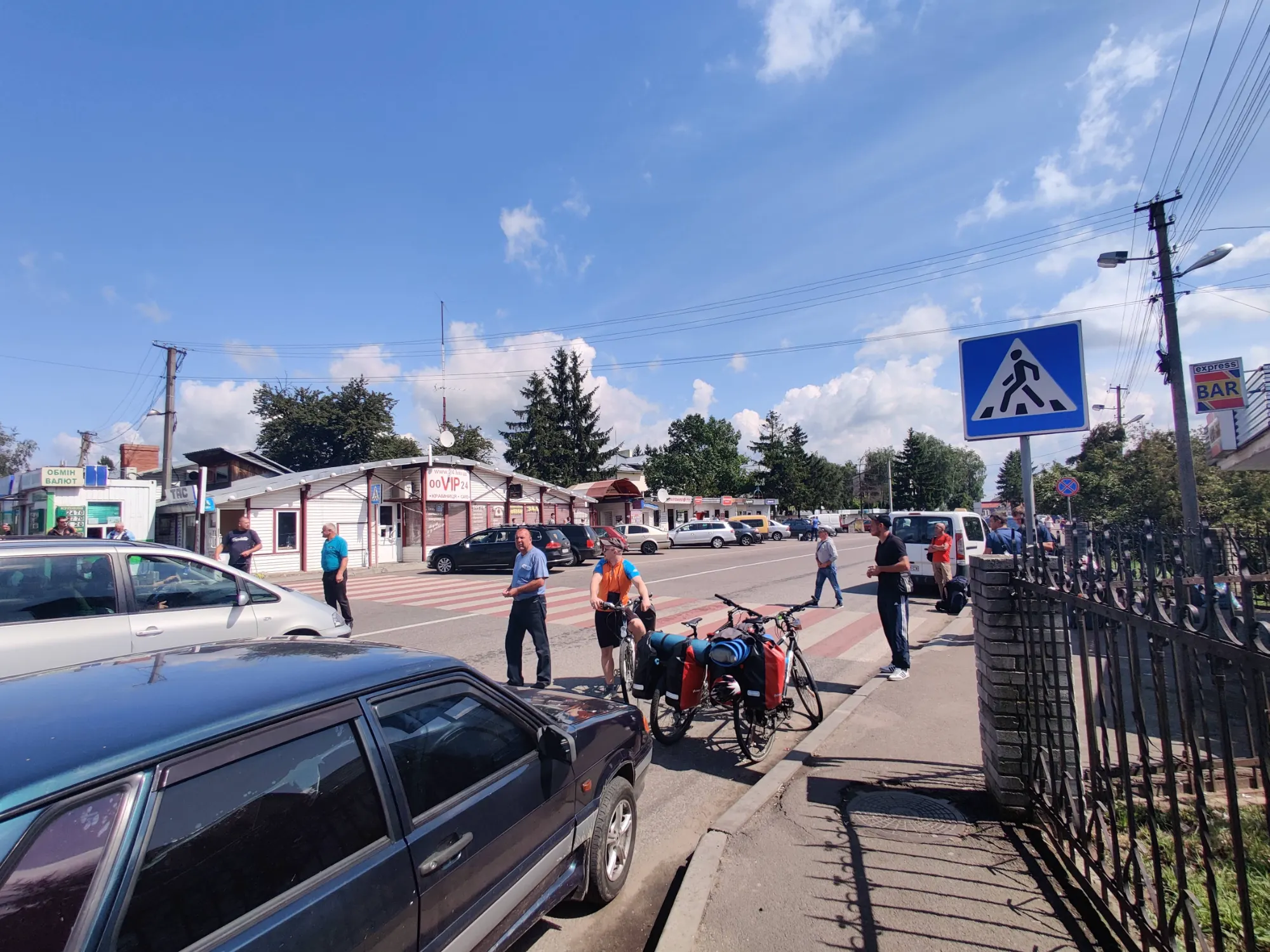
📝 Caption: The Shehyni-Medyka pedestrian border crossing is a key transit point for travelers moving between Ukraine and Poland.
Crucially, there is a distinct advantage here for EU citizens and international passport holders. There is a separate passage for EU citizens, allowing you to skip the longer queues that are mostly comprised of Ukrainians returning home. This separation makes the process relatively quick, often reducing the border formalities to a swift walk rather than a hours-long wait.
From the Border to Lviv: Marshrutkas and Taxis in Ukraine
Once you have walked across the border into the Ukrainian town of Shehyni, transportation options are readily available to take you the final leg to Lviv. You will find taxis and "Marshrutkas" (small local buses) waiting right there; they are standing pretty much all the time. The Marshrutka is the economical choice, usually costing around 200 hryvnias (approximately 5 euros), while a taxi offers more privacy and speed for around 20 euros—more expensive, but reasonably priced by European standards. The drive to Lviv typically takes between one and a half to two hours.
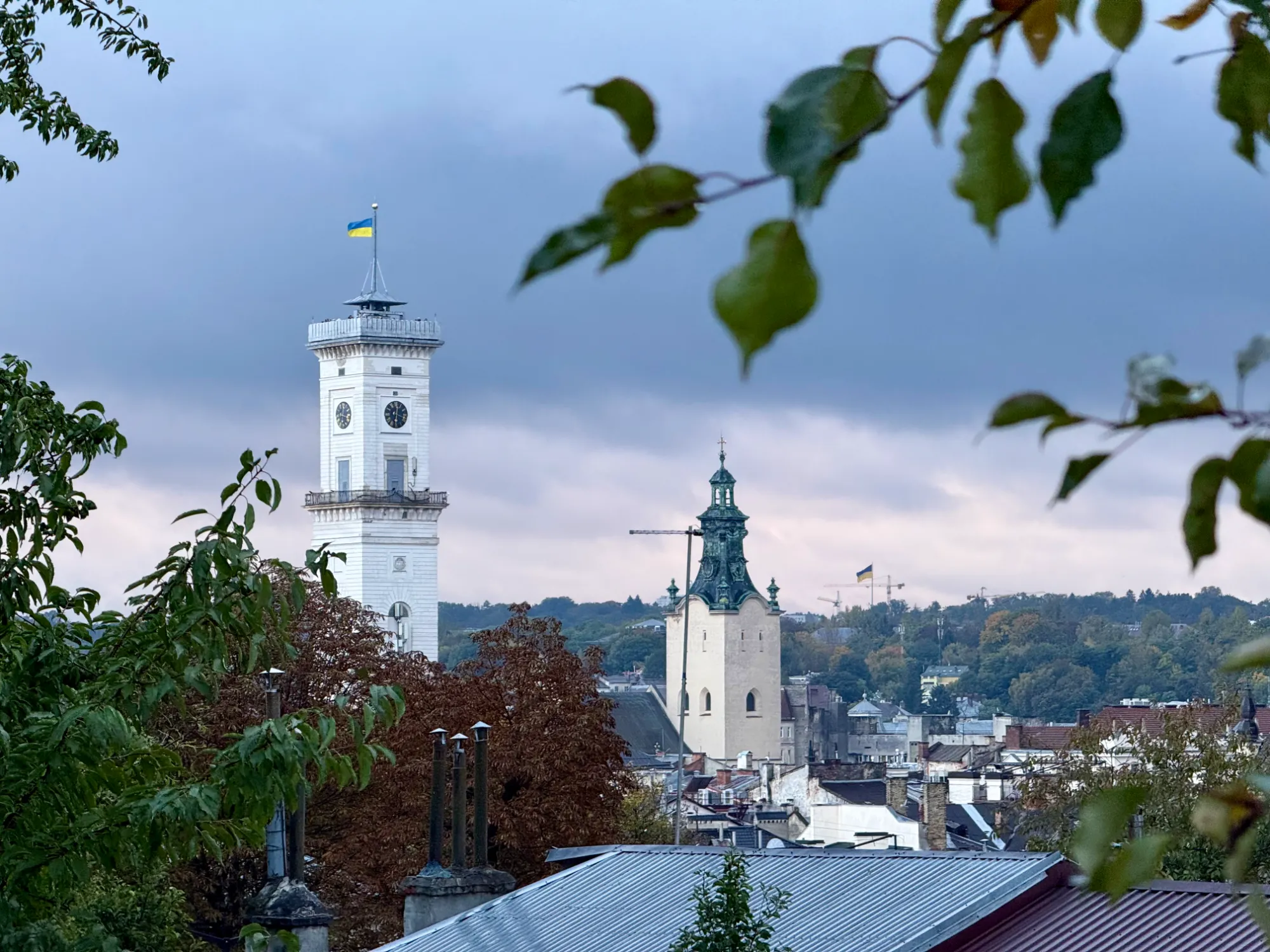
A view of the Lviv Town Hall and Latin Cathedral, two central landmarks of the city's historic UNESCO-listed skyline.
Arriving in Lviv is an experience in itself, but to truly grasp the city's current reality, we highly recommend going beyond a self-guided walk. Joining our specific tour in Lviv will give you a much deeper understanding of local life during the time of war. Our excellent local guides can provide context that guidebooks cannot, explaining how the city functions, how residents maintain their resilience, and the historical layers that define this unique period. It is an opportunity to connect with the city on a human level that you simply shouldn't miss.