Understanding Semana Santa (Holy Week) in Barcelona
Planning a trip to Barcelona during Easter? Discover what to expect during Semana Santa, from traditional foods to practical tips for the holidays.
4 min. read
Spring in Barcelona is a popular time to visit, and experiencing Semana Santa (Holy Week) offers a unique glimpse into local culture. As winter fades and the weather warms, the city fills with both locals enjoying the long weekend and travellers eager to explore. Whether you are interested in witnessing religious traditions or simply want to know how the holidays will affect your travel plans, understanding what to expect during Easter in the Catalan capital helps ensure a smooth trip.
Understanding Semana Santa in Barcelona
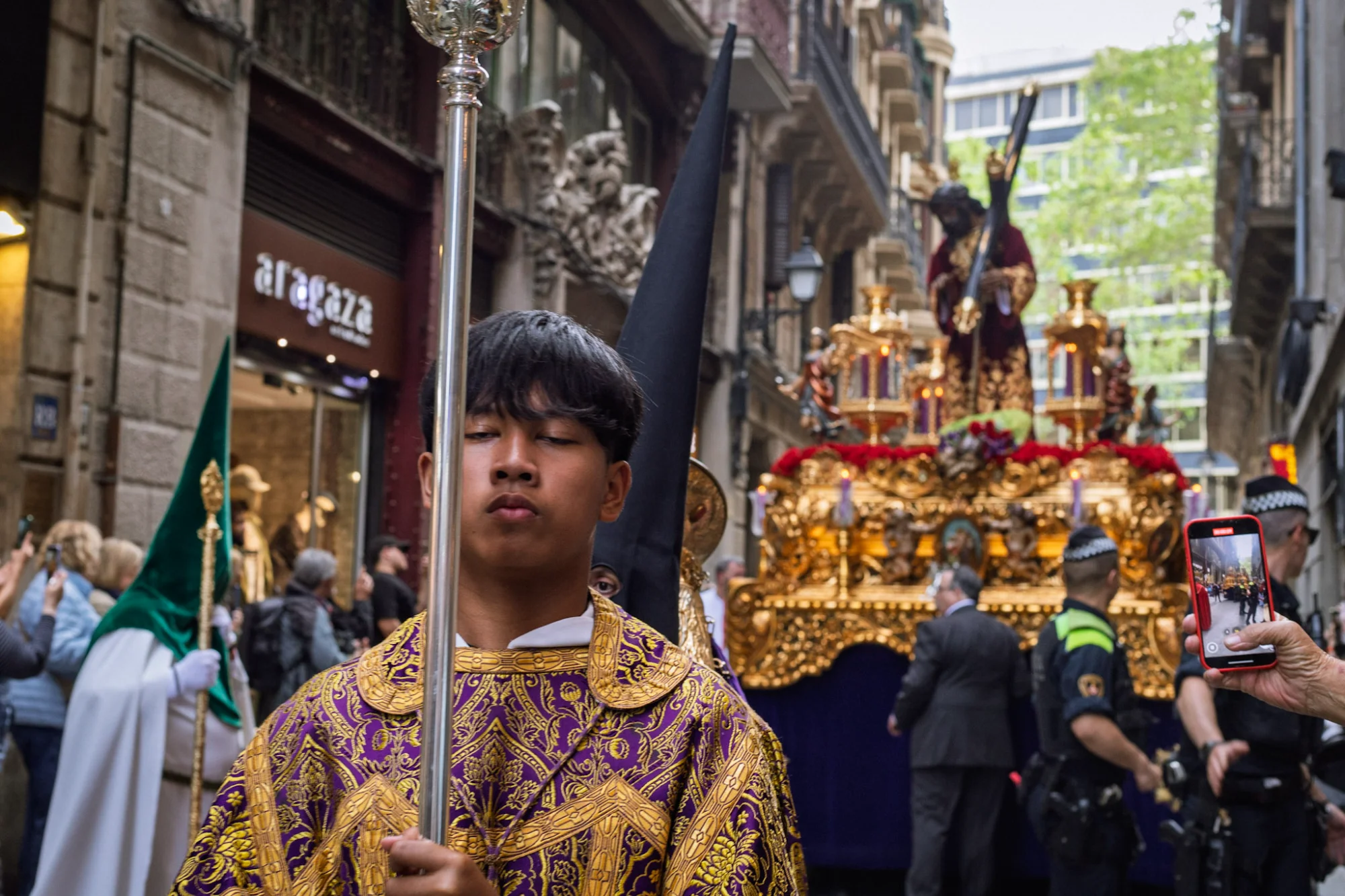
If you are anticipating the massive, dramatic street processions famous in southern Spanish cities like Seville, it is helpful to adjust your expectations. Semana Santa in Barcelona is noticeably quieter and more subdued. While religion plays a role, for many locals, Easter is primarily a time for family gatherings and spring holidays. The atmosphere in the city is lively but relaxed, with people filling the streets, enjoying the pleasant weather, and admiring the elaborate chocolate displays in pastry shop windows.
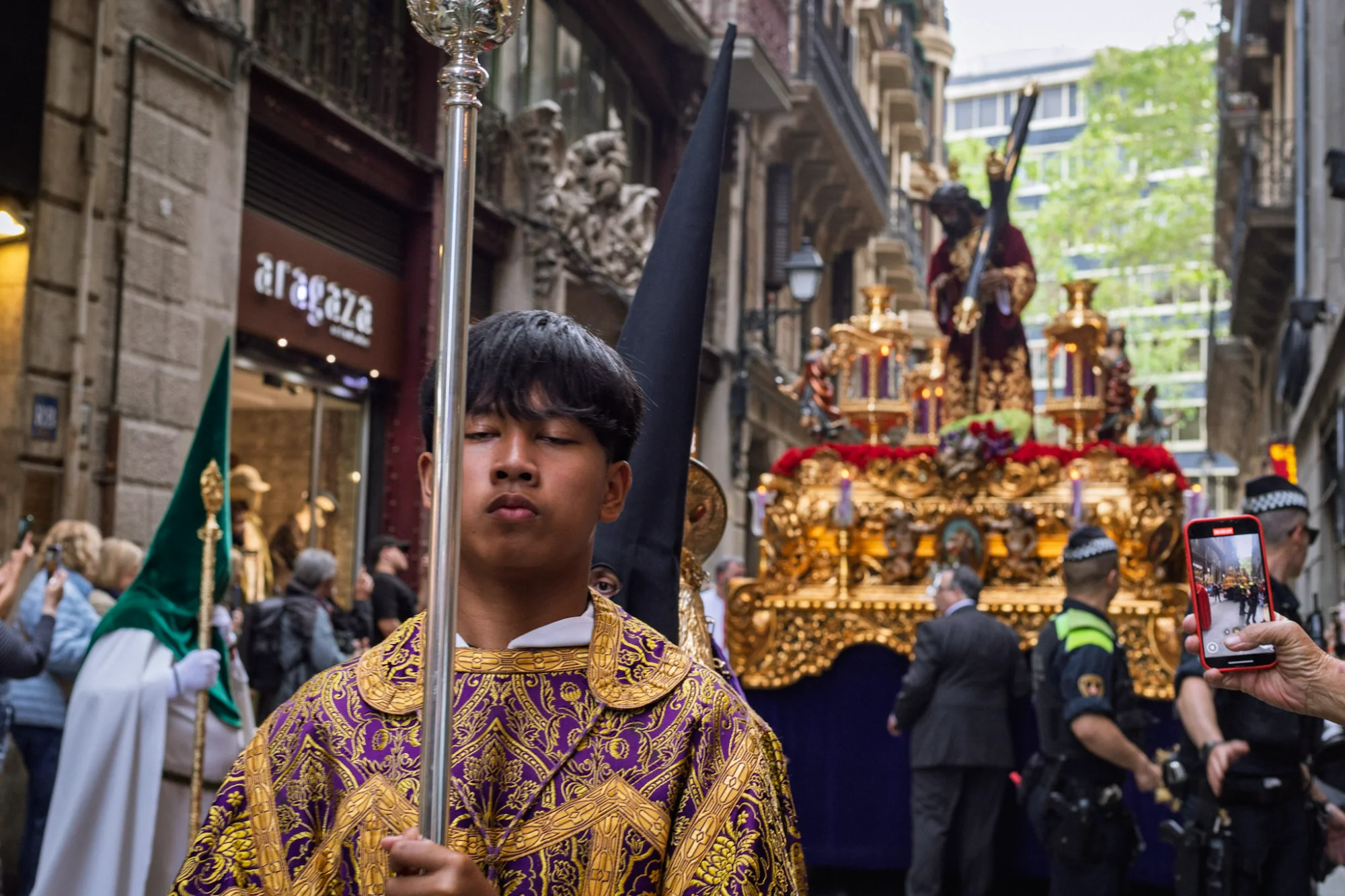
Participants in traditional purple vestments lead a Holy Week procession through Barcelona's streets.
Key Processions and Religious Events
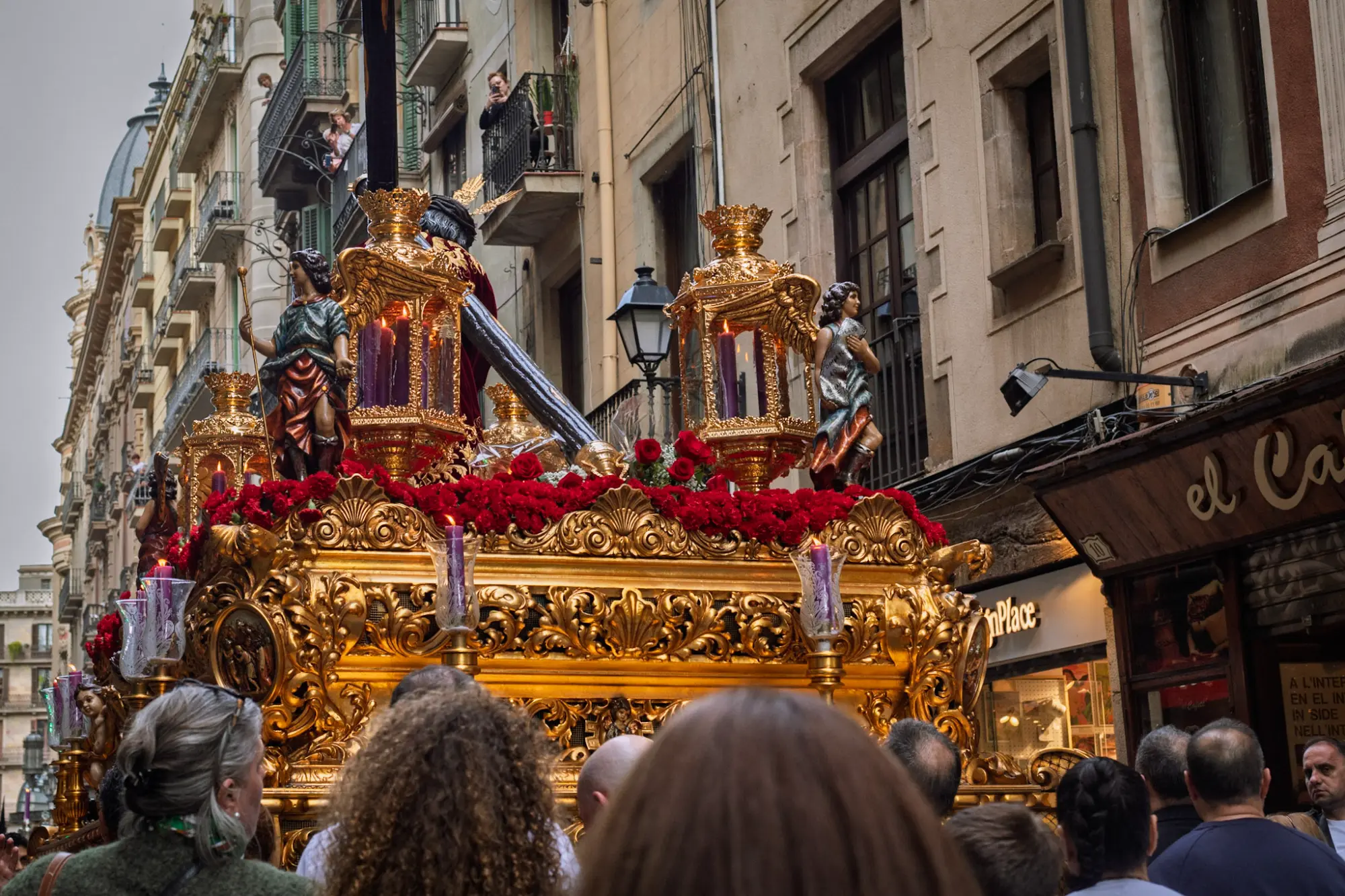
Despite a quieter approach, Barcelona still hosts several significant processions. The week begins on Palm Sunday with the traditional La Burreta procession in the Raval neighborhood, commemorating Jesus’ entry into Jerusalem. On Good Friday, solemn processions such as the Cristo de la Buena Muerte and Our Lady of Sorrows make their way around the Barcelona Cathedral and the surrounding streets. Joining a guided walking tour of the Gothic Quarter during your stay is an excellent way to familiarize yourself with the history of these ancient pathways. Additionally, visitors can often witness a free light show projected onto the Passion façade of the Sagrada Família, visually narrating the final days of Christ.
An ornate golden float carrying a statue of Jesus draws crowds during a traditional procession.
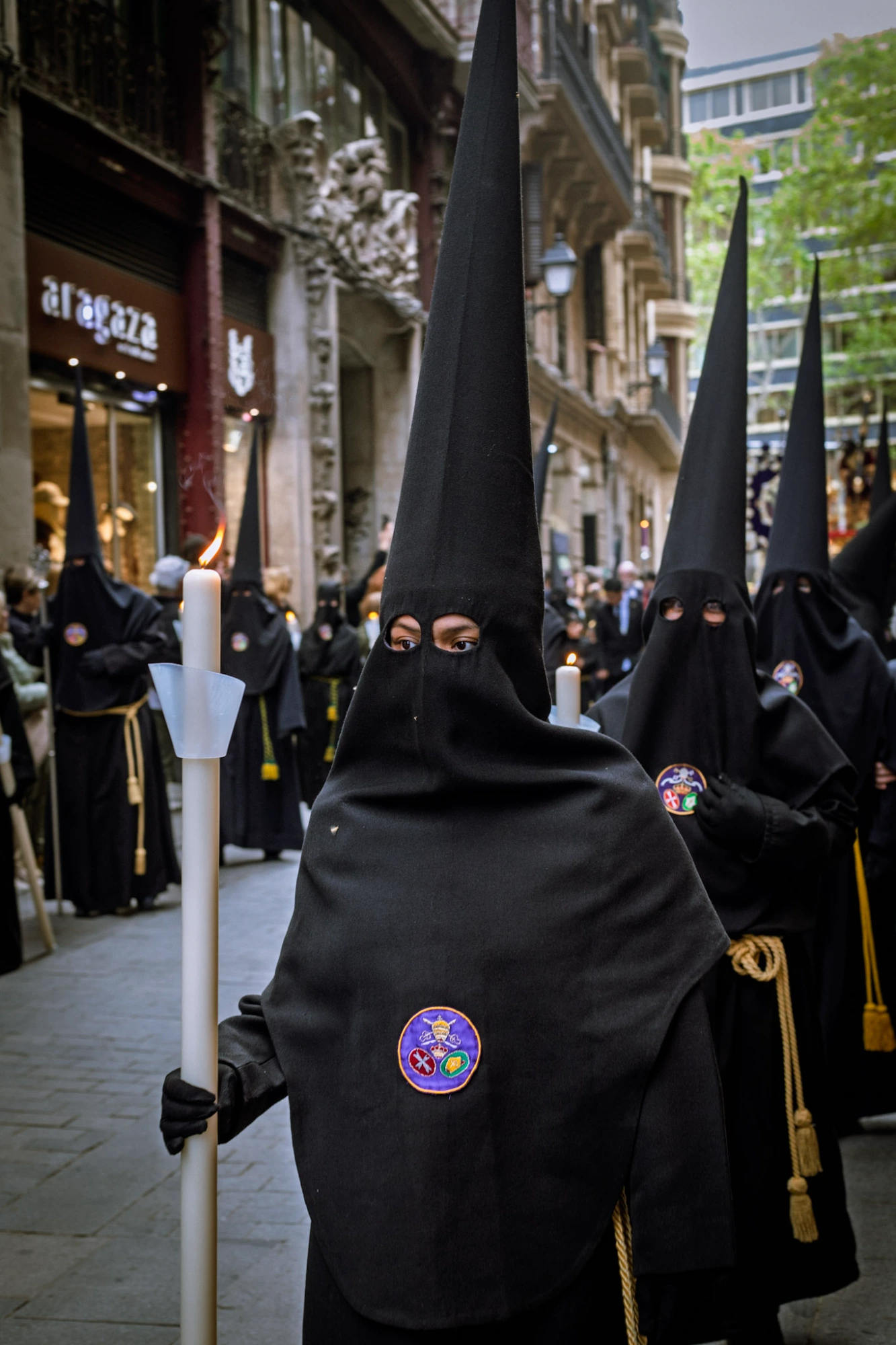
A participant wearing a traditional conical hat holds a candle as they walk through the historic centre.
Traditional Easter Foods to Try
Easter in Catalonia comes with its own specific culinary traditions. The centerpiece is the Mona de Pascua, an intricately decorated cake or chocolate sculpture traditionally given by godparents to their godchildren on Easter Monday. You will see bakeries across the city competing with spectacular chocolate window displays leading up to the holiday. Because meat is traditionally avoided by many on Good Friday, local menus frequently feature bacalao (salt cod) prepared in various ways, such as in fritters or cooked with chickpeas and spinach.
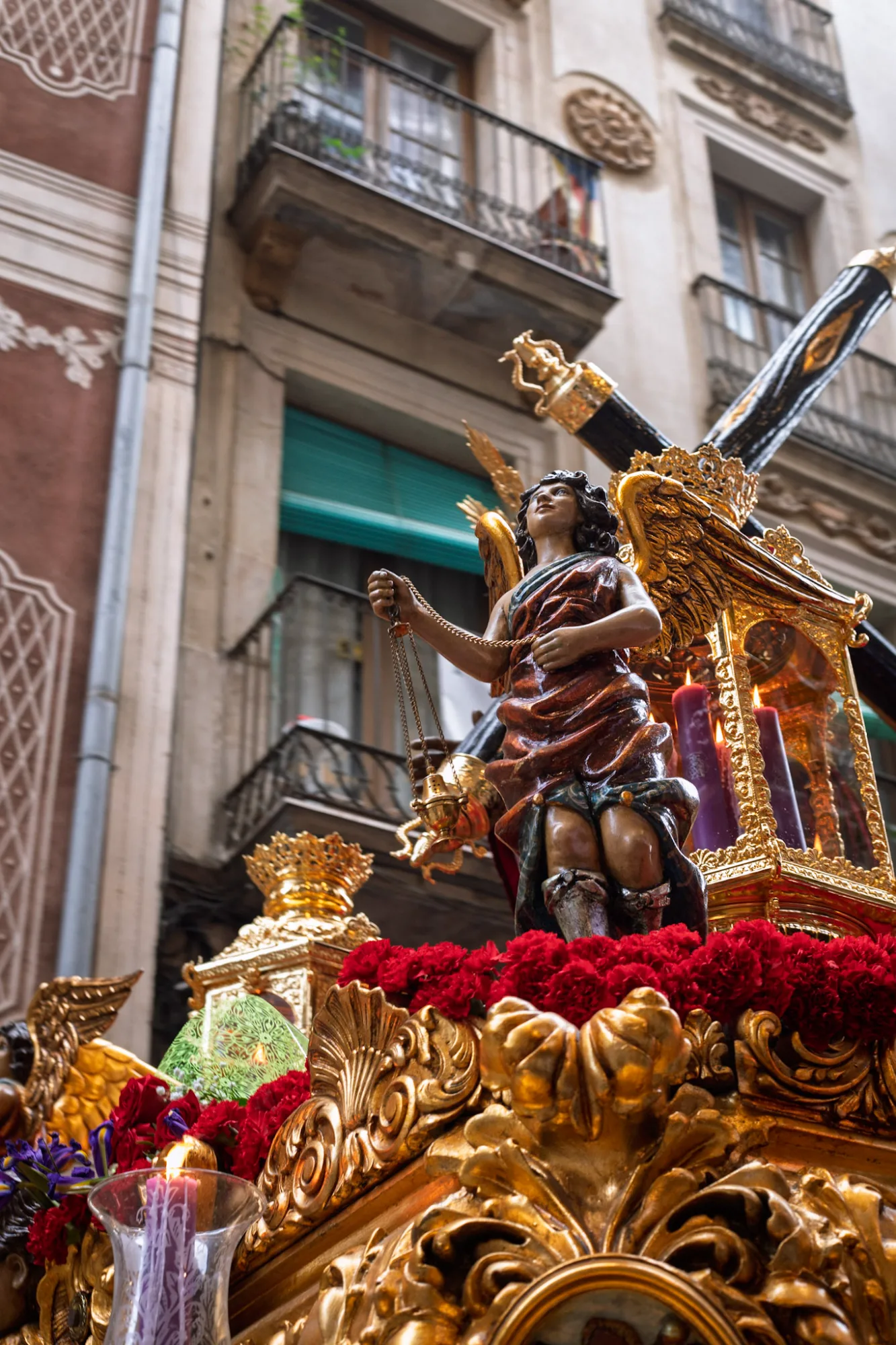
Red carnations beautifully decorate a gilded religious float used during the Easter ceremonies.
Travel Disruptions and Public Holidays
When planning your itinerary, be aware that Good Friday and Easter Monday are official public holidays in Catalonia. On these days, most retail shops, supermarkets, and local markets will be closed. However, restaurants, cafes, bakeries, and the majority of the city's main tourist attractions generally remain open. Barcelona’s public transport network, including the Metro and buses, continues to operate but will run on a reduced Sunday or holiday schedule. It is wise to check departure times in advance if you are traveling to the airport or further outside the city.
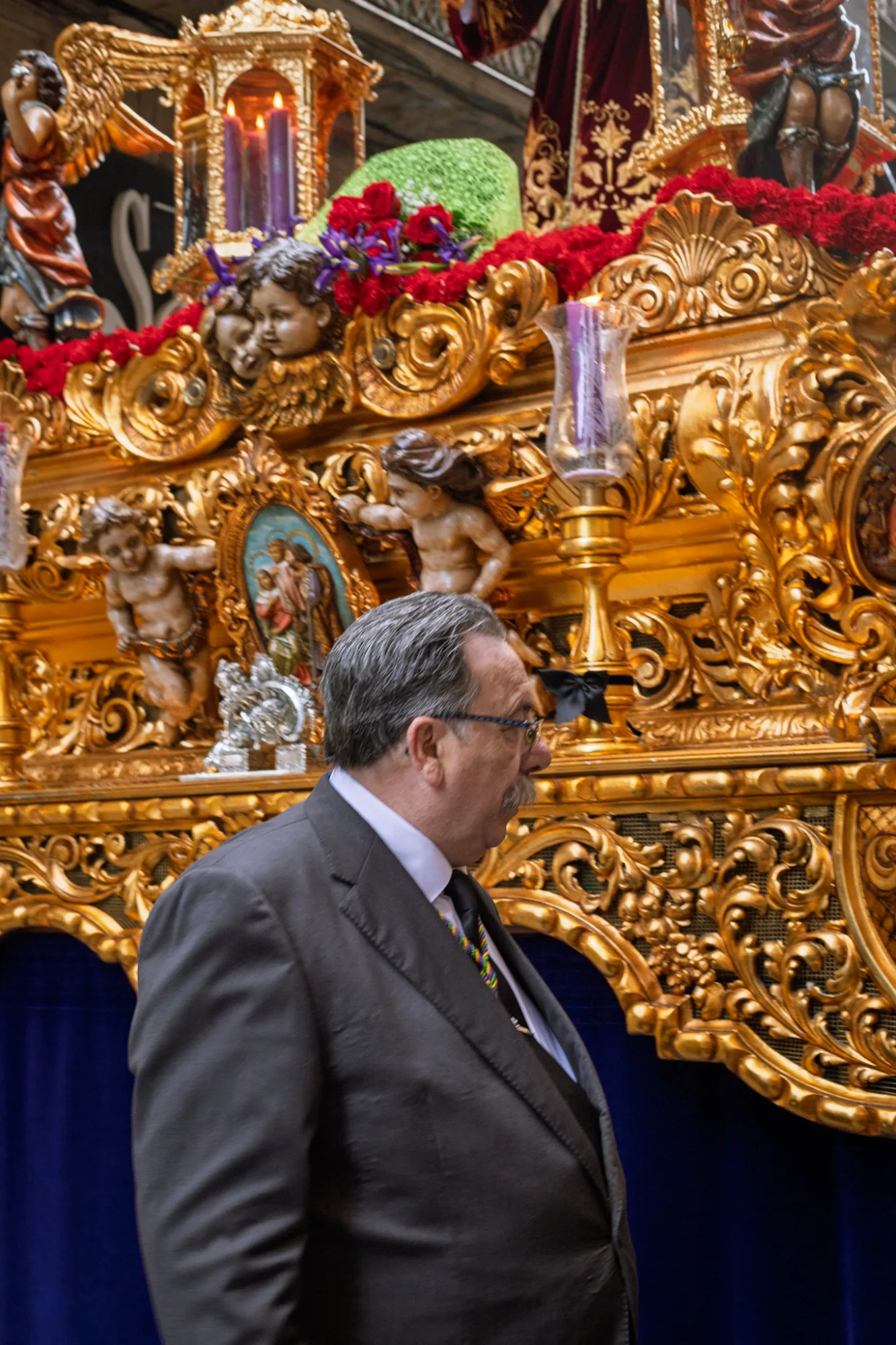
A participant stands thoughtfully beside an intricately detailed float before it is carried through the city.
Practical Tips for Visiting During Holy Week
Semana Santa coincides with the beginning of Barcelona’s peak spring tourist season. The city will be busy, making it essential to book tickets for major attractions—like the Sagrada Família and Park Güell—well in advance, as they frequently sell out. While the street processions may cause minor, temporary road closures in the old town, they rarely disrupt broader city navigation. Stay flexible with your dining plans, and consider making restaurant reservations for the holiday weekend, as many local families will also be dining out to celebrate.
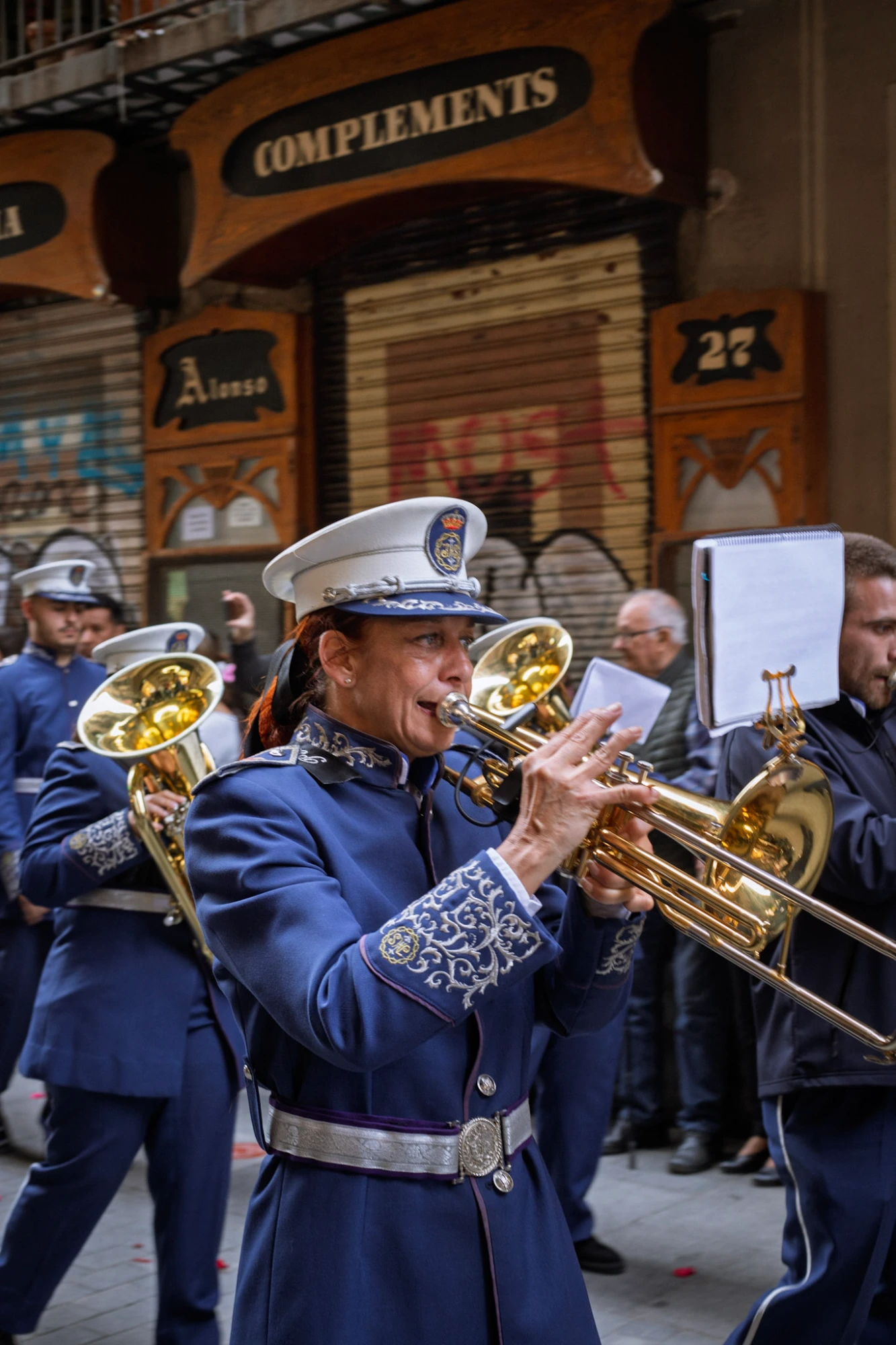
Local musicians in uniform often accompany the parades, adding an auditory layer to the solemn processions.
Spending Holy Week in Barcelona provides a lovely balance of cultural observation and typical sightseeing. By understanding the local schedule and planning ahead for closures and crowds, you can comfortably navigate the city. Whether you are watching a procession pass by the Cathedral or simply enjoying a slice of Mona de Pascua in a sunny plaza, Easter is a wonderful time to experience the distinct character of the Catalan capital.
All photography by Dominika Barska ©.