What Are Calçots? A Guide to Catalonia’s Winter Onion Tradition
Every winter, Barcelona celebrates the calçot. Discover this messy, delicious grilled onion ritual and learn exactly how to eat them like a true local.
5 min. read
Section 1: What Are Calçots?
If you are visiting Barcelona, you might notice a peculiar long white onion appearing in markets and restaurant menus. These are calçots, a beloved staple of rigorous Catalan identity and gastronomy. Far more than just a vegetable, the calçot is a variety of green onion that has achieved Protected Geographical Indication (PGI) status, ensuring that what you are eating meets specific traditional standards. In 2019 alone, around 15 million of these certified onions were sold, with estimates reaching nearly 60 million when including non-certified local producers.
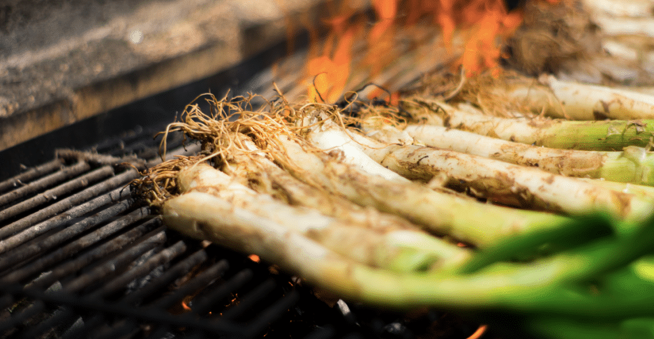
📝 Caption: Fresh calçots grilling over an open fire. These charred green onions are a seasonal staple of Catalan cuisine.
The calçot is milder and sweeter than a standard onion, thanks to the specific method of cultivation where the soil is piled up around the shoots as they grow. This process creates the long, tender white stalk that is perfect for grilling. While the numbers dipped slightly during the pandemic, the tradition has roared back, with recent estimates suggesting sales of PGI calçots alone could hit 17 million in a single season. It is a booming culinary industry that defines the local winter diet.
Section 2: When is Calçot Season?
Timing is everything when it comes to this gastronomic phenomenon. The calçot season is strictly a winter-to-early-spring affair, generally running from January to March. This is the prime window when the onions are harvested and the weather is crisp enough to enjoy a hearty outdoor meal next to a roaring fire. If you are planning a trip to Barcelona during these months, you have arrived at the perfect moment to partake in this authentic local custom.
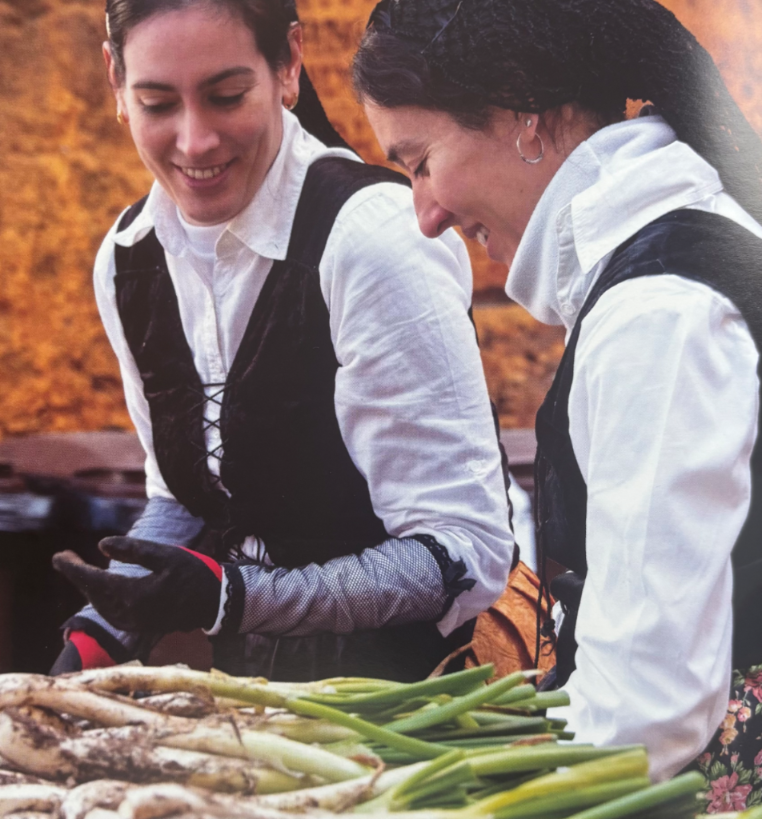
📝 Caption: Locals preparing calçots.
While you might see them appear as early as November or linger until April, the peak consumption happens in the first three months of the year. It is a seasonal treat that locals anticipate with great excitement, much like harvest festivals in other parts of the world. The fleeting nature of the season makes the experience even more special, encouraging everyone to head out to the countryside or local taverns before the crop disappears until next year.
Section 3: The Calçotada Ritual
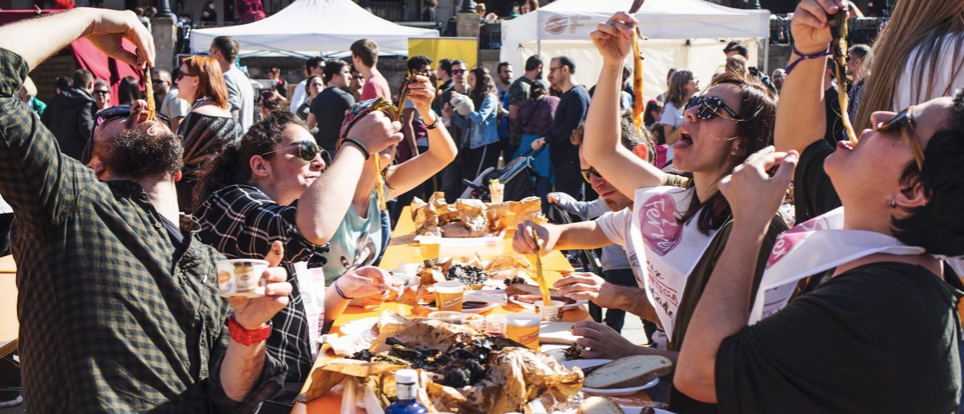
Eating these onions is rarely a solitary act; it is the centerpiece of a social gathering known as a calçotada. These events are festive barbecues held with large groups of friends and family, often acting as a reunion to celebrate the season. It is not commonly a meal eaten at home on a Tuesday night; rather, it is a dedicated event typically held on weekends, where the ritual of fire, smoke, and conversation is just as important as the food itself.
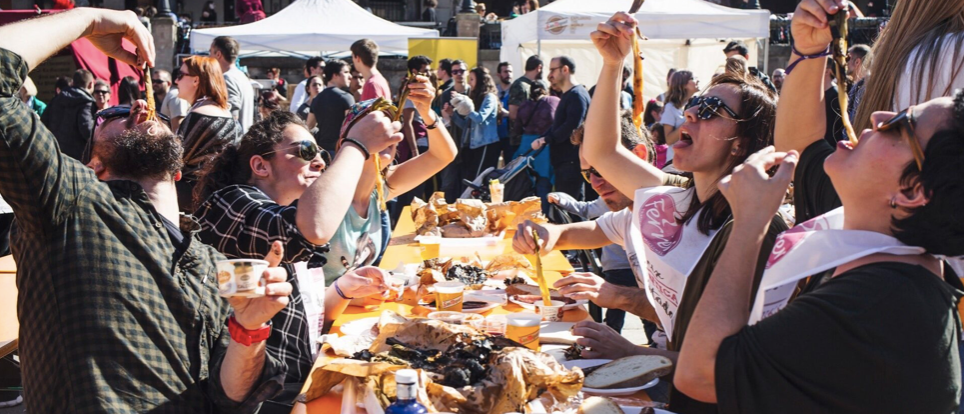
📝 Caption: Locals participating in a traditional calçotada feast, eating grilled onions by hand in the open air.
The tradition has deep roots in towns like Valls, which is considered the capital of the calçot. Interestingly, Valls is also famous for another stunning Catalan tradition: castells, or human towers. Just as the calçotada relies on community and gathering, the human towers symbolize strength through unity. While you are feasting on onions, you will often find yourself immersed in this broader tapestry of Catalan rural culture.

📝 Caption: An outdoor photography display celebrating the Catalan tradition of castells, or human towers in Valls.
Section 4: How to Eat Calçots Like a Local
If you order calçots, be prepared to get your hands dirty—literally. The onions are grilled over an open vine-wood fire until the outer layer is completely charred and black. They are then wrapped in newspaper to steam and keep warm, before being served on terracotta tiles. To eat one, you grasp the green top with one hand and pinch the bottom of the charred bulb with the other, sliding the burnt outer skin off to reveal the sweet, steaming white stalk inside.
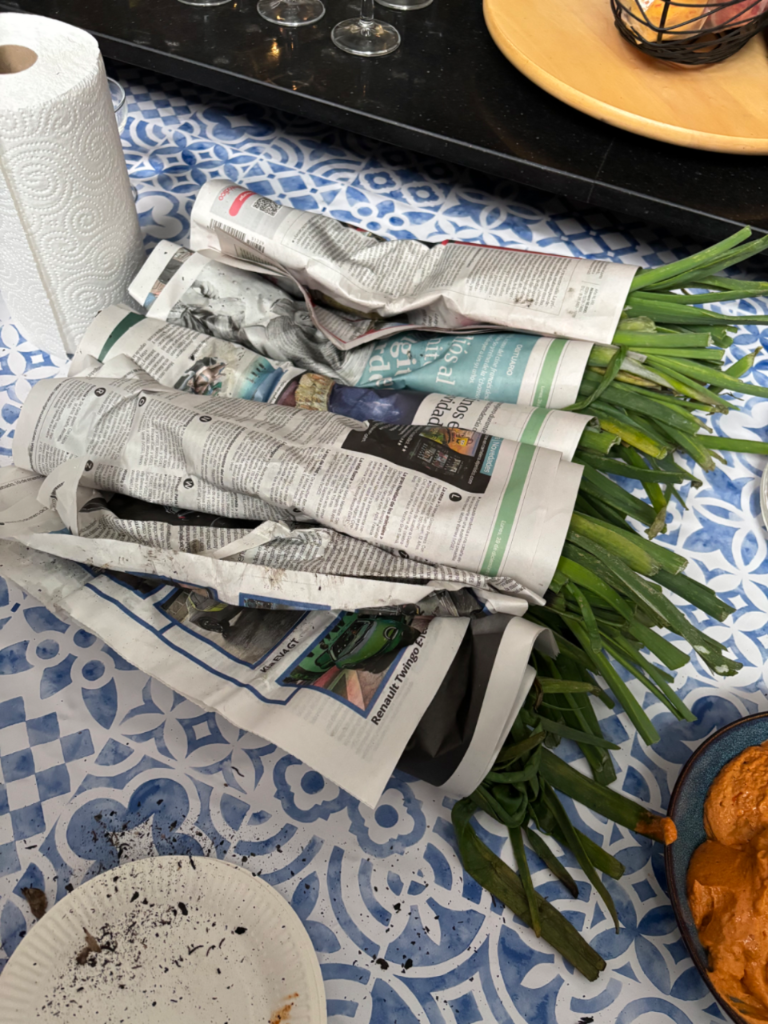
📝 Caption: Traditional Catalan calçots wrapped in newspaper, served with romesco sauce.
Once peeled, the onion is dipped generously into romesco sauce (a blend of roasted nuts, peppers, garlic, and oil) and lowered into your mouth from above. It is a messy, delightful procedure, which is why restaurants will almost always provide you with a large bib. Don't be shy; looking a bit ridiculous while eating is half the fun of the experience. The combination of the smoky char, the sweet vegetable, and the rich sauce is unlike anything else in Spanish cuisine.
Section 5: Where to Experience a Calçotada
For the most authentic experience, travelers should head to a masia (a traditional Catalan farmhouse restaurant) in the countryside surrounding Barcelona. However, the popularity of the dish means you can now find excellent calçotades within the city limits as well. Demand has spread even further afield, with restaurants in Madrid, Aragon, and the Balearic Islands now serving them. Exports have also increased to France, Belgium, and Germany, proving that the love for this Catalan onion knows no borders.
Whether you stay in the city or venture out to the town of Valls to see the home of the calçot (and perhaps visit museum of the famous human towers there as well), catching a calçotada is essential. It offers a unique window into the local lifestyle, where food serves as the binding agent for community, heritage, and celebration.