Who Was Santa Eulàlia? The Legend of Barcelona’s Co-Patron
Before La Mercè, there was Santa Eulàlia. Explore the legend of Barcelona’s original patron, the famous thirteen geese, and the city’s winter festival traditions.
history • culture • 5 min. read
Who Was Santa Eulàlia? Barcelona’s Original Patron
While the massive La Mercè festival in September often dominates travel guides, Santa Eulàlia holds a special, more intimate place in the hearts of locals. Before the Virgin of Mercy (La Mercè) became the city's primary protector in the 17th century, Eulàlia was Barcelona’s original patron saint. Born in the neighborhood now known as Sarrià, she is revered as a symbol of solidarity and justice. To this day, she remains the co-patron of the city, and her influence is deeply embedded in the streets of the Gothic Quarter.
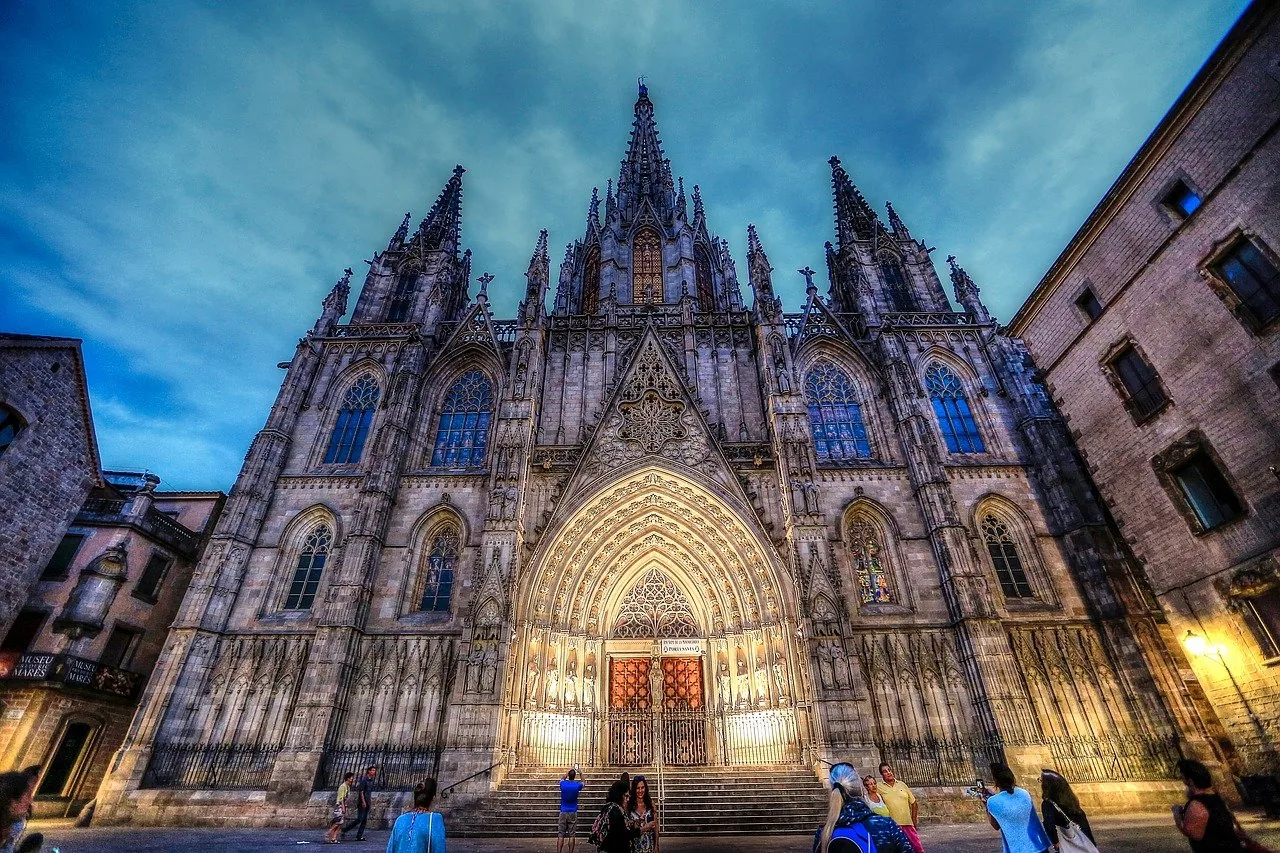
📝 Caption: Barcelona Cathedral at dusk.
The Cathedral of the Holy Cross and Saint Eulàlia (La Catedral) is her final resting place and the spiritual heart of her devotion. Unlike the soaring Sagrada Família, which is still under construction, this Gothic masterpiece was completed centuries ago and stands as a testament to the city's medieval history. Visiting in February allows you to connect with this local history without the overwhelming crowds of the summer peak season, offering a chance to appreciate the saint who watched over Barcelona for over a millennium.
The Legend of Eulàlia and the Thirteen Tortures
The story of Eulàlia is one of courage and tragedy, dating back to the Roman persecution of Christians in 303 AD. According to tradition, Eulàlia was a 13-year-old girl who refused to renounce her faith before the Roman governor, Dacian. Enraged by her defiance, the governor sentenced her to thirteen distinct tortures—one for every year of her young life. These punishments are legendary in scope, ranging from imprisonment to being rolled down a street in a barrel filled with sharp objects (a street now called Baixada de Santa Eulàlia).
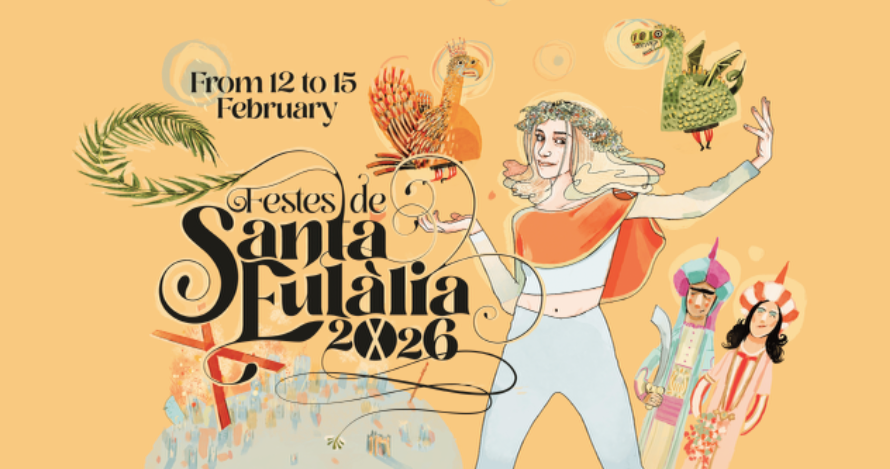
📝 Caption: Poster for Barcelona's 2026 Festes de Santa Eulàlia, scheduled for February 12–15.
The legend concludes with a miraculous event. It is said that after she endured these trials, a sudden, unseasonal snowfall blanketed the city to cover her broken body in white, symbolizing her purity. This mix of gritty history and divine intervention is a cornerstone of Barcelona's folklore. During the February celebrations, you will often spot imagery related to these events, and the number thirteen remains a recurring motif throughout the festivities honoring her sacrifice.
The Cathedral Cloister and the 13 White Geese
One of the most unique and charming tributes to the saint can be found inside the Barcelona Cathedral's Gothic cloister. Here, a flock of exactly thirteen white geese resides permanently in the central garden. This is not a random attraction; it is a living memorial that honors Eulàlia’s age at the time of her martyrdom. The geese have been kept here for centuries, and their loud honking is considered a protective alarm for the sacred space.
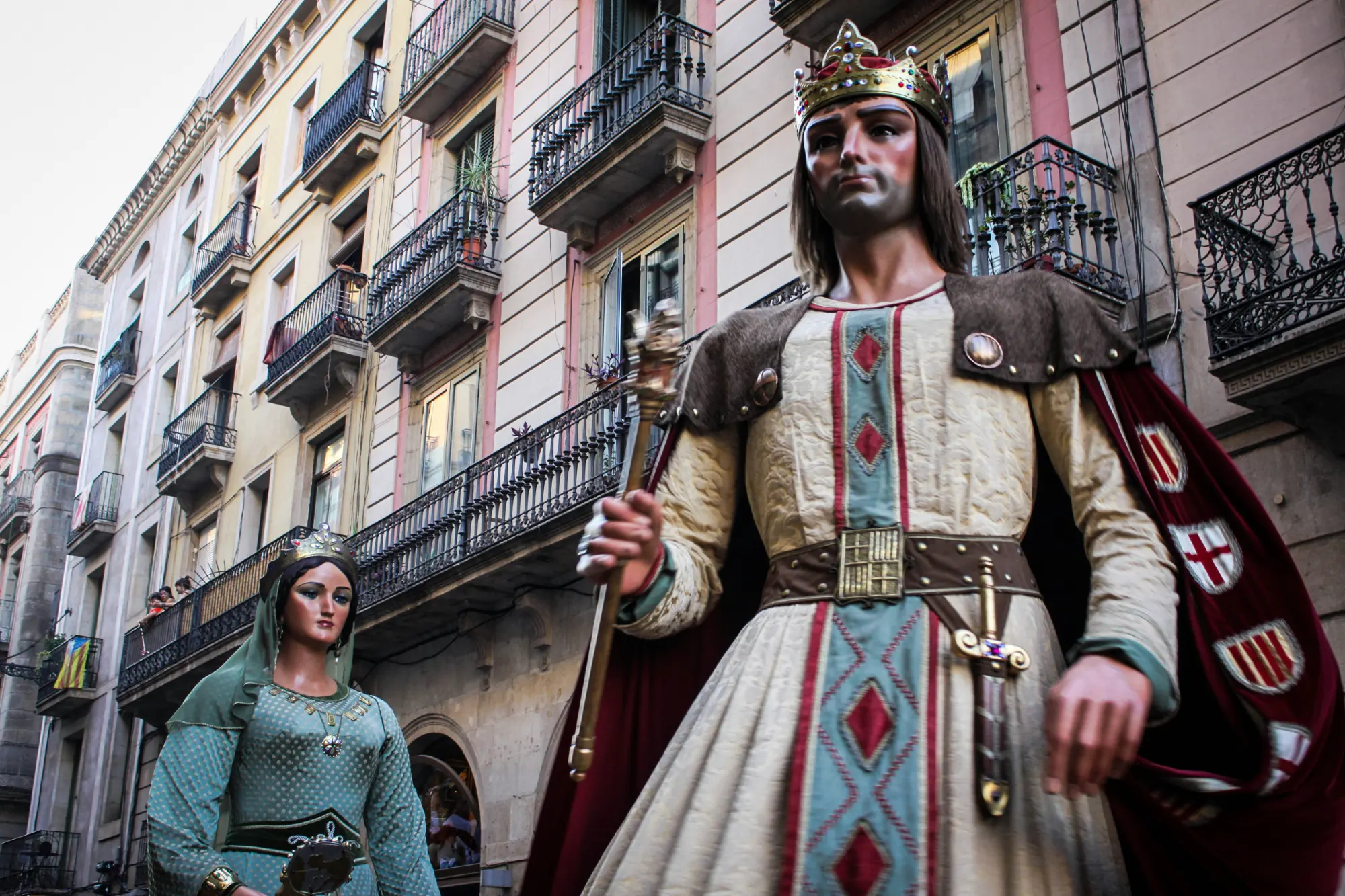
📝 Caption: Traditional Gegants (giants) parade in Barcelona. These figures appear during local festivals like La Mercè.
Entrance to the cloister is often free or included with a donation to the Cathedral. It is a peaceful oasis amidst the stone walls of the Barri Gòtic. When visiting, take a moment to count the geese to ensure all thirteen are present. Surrounding the pond and palm trees, you will also find small chapels dedicated to various patron saints of medieval guilds, but the geese remain the undisputed stars of the cloister, delighting children and history buffs alike.
Les Festes de Santa Eulàlia: The Winter Festival
Known locally as "La Lilliput" or simply "Laia," the Festes de Santa Eulàlia serves as Barcelona’s Festa Major d’Hivern (Winter Major Festival). Held annually around February 12th, this celebration is distinct from the massive, international spectacle of La Mercè in September. It is more intimate, traditional, and family-oriented, making it a perfect time for travelers who want to experience authentic Catalan culture. The weather in February is crisp, requiring warm layers, but the streets come alive with energy.
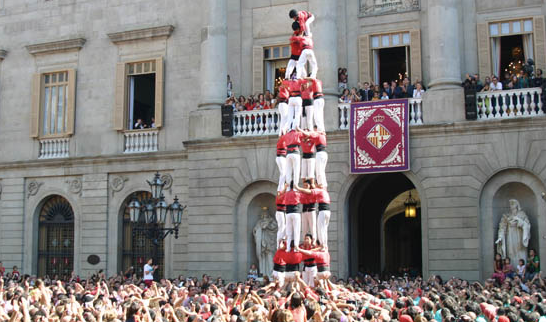
📝 Caption: A traditional castell, or human tower, being built during a festival at Plaça Sant Jaume in Barcelona.
During the festival, the city organizes numerous open house days where museums and cultural centers waive their entrance fees. It is an excellent opportunity to explore venues like the City History Museum (MUHBA) or the Maritime Museum for free. The atmosphere is festive but manageable, centered primarily around Plaça Sant Jaume and the narrow avenues of the Old Town, where the historical resonance of the saint is strongest.
Festival Highlights: Giants, Castells, and Fire Runs
The festivities are packed with photogenic Catalan traditions. A central highlight is the parade of the "Laias"—a procession of giantess figures (Gegantes) renamed Eulàlia for the occasion, who march to Plaça Sant Jaume for a traditional dance. Another unmissable event is the Diada Castellera, where teams build awe-inspiring human towers (Castells) in front of the City Hall. Watching the youngest members, or enxanetas, climb to the very top is a heart-stopping experience that embodies the festival's spirit of teamwork.
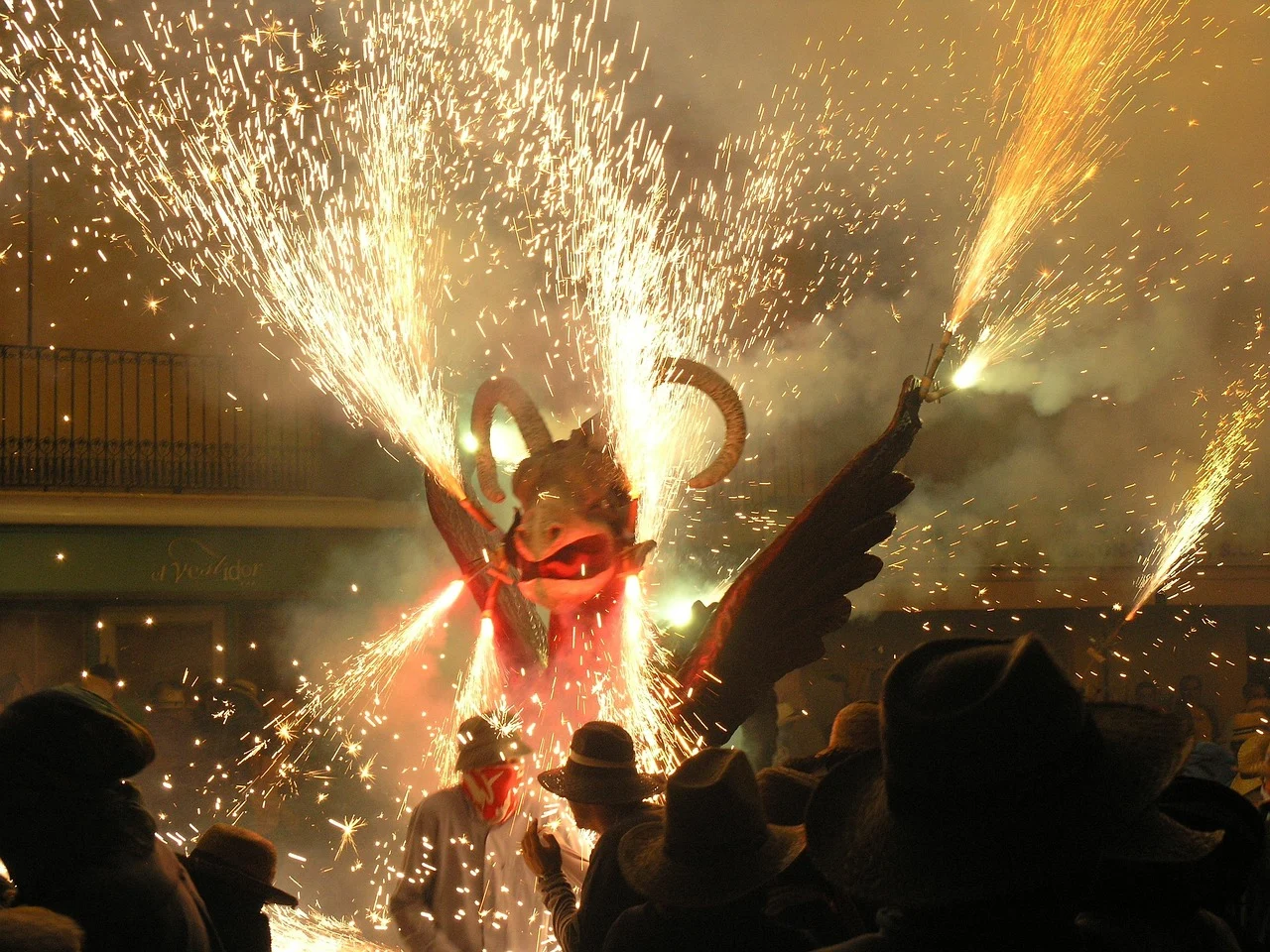
📝 Caption: Festive parades with pyrotechnics and elaborate floats create a dramatic atmosphere at night.
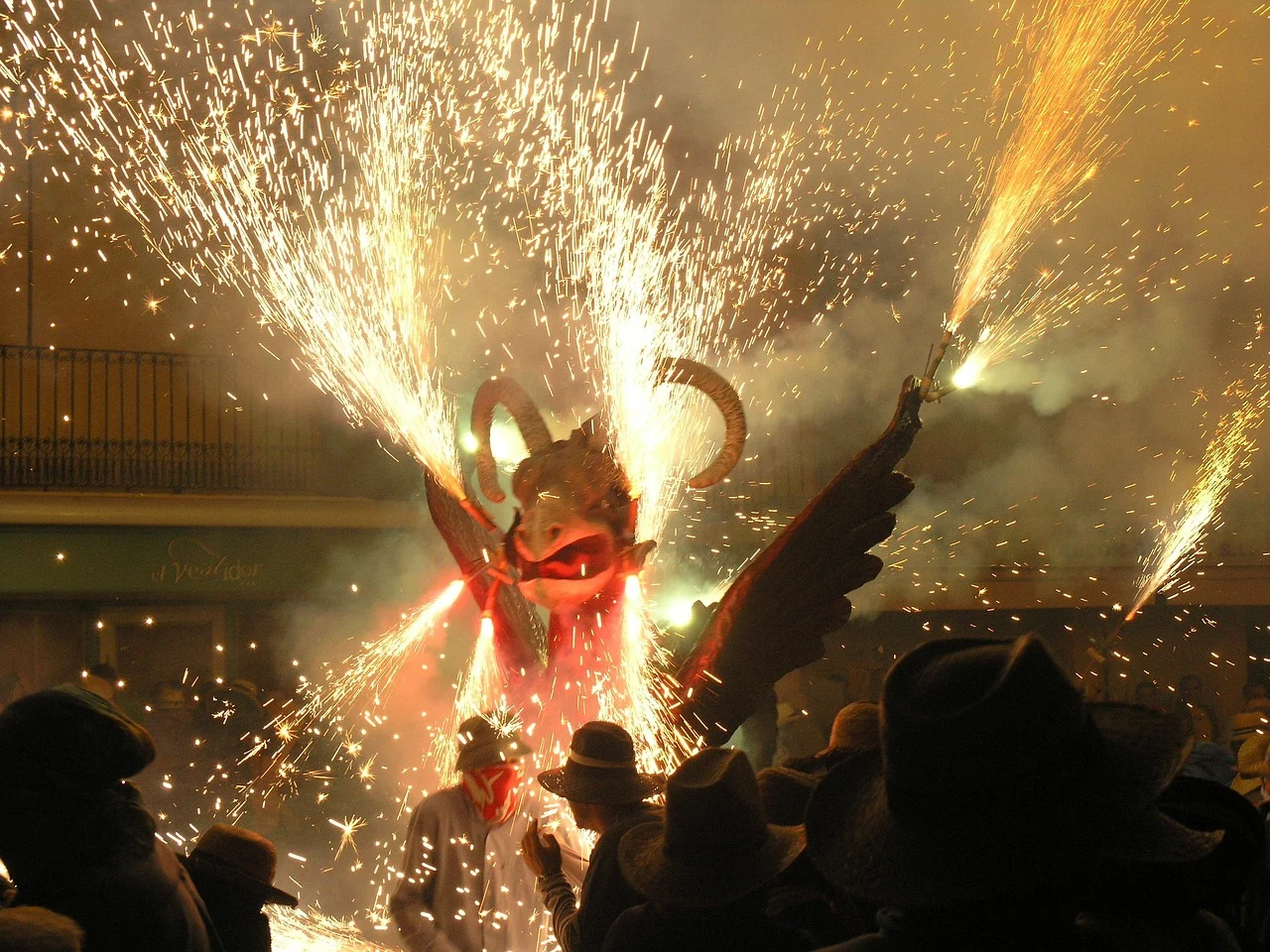
As the sun sets, the festival takes a fiery turn with the Correfoc (fire run). While potentially intimidating to first-timers, the "Drac" (dragon) and other beast figures dancing amidst sparks and fireworks are mesmerizing. For the Santa Eulàlia festival, there is often a designated children's Correfoc, which is slightly tamer than the adult version but still spectacular. If you plan to watch from the front lines, remember to wear cotton clothing (no synthetic fabrics) and protect your eyes from the flying sparks.