Rome’s Parks and Gardens: A Guide to the City’s Green Spaces
Did you know that Rome is one of Europe’s greenest capitals? While the Eternal City is rightly celebrated for its ancient heart, picturesque cobblestone streets, grandiose baroque fountains and lively piazzas, beyond the famous monuments and bustling hotspots lies another side of the Eternal City — Rome that is greener, quieter, and unexpectedly spacious. Here, grand aristocratic villa gardens stretch beneath umbrella pines, panoramic hilltops open onto sweeping views, and ancient roads wind through wildflower-filled meadows dotted with crumbling tombs. From the manicured elegance of Villa Borghese to the fragrant rose and citrus gardens of the Aventine Hill; from the breathtaking terraces of Gianicolo and Monte Mario to the timeless, history-steeped paths of the Appia Antica Regional Park, Rome reveals a softer, more relaxed rhythm of local life, where history escapes the confines of museum walls — it rises from the grass beneath your feet, frames the horizon at sunset, and lines the paths where Romans jog, picnic and gather with family.
history • culture • practical-tips • 7 Min. Lesezeit
Whether you’re seeking a scenic stroll through history, some outdoor activities, or a peaceful spot for a picnic, these parks and gardens deserve a place in your itinerary. Let’s explore together Rome beyond the crowds and reconnect with nature!
Villa Borghese
Villa Borghese is one of Rome’s most beloved parks, located just north of the historic centre. It takes its name from the stunning Renaissance villa that houses the Galleria Borghese, home to masterpieces by artists like Bernini, Caravaggio and Canova. Beyond this renowned museum, the park also features lesser-known but worthwhile attractions, including the Pietro Canonica House Museum, with its 19th- and 20th-century sculptures, and the Carlo Bilotti Museum, focused on modern and contemporary art.
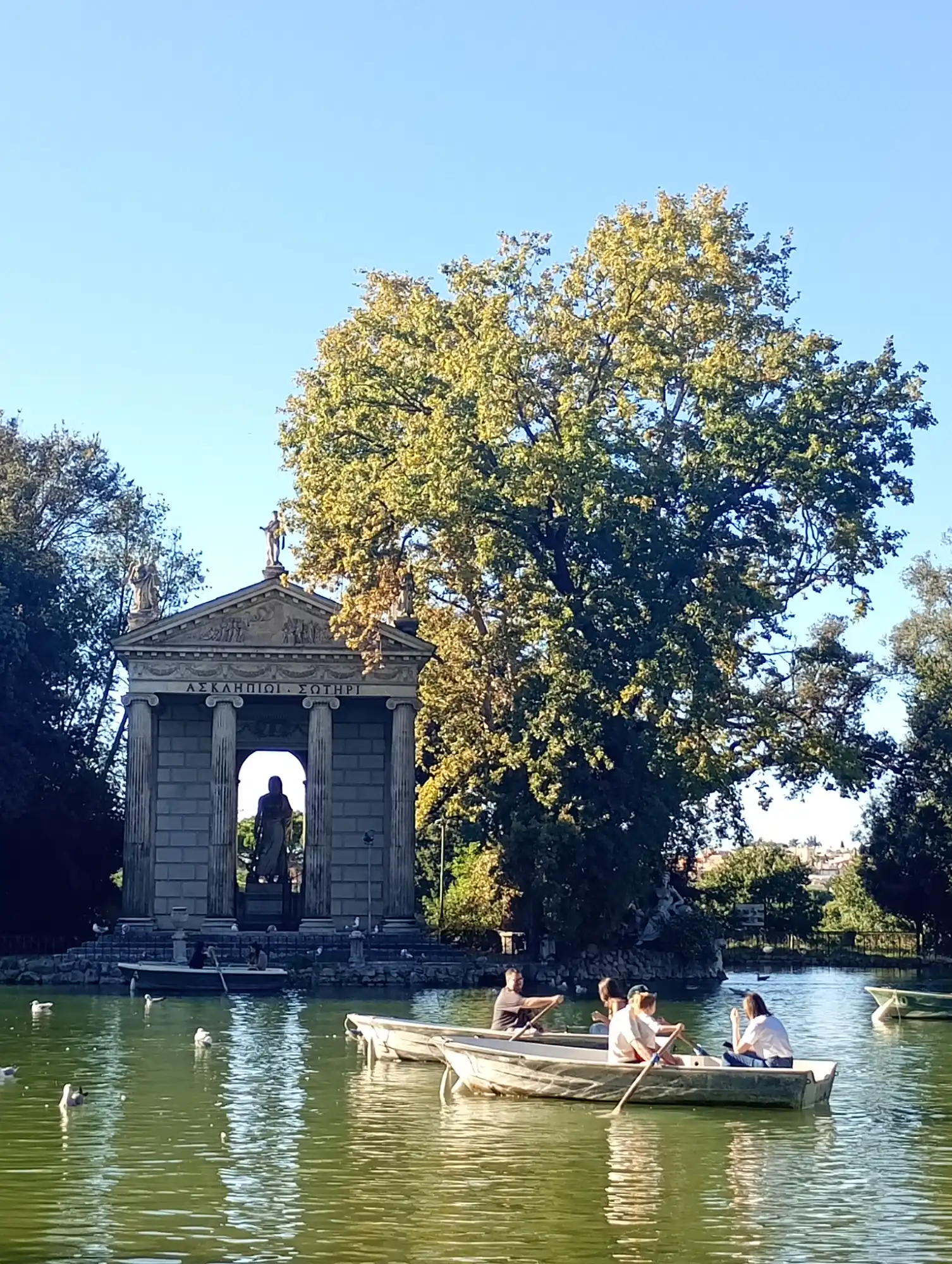
The park offers plenty of recreational opportunities: visitors can rent bikes, quadricycles, or roller skates, or take a boat out on the lake, where the picturesque Temple of Aesculapius stands at its centre. Throughout the year, Villa Borghese hosts major public events such as sports competitions, fairs, markets, and open-air summer cinemas. As Rome’s most popular park, it is especially lively on weekends, when Italian families and picnickers fill its paths and lawns.
Don't forget to join us on our Sunset Tour to discover the history and stories behind this beloved park while taking in breathtaking views over the Roman rooftops during the golden hour!
--> Other "villa" parks of Rome: If Villa Borghese feels too busy, Rome has several other beautiful parks that offer more space and a quieter atmosphere. These parks were once the private estates of powerful Roman noble families, which is why they still bear the family names today: Villa Ada Savoia, Villa Torlonia, and Villa Doria Pamphilj are all excellent alternatives—each with its own character and history. At Villa Torlonia, you can explore a complex of four Torlonia museums set within the former estate, as well as the underground bunker of Benito Mussolini, a fascinating site for those interested in World War II history. Villa Doria Pamphilj, Rome’s largest landscaped park, is perfect for long, scenic walks. Wander through the former villa grounds dotted with fountains and statues that create a slightly decadent, romantic atmosphere—even though the main villa building itself is not open to visitors. Villa Ada is a vast green area where you can rent bicycles, go horseback riding, or even paddle a canoe on the artificial lake.
Aventine Hill
Perched above the Tiber, the Aventine Hill is one of the centre city's most peaceful and atmospheric corners—a place where gardens, monasteries, and sweeping views replace the bustle of the city below. In spring, don’t miss the Roseto Comunale (Rome’s public rose garden), open from mid-April to mid-June, when thousands of roses bloom against the backdrop of the Palatine Hill and Circus Maximus. Just a short stroll away lies the beloved Giardino degli Aranci (Orange Garden), a serene park fragrant with citrus trees and home to one of the most beautiful panoramic terraces in Rome. A few steps further, a small crowd usually gathers at the famous Aventine Keyhole on the gate of the Priory of the Knights of Malta. Peek through it for a perfectly framed view of St. Peter’s Basilica dome, aligned with a quiet, hedge-lined avenue—one of Rome’s most delightful visual surprises! Book your place to learn more about the Aventine Hill and have a relaxed morning walk through its lush gardens with us on our Taste and Traditions of Rome-tour!
Gianicolo Hill
Rising above Trastevere, Gianicolo Hill (Janiculum Hill) offers some of the most breathtaking views in Rome—without actually being one of the city’s seven historic hills. The highlight is the panoramic terrace at Piazzale Giuseppe Garibaldi. Just below the terrace stands the monumental Fontana dell’Acqua Paola, a grand 17th-century fountain whose cascading waters and marble façade create one of the city’s most cinematic backdrops—and another spectacular viewpoint. Nearby, tucked within the courtyard of San Pietro in Montorio, the Tempietto di Bramante stands as a true hidden gem of Renaissance architecture—an elegant, perfectly proportioned masterpiece that quietly embodies the harmony and ideals of the High Renaissance. History enthusiasts can visit the small but engaging Museum of Garibaldi, dedicated to the hero of Italian unification—admission is free. At the foot of the hill, nature enthusiasts can wander the Orto Botanico di Roma, a lush oasis of bamboo groves, palm trees, medicinal plants, and rose gardens, which also houses the whimsical Casa delle Farfalle (Butterfly House), where vibrant tropical butterflies flutter freely in a greenhouse setting.
Appia Antica Regional Park
Southeast of the city centre of Rome stretches some of the city’s most beautiful and unexpected green spaces. Parks such as Parco della Caffarella, Appia Antica, and Parco degli Acquedotti form a vast, interconnected landscape of meadows and archaeological remains, where nature and history blend seamlessly. Via Appia, or the Appian Way, is one of Rome’s oldest and most famous ancient roads, originally built in 312 BC to connect the city with the southern Italian town of Brundisium (modern Brindisi). Even some traces of ancient chariot wheels are still visible on the original pavement! Today, much of Via Appia runs through the Appia Antica Regional Park, one of the largest green areas in Rome and along the way, visitors can explore a remarkable concentration of archaeological sites. Among the most visited are the underground catacombs of San Callisto and San Sebastiano, which reveal early Christian burial networks carved beneath the road. As the proud landmark of the road rises the Mausoleum of Cecilia Metella, a massive circular tomb of a Roman noblewoman, which was later in the Middle-Ages turned into the Caetani family’s fortress. Nearby, the ruins of Villa Massenzio extend across the park, including the remains of an imperial palace, circus, and mausoleum, while further along the route, the vast Villa dei Quintili offers a glimpse into the grandeur of an ancient Roman country estate with sweeping views of the surrounding countryside. The area also connects to the Parco degli Acquedotti, where monumental Roman aqueducts stride across grassy plains, making this part of Rome a popular destination for walking, cycling, and picnicking—a peaceful outdoor escape layered with history.
Pro tip: On the first Sunday of each month, all the archaeological sites and monuments along the Via Appia are open to the public for free (except the catacombs). It’s an especially great option if you want to skip the long queues and crowds of central Rome’s museums and instead spend a relaxed day exploring ancient ruins surrounded by peaceful countryside. Spring is an ideal time to visit, before the summer heat sets in, when the fields are lush and dotted with colourful wildflowers.
Monte Mario
Monte Mario, Rome’s highest hill at 139 meters, offers one of the city’s most accessible and scenic hiking experiences. The main trail begins near Via Trionfale or Via della Pineta Sacchetti and gradually winds through pine forests, oak groves, and open grassy areas, providing a peaceful escape from the urban bustle. Along the way, small terraces and viewpoints offer sweeping panoramas of Rome. The trail is mostly easy to moderate, suitable for walkers and light hikers, and can be completed in one to two hours depending on your pace. For nature lovers, the path is dotted with information about local flora and birdlife. At the summit, a viewing platform offers a 360-degree perspective of Rome—one of the best spots in the city for sunrise or sunset photography!
In a city where every stone tells a story, Rome’s parks and hills offer something truly special: space to breathe. Whether you’re drawn to the refined elegance of Villa Borghese, the romantic stillness of the Aventine, the golden panoramas from Gianicolo, the timeworn stones of the Appian Way, or the wide-open vistas of Monte Mario, you’ll soon realise that these green spaces are far more than parks—they are living chapters of the city’s story. So slow down, step off the beaten path, and experience Rome the way locals do. At Walkative, we hope these tips inspire you to slow down, wander further, and craft an unforgettable, refreshingly relaxed journey through Rome’s most beautiful green escapes!