The Jack the Ripper Obsession
More than a century after the Whitechapel murders, Jack the Ripper remains one of the most recognisable names in history. But how did a local criminal investigation become a global obsession?
Tours • 10 min. read
Last edited:
Content warning: This article discusses the Whitechapel murders of 1888. While it avoids graphic descriptions, it contains references to violence, poverty, alcoholism and the difficult circumstances faced by many women in Victorian London.
Why Are We Still Obsessed with Jack the Ripper?
New for 2026, our Jack the Ripper Tour: The Women of Whitechapel explores not only the murders of 1888, but how those murders became one of the modern world’s most enduring cultural phenomena.
The murders most commonly associated with Jack the Ripper took place over just ten weeks, between 31 August and 9 November 1888. Yet nearly 140 years later, the name remains instantly recognisable around the world. Books, films, podcasts, documentaries and guided tours continue to revisit the case, while historians, journalists, forensic scientists and amateur detectives still debate the identity of the killer.
Yet perhaps the most interesting question is not who Jack the Ripper was. It is why we are still talking about him at all.
The Forgotten Murders of Ratcliffe Highway
In December 1811, two households on Ratcliffe Highway (now part of The Highway in Wapping) were brutally attacked. Seven people were murdered, including men, women and children. The killings horrified London. A suspect, John Williams, was arrested but died before trial. At the time, the Ratcliffe Highway murders were among the most notorious crimes in British history.
Today, relatively few people have heard of them. By contrast, almost everyone has heard of Jack the Ripper—even people who have never been to London before.
The difference cannot be explained by the scale of the crimes. The Ratcliffe Highway murders claimed more victims than the five women most commonly associated with Jack the Ripper, and contemporary observers regarded both cases as shocking and unprecedented.
Part of the answer lies in the changing world of nineteenth-century Britain. Between 1811 and 1888, literacy increased dramatically, newspapers became cheaper and more widely available, and urban populations grew. By 1888, London supported around fifteen daily newspapers competing fiercely for readers. Crime reporting was no longer confined to court records and pamphlets; it had become mass entertainment.
The Whitechapel murders occurred at precisely the moment when modern media was emerging.
Looking East: Poverty as Spectacle
The murders also took place in a part of London that already fascinated many Victorians.
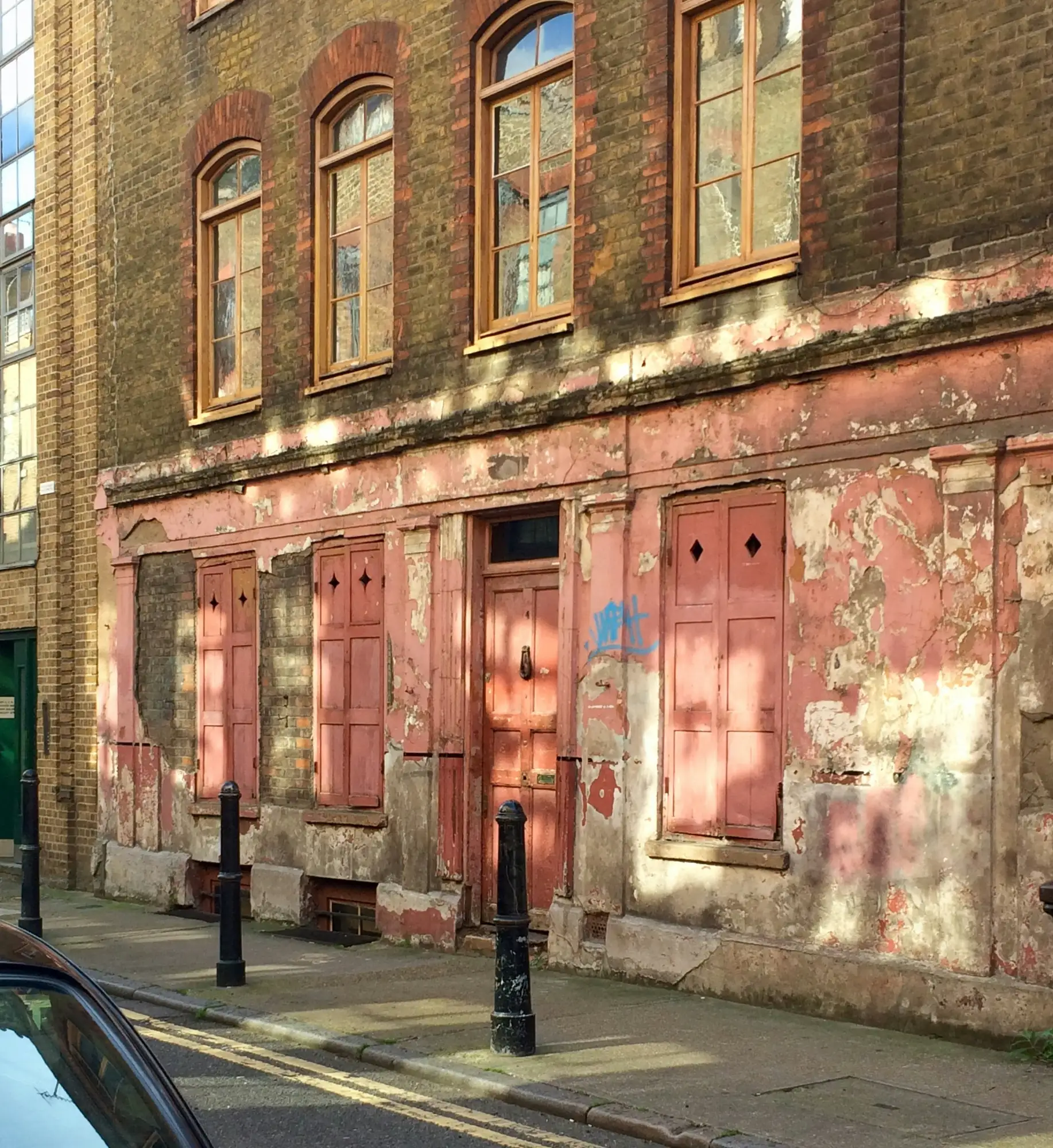
In 1888, London was the richest city in the world, the capital of a global empire and home to extraordinary wealth. Yet that wealth was unevenly distributed. While the West End benefited from planned development and investment, much of the East End grew rapidly and haphazardly, becoming associated in the public imagination with poverty, overcrowding and vice.
The East End was also far more diverse than many modern visitors realise. Huguenot silk weavers, Irish labourers and Jewish refugees had all left their mark on the area. Between 1881 and 1914 alone, London’s Jewish population increased by approximately 100,000 people, many settling in Whitechapel and Spitalfields.
The district’s population was also remarkably transient. Whitechapel contained around 231 common lodging houses accommodating approximately 8,300 people. Many residents lived from day to day, paying for a bed one night at a time. One lodging house on Flower and Dean Street had space for around 100 residents. These conditions attracted increasing attention from journalists, social reformers and curious visitors from wealthier parts of London.
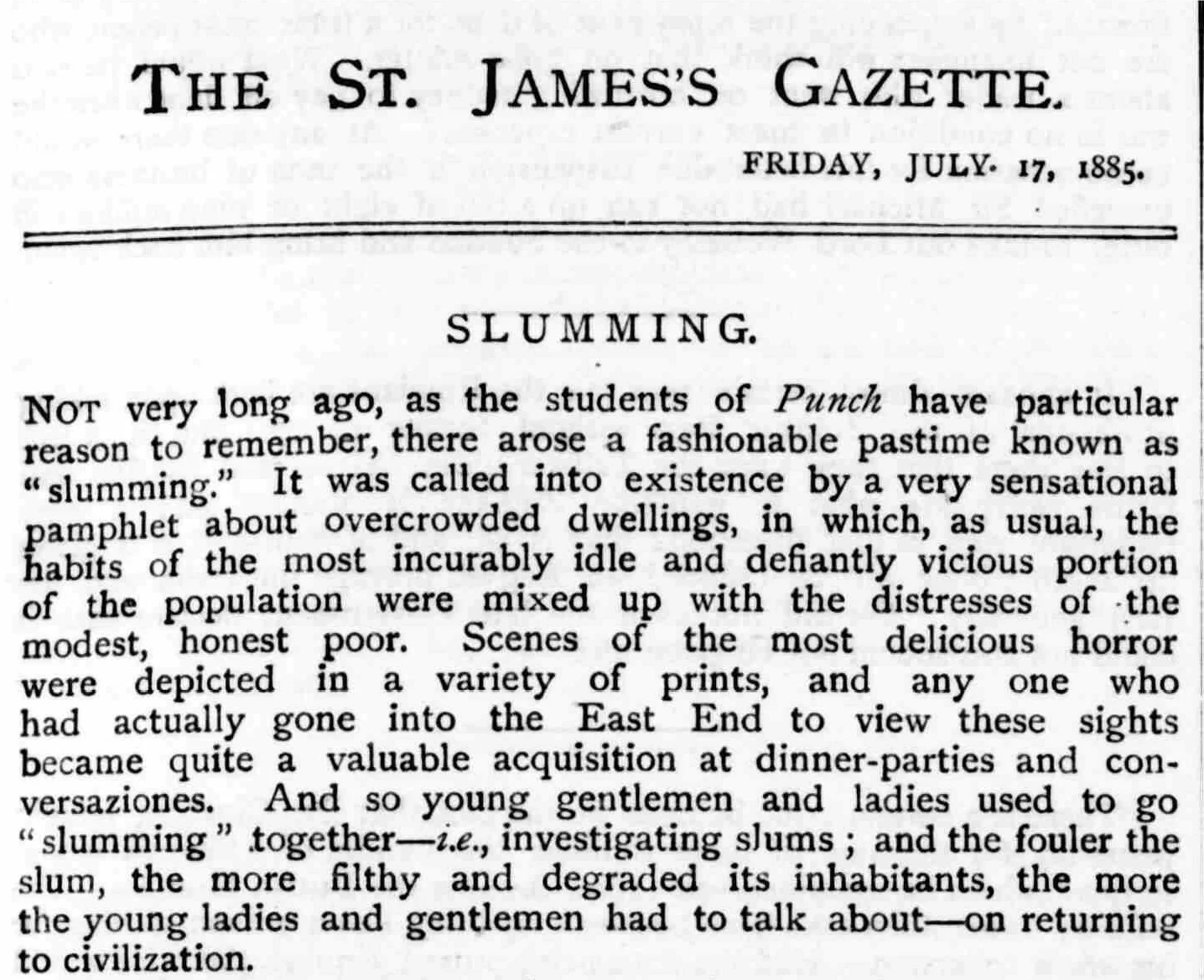
A phenomenon known as “slumming” became fashionable. Visitors travelled east to observe conditions for themselves. Some were motivated by philanthropy and social reform, others by curiosity, and some treated the experience as a form of entertainment. Contemporary accounts describe visitors walking the streets of Whitechapel, observing lodging houses and markets, and even paying for rooms overlooking busy streets so they could watch local life unfold below.
Long before the murders, then, the East End was already being consumed as a spectacle. The Whitechapel murders intensified that fascination. Even while the killings were ongoing, visitors travelled to Whitechapel to see murder sites. Publishers rushed out pamphlets and books. A peep-show featuring waxworks of the victims reportedly operated in the area. The foundations of modern true crime tourism were already being laid.
Jack the Ripper Named Himself… Or Did He?
One of the strangest facts about the case is that the killer probably never called himself Jack the Ripper.
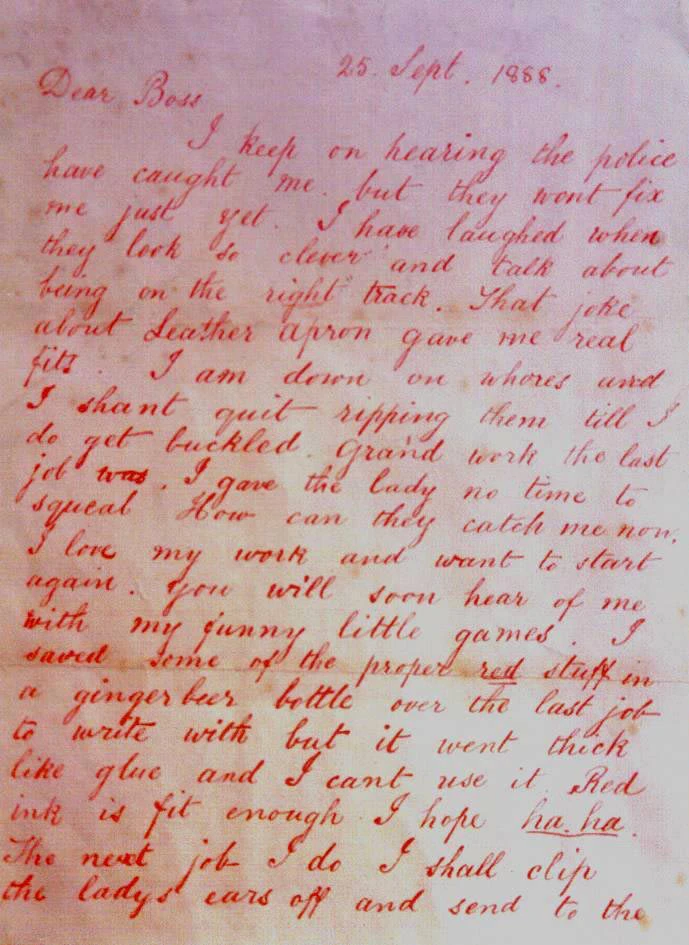
Following the murders of Polly Nichols and Annie Chapman, public anxiety increased significantly. Newspapers competed aggressively for exclusive information and sensational details. On 27 September 1888, a letter was sent to the Central News Agency. The letter, now known as the “Dear Boss” letter, was signed:
“Yours truly, Jack the Ripper.”
It was the first recorded use of the name. The police made the letter public in the hope that it might generate useful leads. Soon afterwards, another communication known as the “Saucy Jacky” postcard appeared. The effect was enormous. For the first time, the murderer had a memorable identity. He was no longer an unknown killer operating in Whitechapel but “Jack the Ripper”, a name that would soon become famous across Britain and eventually across the world.
There is strong reason to believe the letter was a hoax. In 1931, journalists Frederick Best and Tom Bullen claimed responsibility for creating the correspondence as a publicity stunt designed to keep the story in the newspapers. Whether or not that confession tells the whole story, most historians regard the “Dear Boss” letter as unlikely to have been written by the killer.
Its importance, however, is undeniable. The letter transformed a criminal investigation into a narrative. It gave the public a villain, a name and a mythology.
If the “Dear Boss” letter helped create the legend, another letter deepened it. On 15 October 1888, George Lusk, chairman of the Whitechapel Vigilance Committee, received a package containing half a kidney together with a note beginning:
“From hell.”
Unlike the earlier letters, this communication was not sent to a newspaper. It was sent directly to a prominent figure involved in the investigation. The letter was shorter, cruder and more disturbing than the theatrical “Dear Boss” correspondence, and its authorship remains unknown.
Some historians believe it was another hoax. Others have suggested it may have been written by somebody with anatomical knowledge. No definitive conclusion has ever been reached. What matters is that thousands of people believed it might be genuine.
By this point, the murders had become more than a police investigation. Newspapers followed every development, rumours spread rapidly, amateur detectives proposed theories, and local residents organised patrols through the Whitechapel Vigilance Committee. Fear, speculation and media attention fed one another in a cycle that would feel familiar to anyone following a major criminal case today.
The Birth of Modern True Crime
By the autumn of 1888, something unusual had happened. The murders were no longer simply a criminal investigation. They had become a public drama involving newspapers, anonymous letters, amateur detectives, political pressure groups and thousands of ordinary Londoners following developments almost in real time.
Many of the ingredients that characterise modern true crime culture were already present: an unidentified perpetrator, a constant stream of rumours and theories, competing claims of insider knowledge, sensational media coverage and widespread public participation. Most importantly, there was no resolution.
That absence of certainty is crucial to understanding why the case endured. Most murders eventually move from headlines into history. An arrest is made, a trial takes place, and public attention shifts elsewhere. The Whitechapel murders never received that ending. The killer was never identified, nobody was convicted, and the mystery remained open.
It is difficult not to see echoes of the Whitechapel murders in modern true crime culture. The same ingredients that fuelled Victorian newspaper coverage continue to drive public fascination today. From bestselling books and podcasts to documentary series such as The Staircase, audiences remain captivated by cases that resist a definitive conclusion and hold out the possibility that a mystery might yet be solved.
Ripperology and the Search for a Solution
Today, the study of the murders is often referred to as “Ripperology”. Thousands of articles and books have been written about possible suspects. More than one hundred non-fiction books have been published on the case alone, alongside at least twenty-five notable film adaptations dating back to the silent era.
The search for Jack the Ripper has, in many ways, become a story in its own right. In 2002, bestselling crime novelist Patricia Cornwell published Portrait of a Killer: Jack the Ripper—Case Closed, arguing that the artist Walter Sickert was responsible for the murders. Cornwell reportedly spent millions of dollars acquiring artworks, commissioning forensic analysis and pursuing evidence in support of her theory. Her conclusions remain controversial, but the episode illustrates the extraordinary lengths people continue to go to in pursuit of the killer’s identity.
Nor has the search ended. As recently as 2025, headlines around the world reported claims that DNA evidence from a disputed shawl had finally identified the killer as Aaron Kosminski, a long-standing suspect. Similar announcements have appeared repeatedly over the past century. Yet no suspect has ever achieved anything close to scholarly consensus, and significant questions remain about the provenance of the shawl and the interpretation of the DNA evidence. The persistence of these claims demonstrates that the public appetite for a solution remains as strong as ever.
Beyond the Killer
In recent years, however, historians have increasingly shifted their attention away from suspects and towards the women themselves.
Research by writers such as Hallie Rubenhold has helped recover lives that were long overshadowed by speculation about the killer. Polly Nichols, Annie Chapman, Elizabeth Stride, Catherine Eddowes and Mary Jane Kelly were not simply victims in a murder mystery. They were daughters, wives, mothers, workers and migrants whose experiences reveal much about poverty, housing, work, welfare and social attitudes in Victorian Britain.
This shift has also challenged some of the most persistent assumptions about the case. None of the canonical five were born in Whitechapel, and only one—Mary Jane Kelly—can confidently be identified as a sex worker. Yet popular memory has often reduced all five women to stereotypes that do not stand up well to historical scrutiny.
Why is the name “Jack the Ripper” recognised across the world, while the names of the women he killed remain far less familiar? The answer lies partly in the enduring appeal of mystery, but also in the way the murders were reported, marketed and remembered. For more than a century, public attention has often centred on the identity of the killer.
More recently, historians have begun to ask different questions. We hope our tour is part of that shift. Rather than treating the women as footnotes in the story of a famous murderer, we place their lives at the centre of the narrative. The aim is not simply to revisit the circumstances of their deaths, but to understand the families they belonged to, the work they did, the communities they moved through and the social forces that shaped their lives.
The story of Jack the Ripper is ultimately about more than an unidentified killer. It is a story about Victorian London, the East End, modern media, and five women whose lives were overshadowed for generations by one of history’s most enduring mysteries.

Written by
James Howard
James is a Londoner who has been guiding with Walkative! since 2024. With a background in literature, he specializes in London's past, particularly the old City of London and its medieval street layout. Outside of guiding, he is a musician whose original songs often explore local history.