
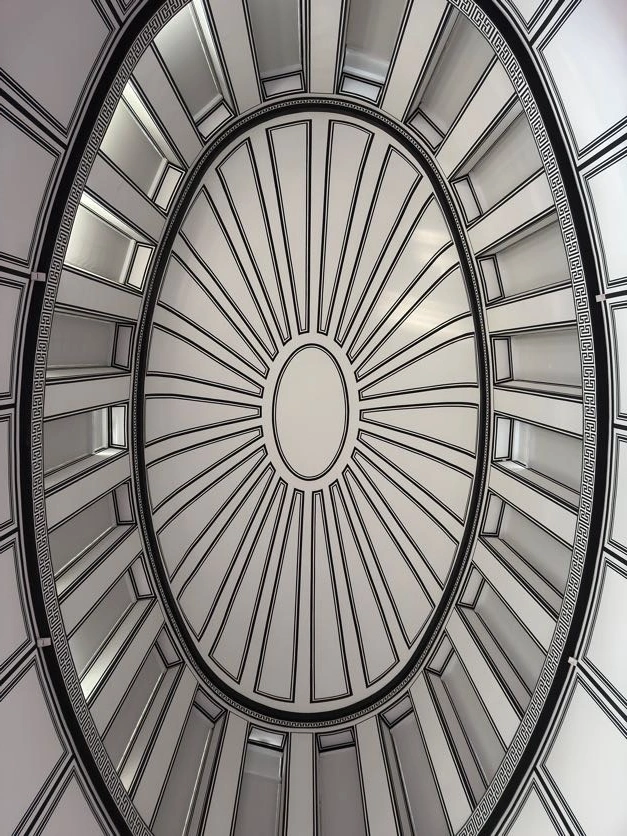
Der Vier-Kuppel-Pavillon: Museum für zeitgenössische Kunst in Wrocław
Der 1912 vom Architekten Hans Poelzig entworfene Vier-Kuppel-Pavillon steht als markantes Bauwerk der Moderne nur wenige Schritte von der Jahrhunderthalle entfernt. Heute beherbergen die lichtdurchfluteten Innenräume die Abteilung für zeitgenössische Kunst des Nationalmuseums in Wrocław. Die Sammlung dokumentiert eine komplexe Ära polnischer Kreativität und stellt den staatlich verordneten sozialistischen Realismus dem hochindividuellen Ausdruck von Nachkriegskünstlern gegenüber.
Culture • Practical Tips • History • Tours • Newsletter • 4 Min. Lesezeit
Zuletzt bearbeitet:
Breslau ist berühmt für seine historische Altstadt, aber auch die moderne Kulturszene ist absolut sehenswert. Wenn wir verstehen wollen, wie das turbulente 20. Jahrhundert die polnische Kunst geprägt hat, sind wir im Museum für zeitgenössische Kunst genau richtig. In einem außergewöhnlichen Gebäude entdecken wir die Entwicklung der modernen Kunst in Polen - von der harten Nachkriegsrealität bis zur individuellen Avantgarde.
Der Vier-Kuppel-Pavillon: Breslaus Zentrum für zeitgenössische Kunst
Als Teil des Nationalmuseums Breslau beherbergt der Vier-Kuppel-Pavillon eine der wichtigsten Sammlungen moderner polnischer Kunst im ganzen Land. Hier entdecken wir die vielschichtigen Geschichten und Medien, die das künstlerische Schaffen Polens im letzten Jahrhundert bestimmt haben. Mit seiner spannenden Mischung aus Gemälden, Skulpturen und Rauminstallationen ist der Pavillon ein echtes kulturelles Highlight. Er spiegelt die gesellschaftlichen und politischen Veränderungen des Landes eindrucksvoll wider.
Die einzigartige Architektur des Pavillons
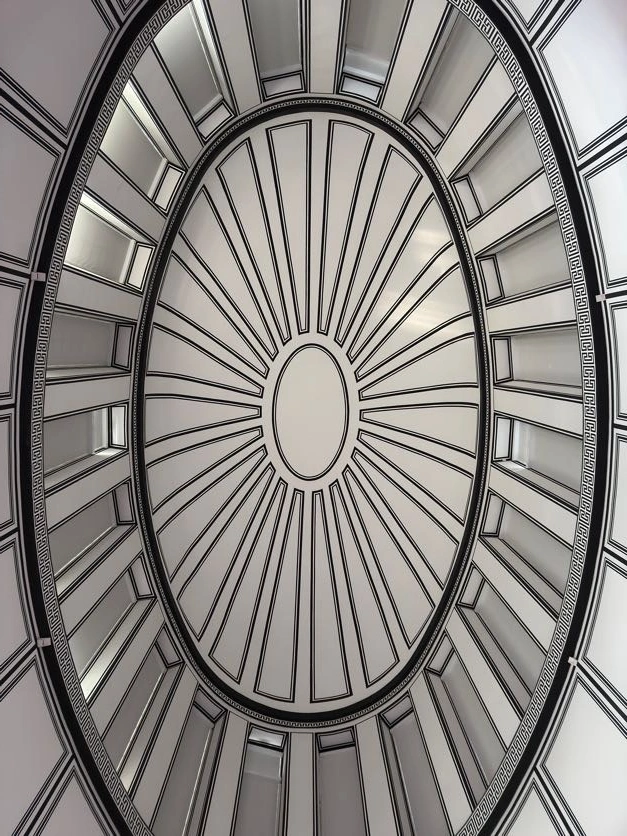
Auch das Gebäude selbst ist ein Meisterwerk der frühen Moderne. Der bekannte Architekt Hans Poelzig entwarf den Vier-Kuppel-Pavillon, der 1912 als Ausstellungsgebäude eröffnet wurde. Nach einer aufwendigen und behutsamen Restaurierung erstrahlen die Räume heute in neuem Glanz und bieten den perfekten Rahmen für eine moderne Kunstgalerie.
Das Design besticht durch einen beeindruckenden Innenhof und - getreu dem Namen - vier markante Kuppeln, die das Innere mit natürlichem Licht durchfluten. Diese durchdachte Architektur schafft einen großzügigen, neutralen Hintergrund. So stehen die Kunstwerke im Mittelpunkt, ohne mit dem historischen Charakter des Gebäudes zu konkurrieren.
Die polnische Kunst der Nachkriegszeit verstehen
Die Sammlung des Museums zeigt uns eindrucksvoll, wie polnische Künstler die schwierige Nachkriegszeit meisterten. Nach dem Zweiten Weltkrieg standen sie unter enormem Druck: Sie sollten sich dem Sozialistischen Realismus anpassen. Dieser staatlich verordnete Stil hatte nur ein Ziel - kommunistische Ideale zu fördern und die Arbeiterklasse zu verherrlichen. Ein Paradebeispiel dafür sehen wir in der Ausstellung: Aleksander Kobzdejs Gemälde Podaj cegłę (Reich mir einen Ziegel). Es zeigt ganz plakativ Arbeiter, die gemeinsam das Land wieder aufbauen.
Doch die polnischen Künstler suchten schnell nach Wegen, ihre Individualität zu bewahren und Widerstand zu leisten. Später nutzten die Menschen oft Humor und Absurdität, um der Zensur zu trotzen - eine faszinierende Geschichte, über die wir auch auf unserer Tour zu Breslaus Zwergen und dem Kommunismus sprechen. Ganz ähnlich wehrten sich viele Nachkriegskünstler mit Abstraktion, Metaphern und unkonventionellen Materialien gegen die strengen staatlichen Vorgaben.
Bedeutende polnische Künstler: Abakanowicz, Szapocznikow und Dwurnik
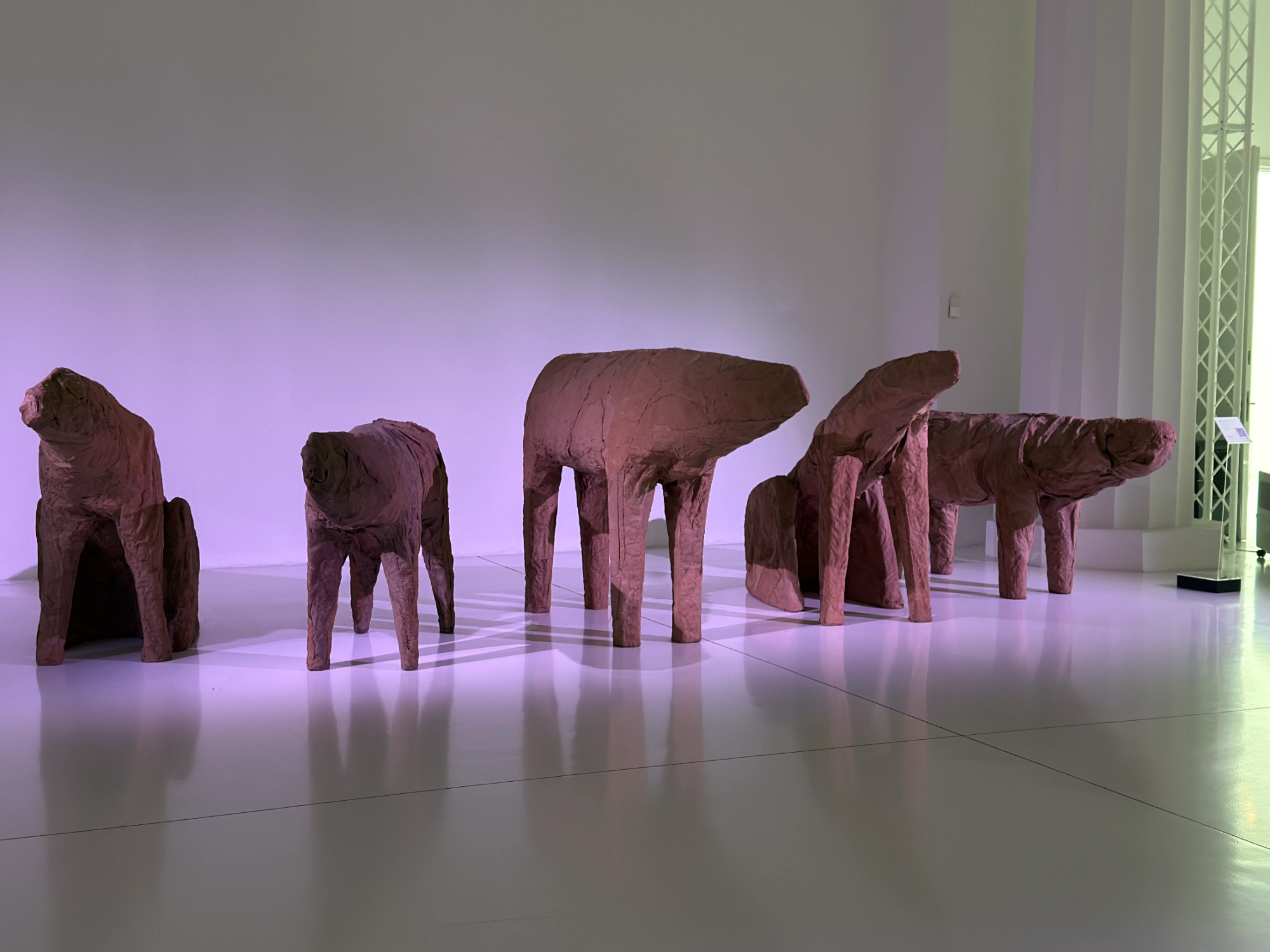
Trotz der anfänglichen Einschränkungen prägten polnische Künstler die internationale zeitgenössische Kunst entscheidend mit. Wir sehen hier zum Beispiel Werke von Magdalena Abakanowicz. Sie revolutionierte die Textilkunst mit ihren riesigen, gewebten Skulpturen, den sogenannten "Abakanen". Darin verarbeitete sie Themen wie menschliche Verletzlichkeit und die Anonymität der Masse. Alina Szapocznikow wählte einen sehr persönlichen Ansatz für ihre Bildhauerei: Sie experimentierte mit Polyester und Polyurethan, um Abdrücke ihres eigenen Körpers zu schaffen. So hinterließ sie uns ein tiefgründiges Zeugnis über Erinnerung und körperliche Zerbrechlichkeit.
Edward Dwurnik wiederum hielt den chaotischen Alltag in Polens Städten und Dörfern fest. Seine detailreichen, oft leicht surrealen Gemälde dokumentieren über Jahrzehnte hinweg den gesellschaftlichen Wandel und die alltäglichen Absurditäten des polnischen Lebens. Gemeinsam zeigen uns diese Künstler, wie unglaublich vielfältig und widerstandsfähig die moderne polnische Kunstszene war und ist.
Praktische Tipps für Ihren Besuch
Der Vier-Kuppel-Pavillon liegt im Osten von Wrocław, direkt neben der berühmten Jahrhunderthalle und dem Multimedia-Brunnen. Vom Zentrum aus erreichen Sie ihn ganz bequem mit Bus oder Straßenbahn. Schauen Sie vor Ihrem Besuch am besten kurz auf die Website des Nationalmuseums - die Öffnungszeiten ändern sich je nach Jahreszeit.
Tickets bekommen Sie direkt vor Ort oder vorab online. Wenn Sie den Tag in der Gegend verbringen, verbinden Sie das Museum am besten mit einem Spaziergang durch den benachbarten Szczytnicki-Park. Danach können Sie in der Altstadt entspannen und die lokale Braukultur kennenlernen - eine Craft-Bier-Tour ist der perfekte Abschluss für Ihren Tag.
Der Vier-Kuppel-Pavillon ist weit mehr als eine klassische Kunstgalerie. Er ist wie eine visuelle Zeitreise durch Polen. Die Ausstellung zeigt eindrucksvoll, wie das Land in Zeiten politischer und sozialer Umbrüche seine eigene Stimme fand. Egal, ob Sie Kunst lieben oder Polen einfach besser verstehen wollen: Hier bekommen Sie einen faszinierenden Einblick in die moderne polnische Identität.
Verwandte Geschichten
Culture • History • 10 Min. Lesezeit
Alle 16 UNESCO-Welterbestätten in Polen. Teil 1: Burgen, Städte und Wälder
Entdecken Sie Polens UNESCO-Welterbestätten: vom riesigen mittelalterlichen Marktplatz in Krakau über die Salzminen aus dem 13. Jahrhundert bis zum Urwald von Białowieża.
Culture • History • 9 Min. Lesezeit
Alle 16 UNESCO-Welterbestätten in Polen. Teil 2: Bergwerke, Parks und Holzarchitektur
Polens UNESCO-Welterbe entdecken: Salzbergwerk Wieliczka, Białowieża-Urwald, Holzkirchen und mehr - Teil 2: Bergwerke, Parks und Kulturerbe.
Practical Tips • History • 3 Min. Lesezeit
Wie kommt man in Wrocław herum?
Breslau wie ein Local erleben. Alles Wissenswerte über Straßenbahnen, Busse und den Nahverkehr in der Stadt der Zwerge.
Practical Tips • 4 Min. Lesezeit
Anreise nach Breslau
Planen Sie eine Reise nach Breslau? Wir zeigen Ihnen die besten Verbindungen mit Flugzeug, Bahn und Bus aus verschiedenen polnischen Städten.
Culture • History • 2 Min. Lesezeit
Pablo Picasso in Breslau
Entdecken Sie die Geschichte von Pablo Picasso in Breslau. Unsere Guides erzählen Ihnen, was den berühmten Künstler mit dieser Stadt verbindet.
Entdecke mit Walkative!



Unsere Städte
57Die besten kostenlosen und bezahlten Walking‑Touren
Unternehmen

Rechtliches