Pablo Picasso in Wrocław
Learn about Pablo Picasso in Wrocław. Discover the artist's historical connection to the city with factual insights from Walkative guides.
Culture • History • 2 min. read
To come to Wrocław for the World Congress of Intellectuals in August 1948, Pablo Picasso boarded a plane for the first time in his life. When he got off at the Wrocław airport, he already knew where cubism came from: "from aviation," he said, "because everything is square from above."
Creme de la creme of left-wing intellectuals from all over the world came to Wrocław for the great "party" of Polish and Soviet communists.
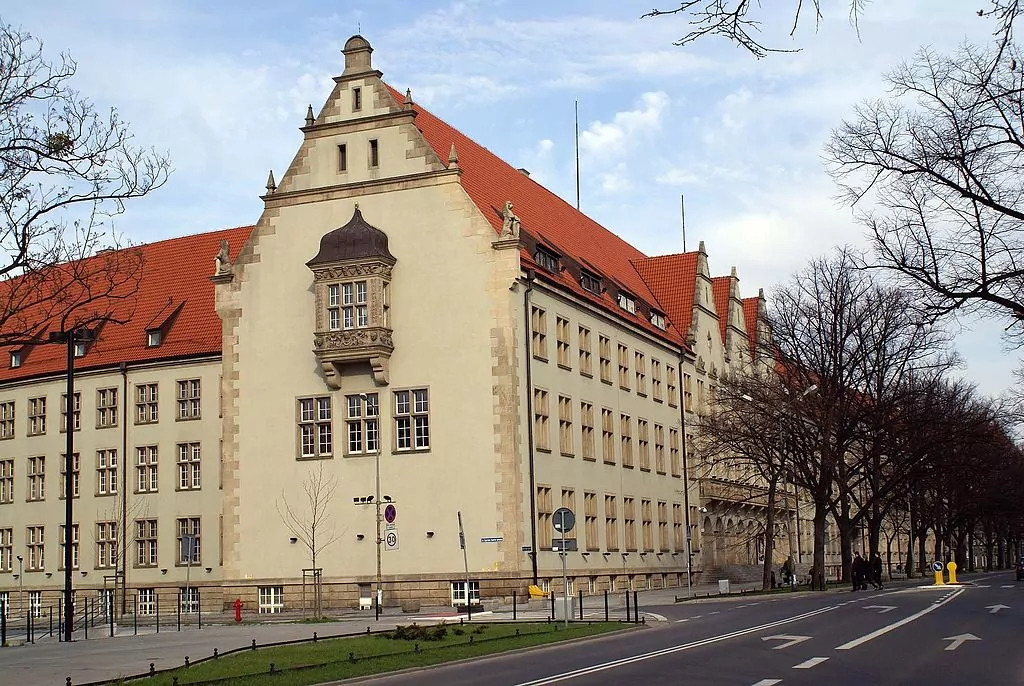
The Congress was held on August 25-26, 1948 in the Lecture Hall of the Polytechnic. Almost 400 delegates from nearly 50 countries took part in it. The propaganda goal of the Congress was to convince the public opinion that communist countries are supporters of peace, and the West - its threats. During the Congress, there was an open conflict between the Soviet delegation and Western intellectuals, some of whom left the assembly in protest.
The Congress was attended by, among others Pablo Picasso, Irene Joliot-Curie, Julian Huxley, Salvatore Quasimodo, Paul Eluard, Bertolt Brecht. On the Soviet side, Alexander Fadeev, Ilya Ehrenburg, Mikhail Sholokhov. Among Polish intellectuals, there were: Jarosław Iwaszkiewicz, Maria Dąbrowska, Władysław Broniewski, Leon Kruczkowski, Zofia Nałkowska, Jan Parandowski, Julian Tuwim, Xawery Dunikowski and others. Albert Einstein sent his letter.
The Congress was part of another propaganda event, the Recovered Territories Exhibition. The organization of this exhibit in Wrocław had an unofficial goal - to show the world the Polishness of the Recovered Territories.
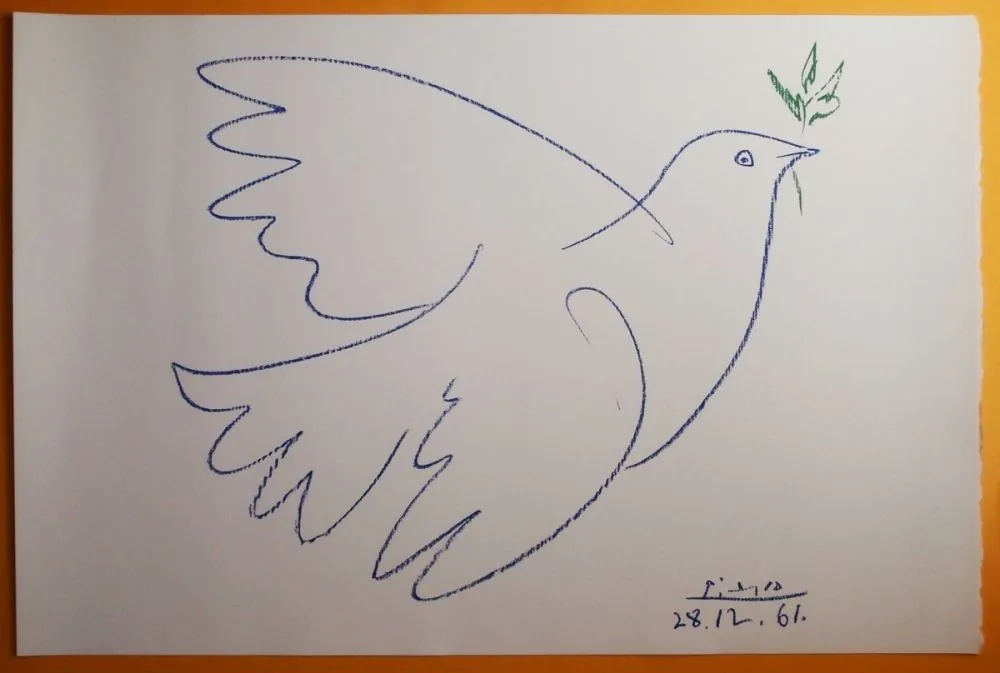
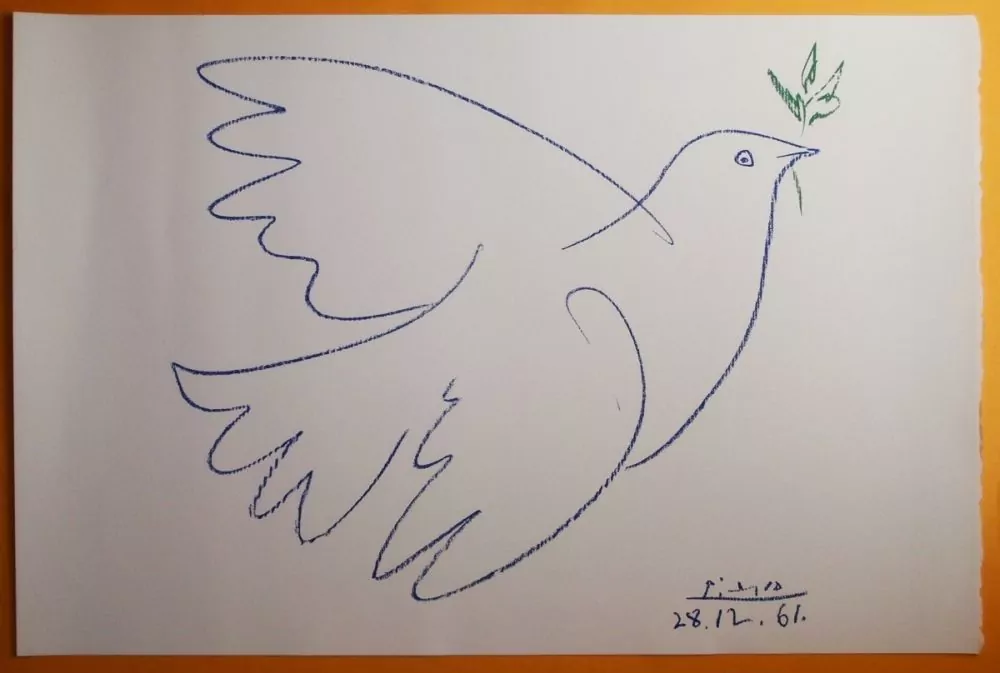
It was then that the famous drawing of the dove of peace was created. The work of Pablo Picasso was created at the café table of the famous Monopol Hotel.
Wojtek Fałkowski
photo 1. Dove of Peace - P. Picasso
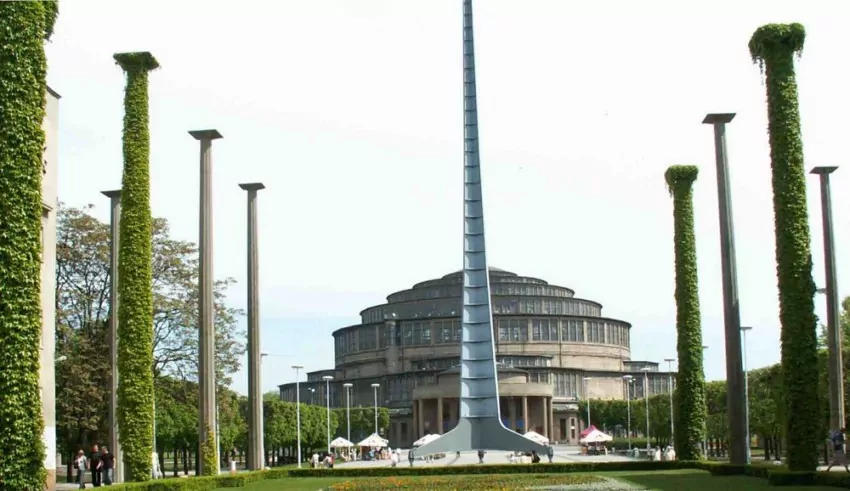
photo 2. The Spire and in the background the Centennial Hall, where the Recovered Territories Exhibition was held.
foto 3. The seat of the Wrocław University of Technology - place of the Congress. Contemporary view.
Related stories
Culture • History • 13 min. read
St Valentine’s Day and the most romantic spots in Berlin, Kraków, Wrocław, Gdańsk, Lviv and more!
Explore St. Valentine's 3rd-century origins, his relics in Poland, the history of love padlocks, and romantic spots like Berlin's Abbey Bridge.
Culture • Food • 11 min. read
Polish traditional food and cuisine – 29 things to try when visiting Poland.
Polish traditional food: 29 dishes to try in Poland, from pierogi and bigos to soups, sweets, and regional specialties. Selection by Walkative Guides!
Practical Tips • History • 7 min. read
8 best things to do in Poznań
Discover the 8 best things to do in Poznań, from the famous Mechanical Goats to the historic Old Town Square.
Culture • History • 12 min. read
All 16 UNESCO World Heritage Sites in Poland. Part 1: castles, towns and forests
Explore Poland's UNESCO sites: from Kraków's vast medieval square and 13th-century salt mines to the primeval Białowieża Forest.
Culture • History • 10 min. read
All 16 UNESCO World Heritage Sites in Poland. Part 2: mines, parks and wooden architecture
Explore Poland’s UNESCO sites: Wieliczka mine, Białowieża Forest, wooden churches, and more—Part 2 guide to mines, parks, heritage.