A Guide to Rome's Major Papal Basilicas and Historic Churches
Much of the finest art in Rome is not kept behind museum glass, but inside the chapels of active churches and ancient basilicas. You can stand beneath the 5th-century mosaics of Santa Maria Maggiore or study Caravaggio’s mastery of light in San Luigi dei Francesi just by walking through the doors. This guide outlines which religious sites hold significant Renaissance and Baroque works, and how to fit them into your visit.
History • 10 min. read
Rome is a city of a thousand churches, and many of them rank among its greatest treasures—not only for the faithful, but also for anyone with a passion for art, history, and architecture. Step through an unassuming doorway and you may find yourself standing beneath a Renaissance masterpiece, gazing at a Caravaggio painting, or walking through layers of history that span nearly two millennia. Unlike many of the world's most celebrated museums, these extraordinary spaces are often free to enter, making them some of Rome's best-kept cultural experiences. In a city where nearly every corner reveals another church, knowing where to go can be overwhelming. This guide highlights the most rewarding churches to visit in Rome, focusing on the artworks and architectural wonders. Whether you're an art lover, history enthusiast, or simply curious traveler, these sacred spaces offer an unparalleled journey through the artistic and cultural legacy of the Eternal City.
The Four Major Papal Basilicas: Rome’s Greatest Churches
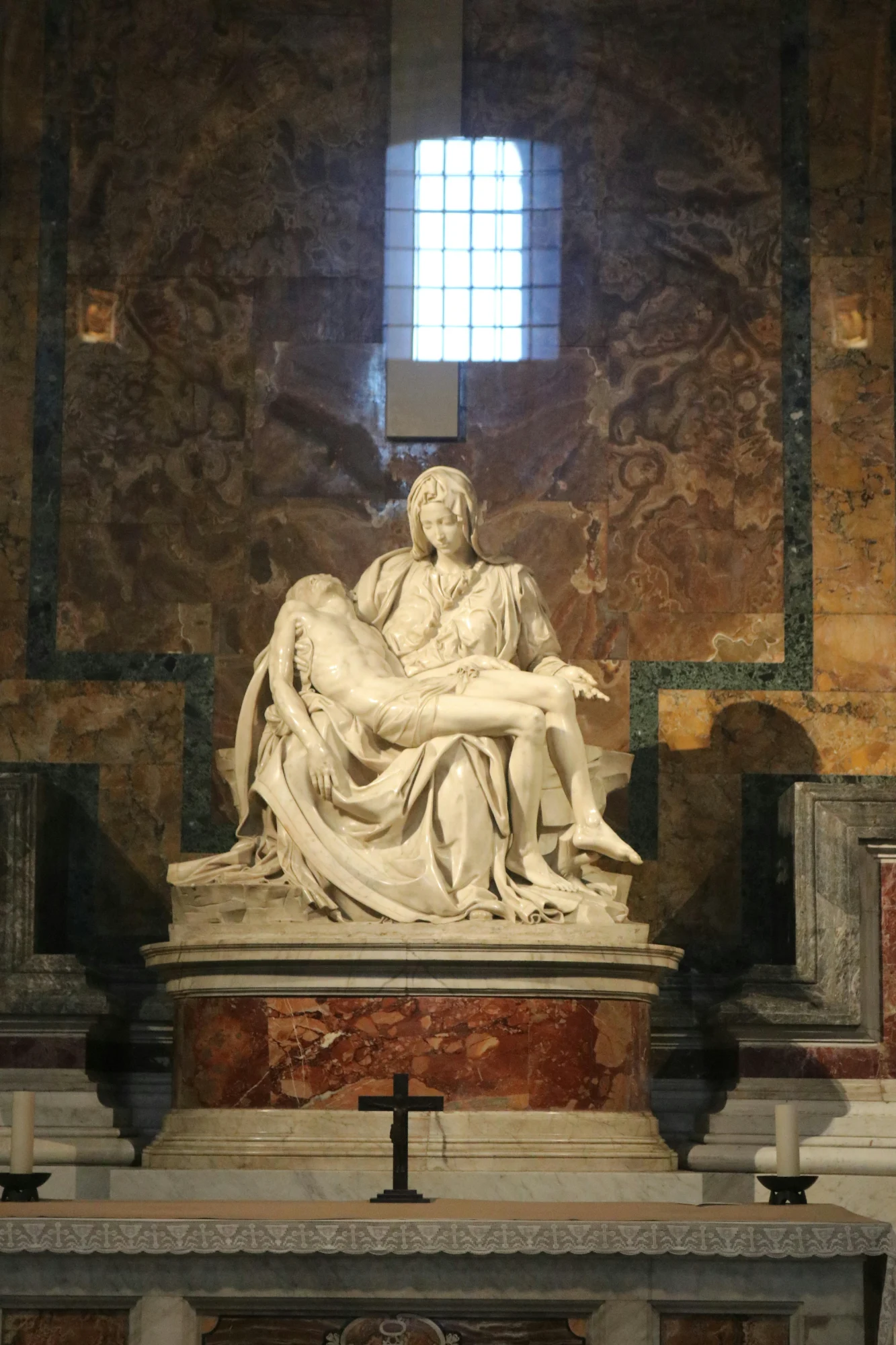
Rome is home to four major papal basilicas, which hold the highest rank in the Catholic Church. The most famous is St. Peter’s Basilica (San Pietro), the monumental heart of the Vatican. Inside, masterpieces appear at every turn. Michelangelo’s Pietà captures a moving moment of grief and tenderness as the Virgin Mary cradles the body of Christ, while Bernini’s colossal bronze baldachin rises dramatically above the papal altar beneath the vast dome. Even first-time visitors are often surprised by the sheer scale of the building, where every detail seems designed to inspire awe. If you plan to visit, check our practical guide to visiting the Vatican and remember to join our Secrets of the Vatican tour, where we explore the history of the Catholic Church through the characters, events, and stories that shaped it. The tour concludes in the iconic St. Peter's Square, embraced by the sweeping colonnades designed by Gian Lorenzo Bernini and crowned with more than 100 statues of saints. From there, you'll be perfectly placed to continue your exploration inside St. Peter’s Basilica, stepping directly from the grandeur of the square into one of the world's greatest architectural and artistic masterpieces.
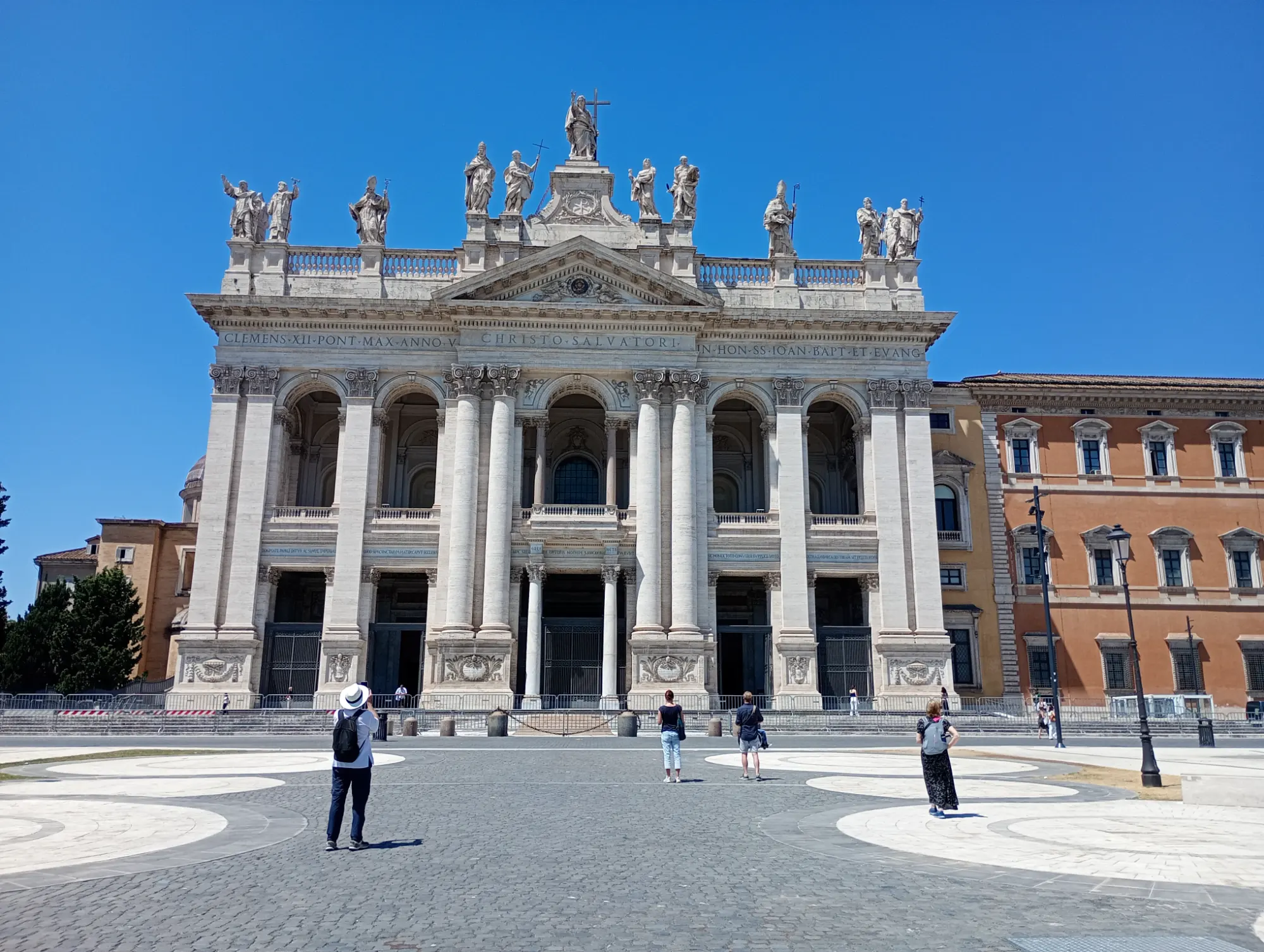
On the opposite side of the city stands Archbasilica of San Giovanni in Laterano (Saint John Lateran), the main cathedral of Rome and the Pope’s official ecclesiastical seat. Often overlooked by visitors rushing to St. Peter’s, it is nevertheless the most important church in Catholicism. Its magnificent nave is lined with towering statues of the Apostles, each dramatically posed within elaborate Baroque niches, creating one of the most striking interiors in Rome.
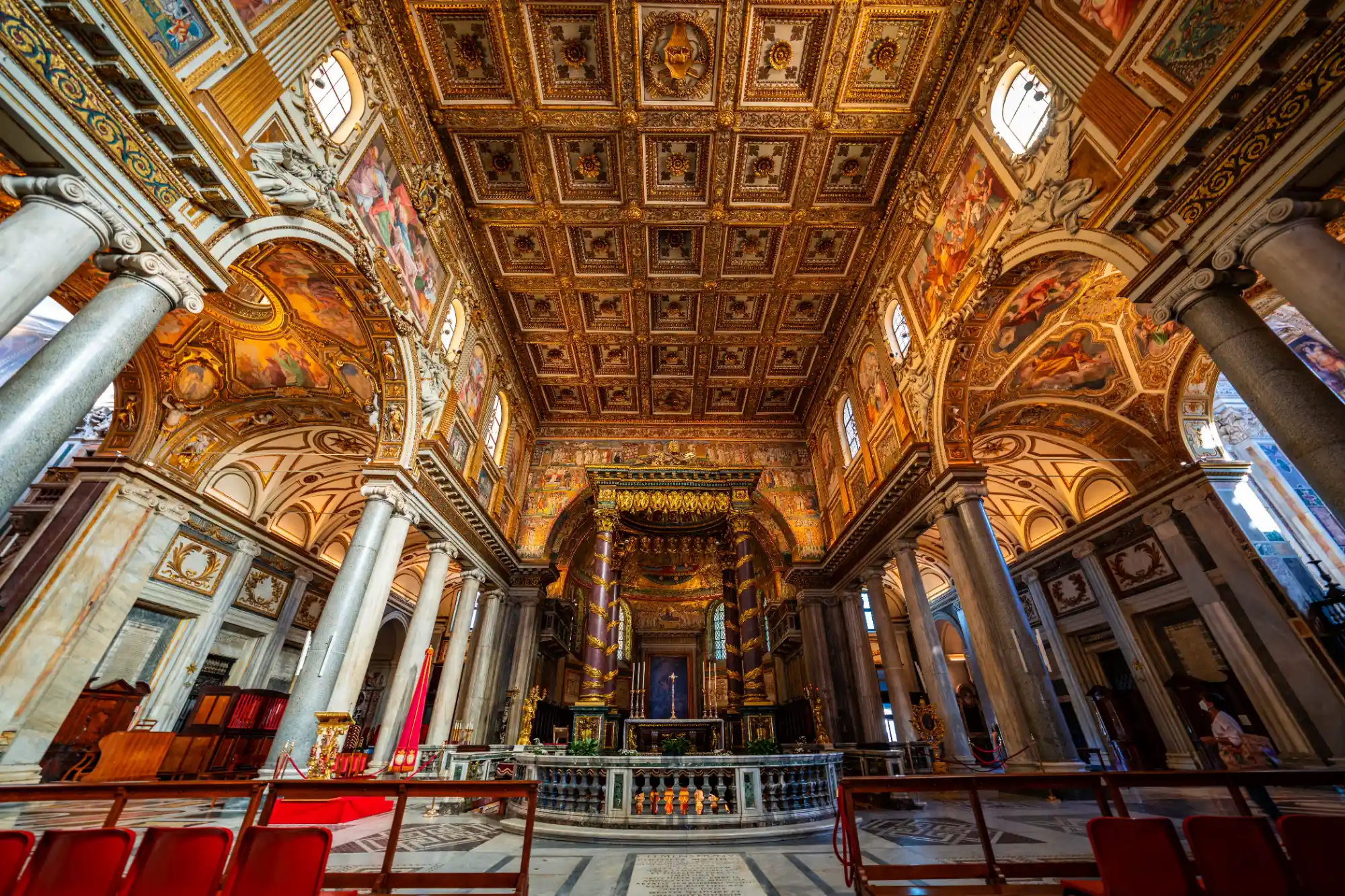
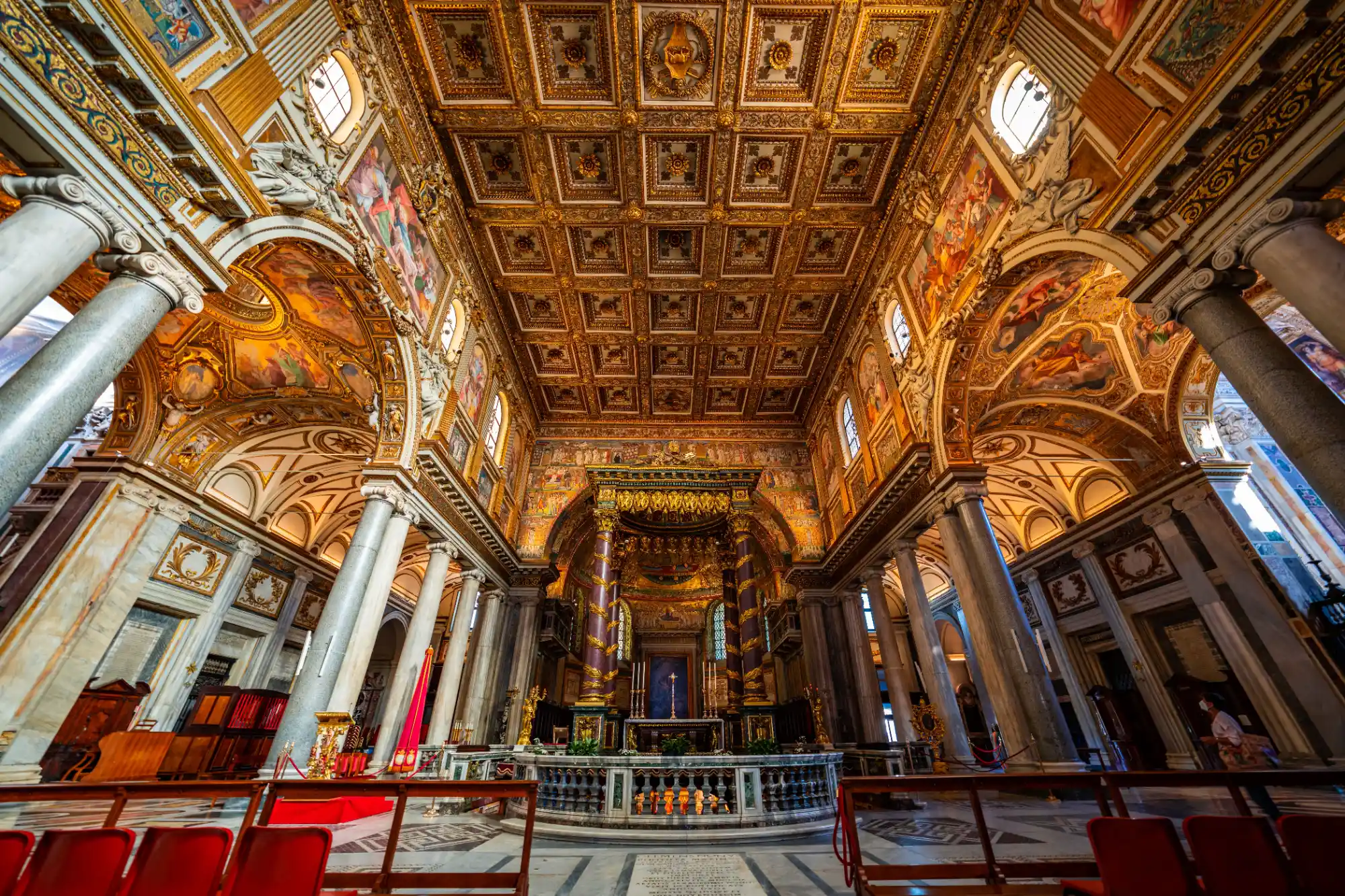
Santa Maria Maggiore offers a glimpse into the splendour of early Christianity. Its glittering 5th-century mosaics, among the oldest in the city, tell stories from the Old Testament in vivid detail. Above, a richly gilded ceiling reflects the basilica’s long history and, according to tradition, was decorated with some of the first gold brought back from the Americas after Columbus’ voyages.
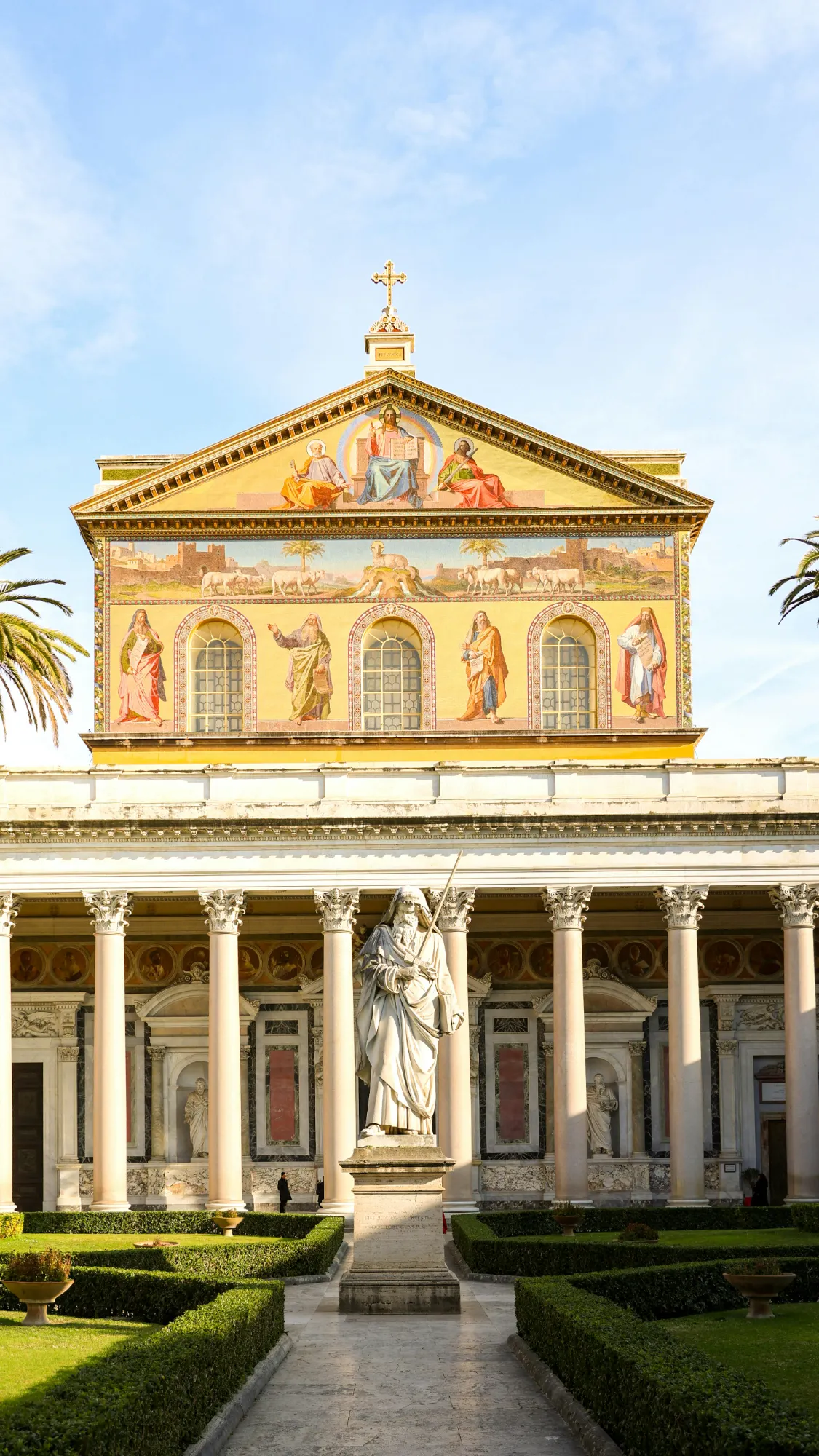
The fourth basilica, San Paolo Fuori le Mura (St. Paul Outside the Walls), lies beyond Rome’s ancient centre but rewards those who make the journey. Far quieter than its counterparts, it combines monumental scale with a sense of serenity. Highlights include the dazzling 13th-century apse mosaic, where Christ is surrounded by saints in a blaze of gold, and the remarkable series of portrait medallions depicting every pope in history, stretching around the nave in an unbroken visual timeline of the Catholic Church.
Finding Caravaggio, Raphael, and Michelangelo
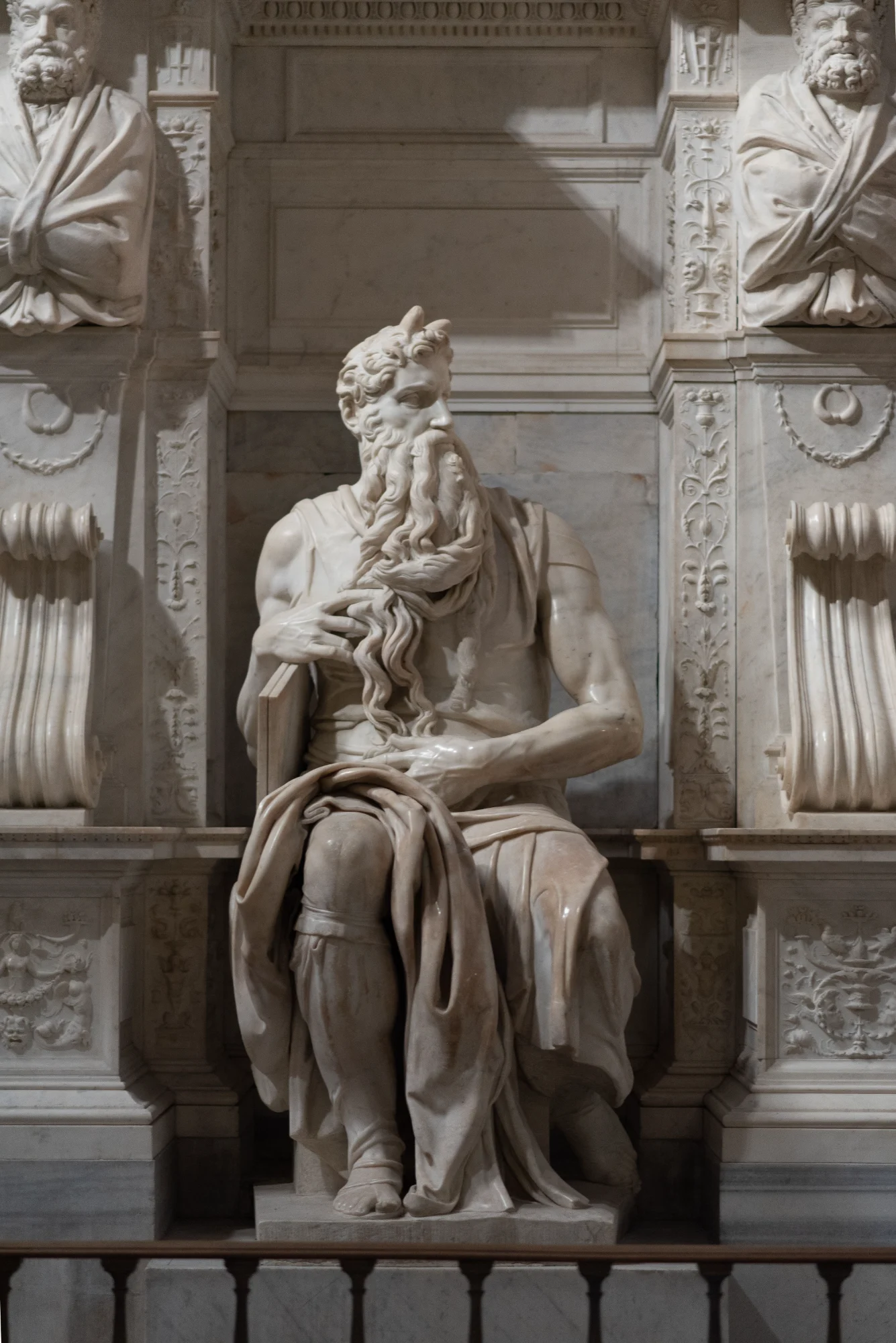
Many of Rome’s churches double as world-class art galleries, housing masterpieces by the greatest artists of the Renaissance and Baroque periods. One of the most celebrated is San Pietro in Vincoli, home to Michelangelo’s extraordinary Moses. Created for the monumental tomb of Pope Julius II, the imposing seated figure is renowned for its lifelike intensity, muscular power, and piercing gaze. Visitors are often struck by the small horns on Moses’ head, a feature derived from a medieval mistranslation of the Bible.
For admirers of Caravaggio, San Luigi dei Francesi is an essential stop. The Contarelli Chapel contains his famous cycle dedicated to Saint Matthew: The Calling of Saint Matthew, The Inspiration of Saint Matthew, and The Martyrdom of Saint Matthew. These revolutionary works showcase the artist’s dramatic use of light and shadow, transforming biblical scenes into vivid moments of human emotion and realism.
Just a few streets away, Sant’Agostino contains another of Caravaggio’s masterpieces, the Madonna of Loreto. The painting caused controversy when it was unveiled because the pilgrims at the Virgin’s feet are depicted with dirty, weathered feet—a strikingly realistic detail that challenged contemporary artistic conventions. The church also houses Raphael’s monumental fresco of the Prophet Isaiah, whose classical grandeur reflects the artist’s deep admiration for Michelangelo.
Nearby, Santa Maria della Pace rewards visitors with one of Raphael’s most elegant works, the Sibyls fresco above the Chigi Chapel. Blending classical beauty with Christian symbolism, the fresco depicts ancient prophetesses foretelling the coming of Christ. The church is equally famous for its harmonious Renaissance cloister, designed by Bramante, one of the defining architects of the period.
Finally, Santa Maria del Popolo, located beside Piazza del Popolo and starting point of our Sunset tour, is a treasure trove of Renaissance and Baroque art. In the Cerasi Chapel, visitors can admire Caravaggio’s dramatic Crucifixion of Saint Peter and Conversion of Saint Paul, both masterpieces of movement, emotion, and theatrical lighting. Elsewhere in the church, the magnificent Chigi Chapel combines architecture, sculpture, and painting by some of Italy’s greatest artists, including Bernini, whose dynamic sculptures of Habakkuk and the Angel and Daniel and the Lion bring the space vividly to life.
Baroque Masterpieces: Bernini and Borromini
The rivalry between Gian Lorenzo Bernini and Francesco Borromini defined Rome's Baroque era. Bernini’s theatrical genius is displayed at Santa Maria della Vittoria, home to the highly emotional sculpture The Ecstasy of Saint Teresa, which depicts the saint being pierced by an angel's arrow in a scene illuminated by a hidden window. You can also admire his late marble masterpiece, the Blessed Ludovica Albertoni, in the quiet Chiesa di San Francesco a Ripa, where she is captured in a state of spiritual ecstasy on her deathbed. Additionally, Sant'Andrea delle Fratte houses two of Bernini’s original marble angels carrying the instruments of the Passion, deemed too beautiful to be exposed to the elements on Ponte Sant'Angelo.
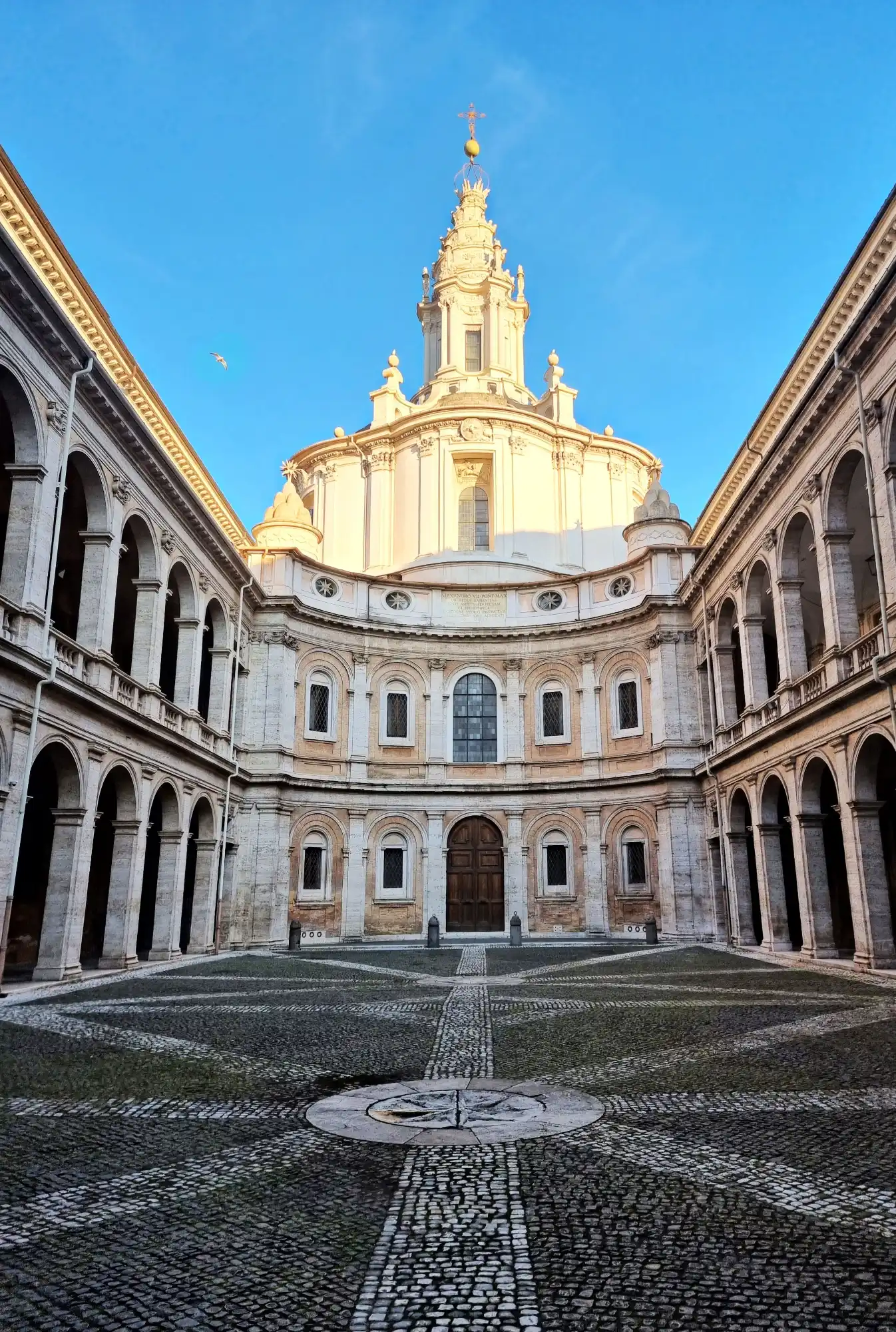
Borromini’s geometric approach is perfectly illustrated at San Carlo alle Quattro Fontane, with its undulating façade and intricate oval dome, where coffers of interlocking crosses, octagons, and hexagons create a mesmerizing play of structure and light. Just a short walk away stands Bernini’s Sant’Andrea al Quirinale, making it easy to pair the two as a striking contrast between Borromini’s complex geometries and Bernini’s theatrical elegance in a single, compact visit. Borromini also designed the Sant’Ivo alla Sapienza, one of his most original and intellectually ambitious works. It is best known for its extraordinary spiral lantern, which rises like a stone flame above the dome, and for its remarkable geometry: a star-shaped plan formed by interlocking equilateral triangles that generates a continuous, almost organic spatial flow. Inside, walls, niches, and dome are conceived as a single, unified movement, where structure and ornament merge seamlessly, expressing Borromini’s radical vision of architecture as a living, dynamic space. Note that Sant’Ivo alla Sapienza is generally open to visitors only on Sunday mornings, typically from around 9:00 to 11:00 (sometimes until 12:00), and access is often tied to liturgical services rather than regular tourist hours.
From Early Christianity to the Middle Ages: Mosaics and Hidden Layers
Few places in Rome reveal the city's layers of history as dramatically as San Clemente. At street level stands a beautiful 12th-century basilica adorned with glittering mosaics, but the real adventure lies beneath. For an admission fee, visitors can descend to a fourth-century church buried below the current one, complete with medieval frescoes, and then even deeper into the remains of a first-century Roman building and a mysterious Mithraic temple. Exploring San Clemente is like travelling back through nearly 2,000 years of Roman history, one floor at a time.
Just a short walk from the Basilica of Santa Maria Maggiore, Santa Prassede is one of Rome’s hidden treasures. The church preserves some of the city’s finest early Christian and Byzantine art, most notably the dazzling 9th-century mosaics of the Chapel of San Zeno. Covered from floor to ceiling in shimmering gold mosaics depicting Christ, saints, and angels, the chapel was so breathtaking that it became known as the "Garden of Paradise."
On the peaceful Aventine Hill, Santa Sabina offers a striking contrast to Rome’s more ornate churches. On our Taste and Traditions tour we explore this 5th century basilica which is remarkably well preserved, it is one of the finest examples of an early Christian basilica anywhere in the world. Its greatest treasure is the original carved cypress-wood doors, whose 18 surviving panels illustrate scenes from the Old and New Testaments. Among them is one of the earliest known artistic depictions of the Crucifixion of Jesus.
Across the Tiber, in the heart of Trastevere, stands Basilica of Santa Maria in Trastevere, traditionally considered one of Rome’s oldest churches dedicated to the Virgin Mary. Its glittering apse mosaics rank among the masterpieces of medieval Rome. The 12th-century mosaic above the apse depicts Christ seated beside the Virgin Mary in a powerful image of her coronation and exaltation. Beneath it, the celebrated 13th-century mosaic cycle by Pietro Cavallini illustrates scenes from the Virgin’s life with an unprecedented sense of naturalism and emotion. Rich in history, art, and atmosphere, the basilica provides a memorable conclusion to a Jewish Ghetto and Trastevere tour.
Iconic Central Churches and Walking Tours
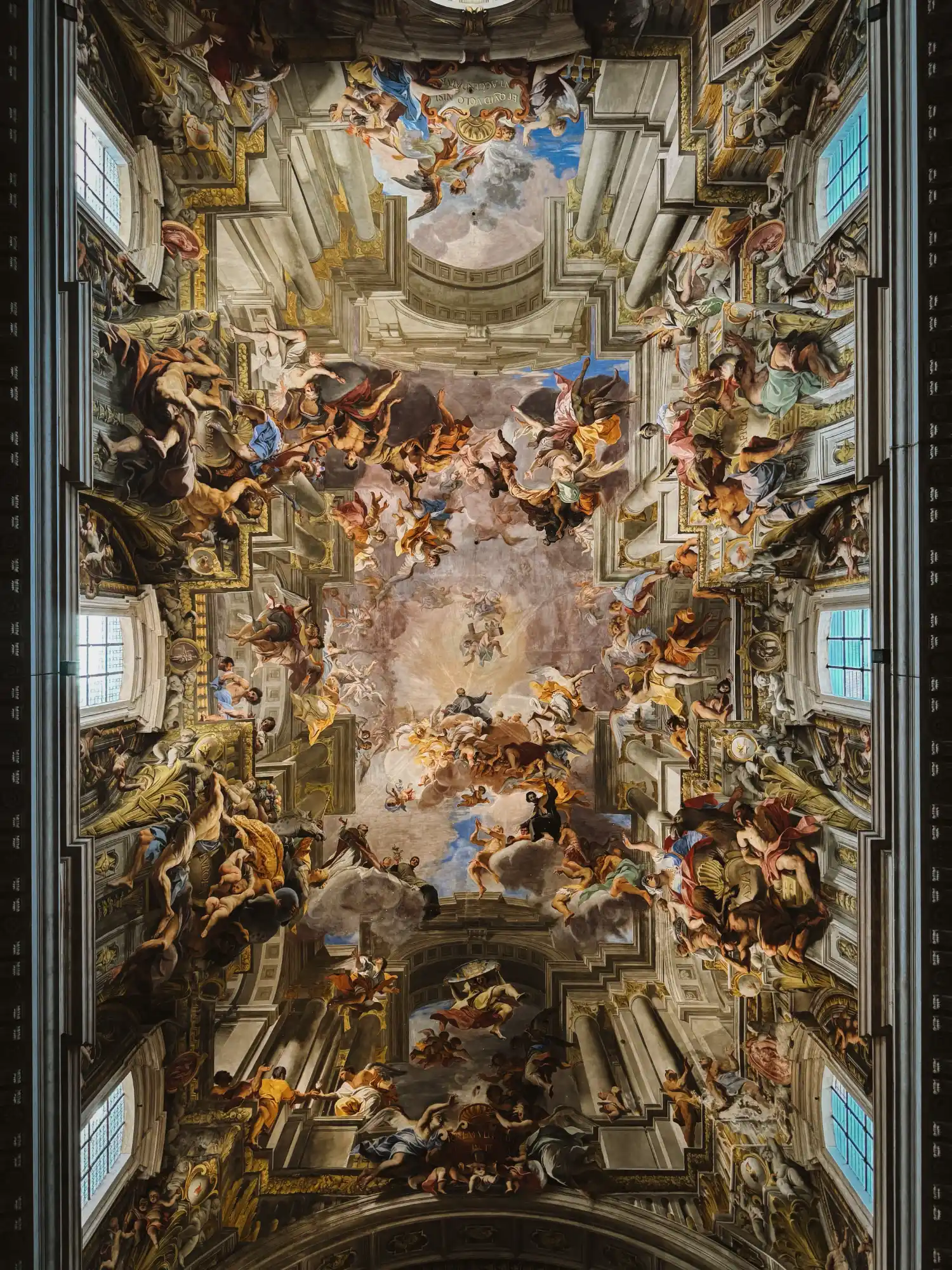
Exploring the historic centre on a Welcome to Rome tour naturally brings you past several central landmarks. One of the highlights is Sant'Ignazio di Loyola, a masterpiece of Baroque illusionism. Its nave ceiling features Andrea Pozzo’s breathtaking trompe-l'œil fresco, The Apotheosis of St. Ignatius, which appears to dissolve the roof and open the church to the heavens. Further inside, Pozzo’s famous optical trick creates the convincing illusion of a soaring dome where, in reality, there is only a flat painted surface. Nearby is Santa Maria sopra Minerva, one of Rome’s very few Gothic churches. Behind its striking blue-vaulted interior lie extraordinary works of art, including Michelangelo’s statue of Christ the Redeemer and the tomb of Saint Catherine of Siena. The church offers a fascinating contrast to the city's predominantly Baroque and Renaissance sacred spaces.
Beyond their masterpieces, these sacred spaces reveal nearly two thousand years of Roman life while providing a peaceful escape from the bustling streets outside. We hope this guide helps you discover the churches and treasures that inspire you most—and we look forward to welcoming you on one of our tours to explore some of them together!
Related stories
Culture • Practical Tips • History • 8 min. read
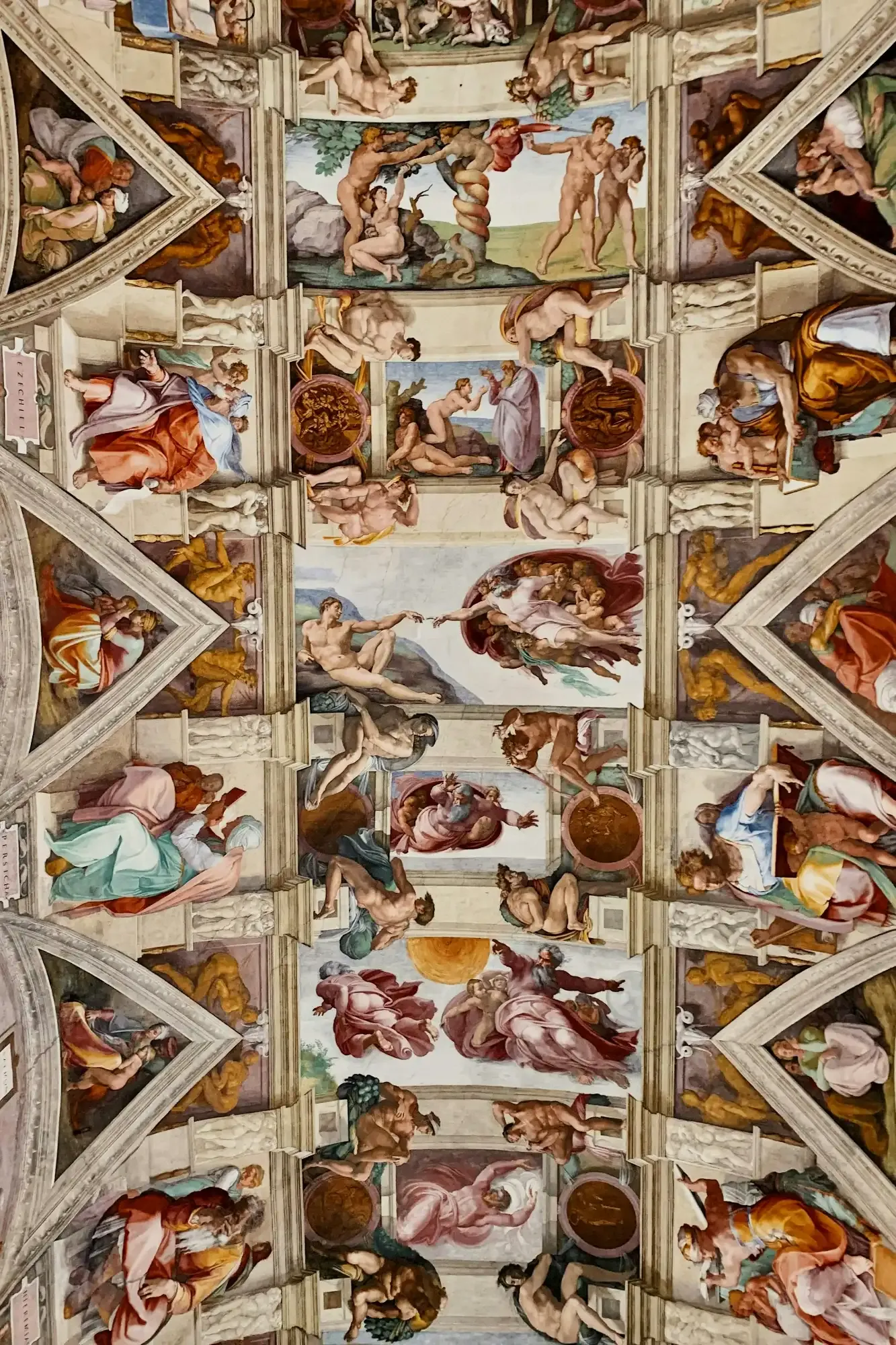
A Practical Guide to Visiting the Vatican: Tips from you Local Walkative Guide
Planning a trip to Vatican City and not sure where to begin? You’re in the right place!
Culture • Practical Tips • History • Food • 8 min. read
Day Trips from Rome: Seaside and Historic Towns
During the warmer months, residents of Rome often leave the city behind to swim in the volcanic basin of Lake Bracciano or walk through the shaded Renaissance gardens of Villa d'Este. The surrounding Lazio region is defined by these quiet retreats, ranging from papal summer residences in the Castelli Romani to ancient Etruscan burial mounds. Relying on the local regional trains makes it straightforward to reach these hilltop villages and coastal towns in under an hour.
Culture • Practical Tips • 5 min. read
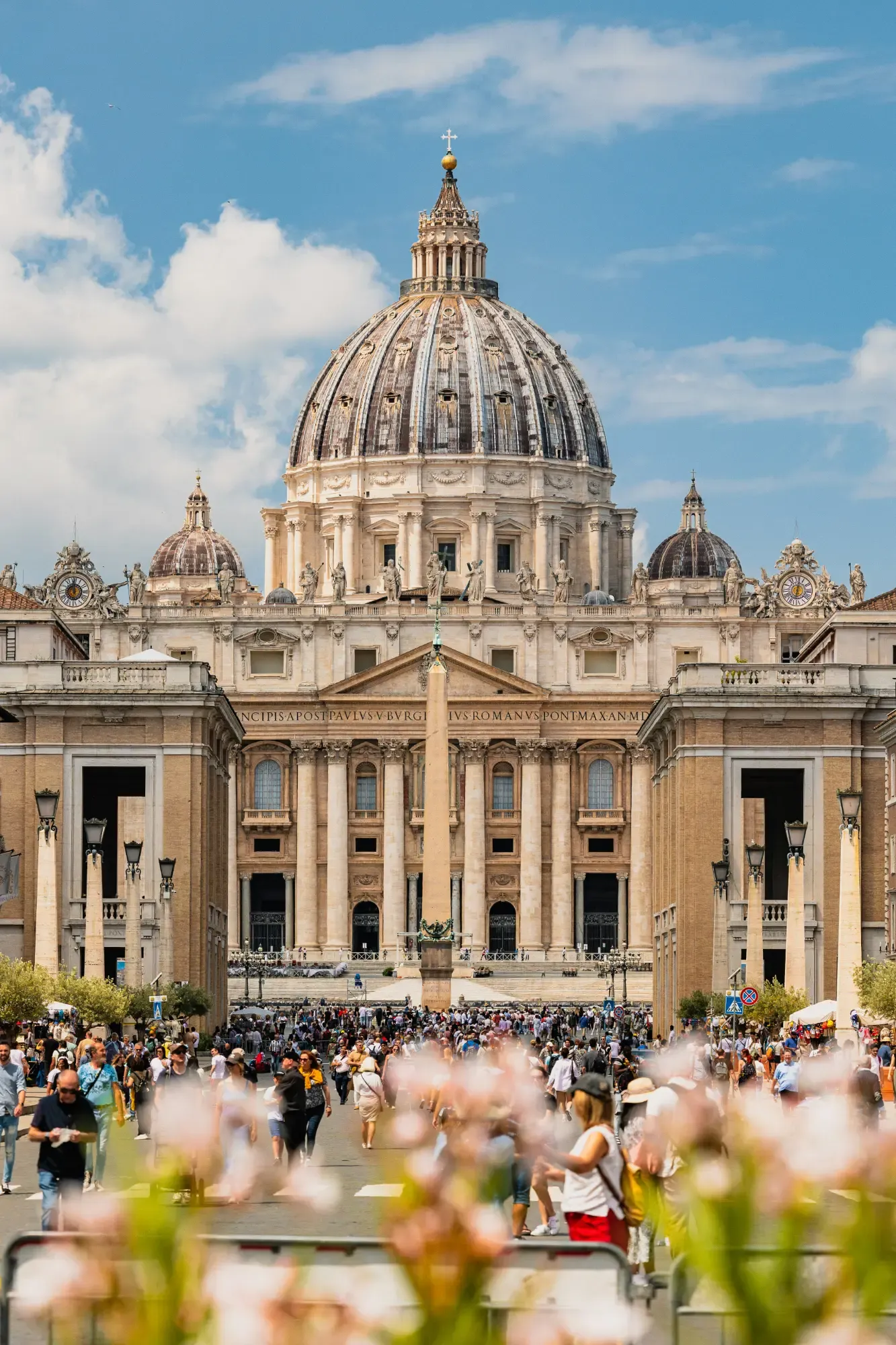
Easter in Rome 2026 - A Guide to Holy Week
Discover the essential dates and traditions for Easter in Rome 2026. From the Colosseum's Via Crucis to Vatican Mass, prepare for Holy Week with our practical travel guide.
Culture • Practical Tips • History • 7 min. read
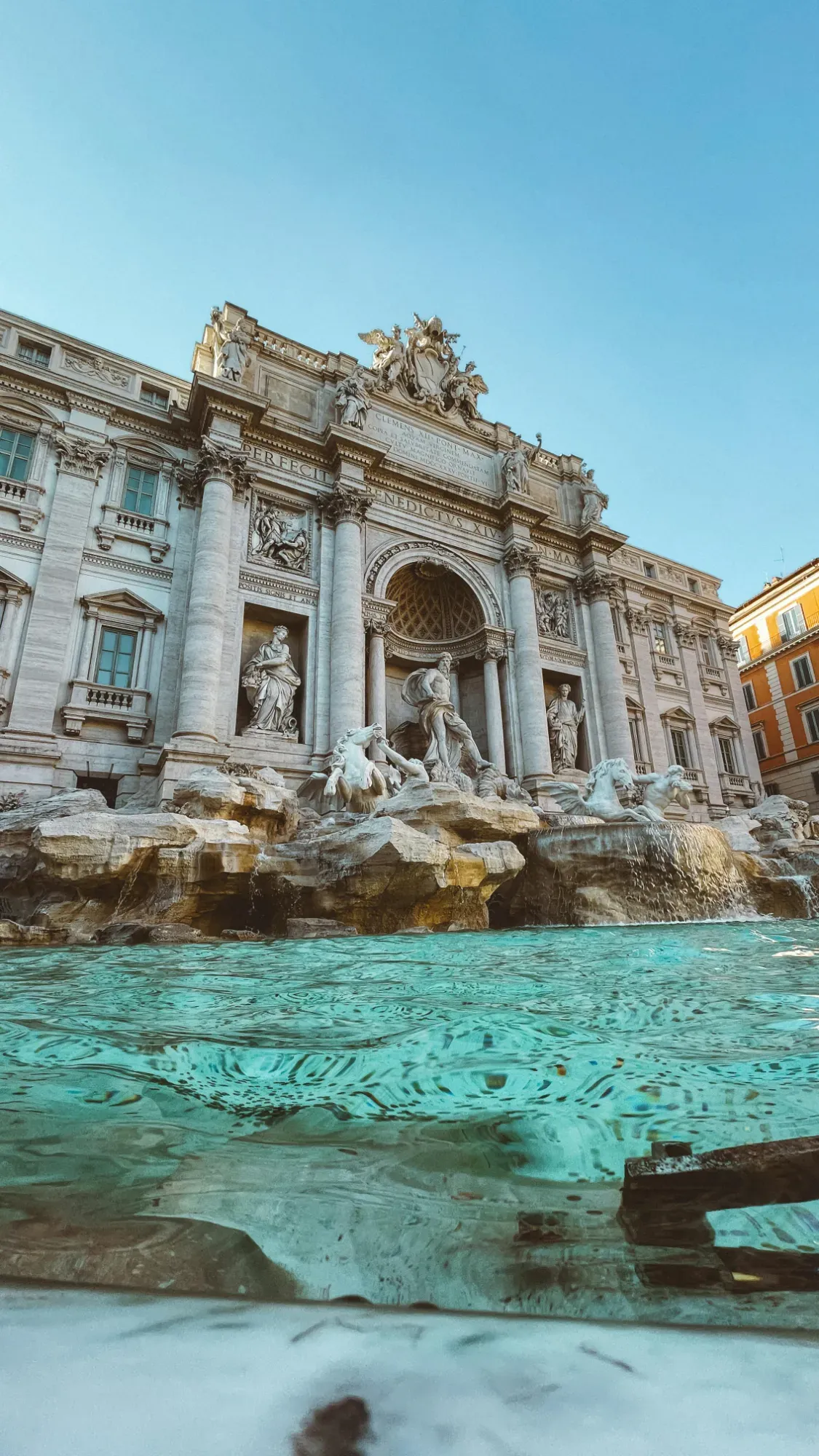
Exploring the Ancient Roots of Rome's Water System and Free Fountains
Explore Rome's enduring water legacy. From ancient aqueducts to modern free nasoni fountains, discover how this unbroken engineering tradition still quenches the city's thirst today.
Practical Tips • Food • 10 min. read
Food Lover’s Rome – A Culinary Guide to the Eternal City
Explore Rome's culinary delights. Discover authentic trattorias, navigate local markets, and taste traditional dishes with this essential food guide.