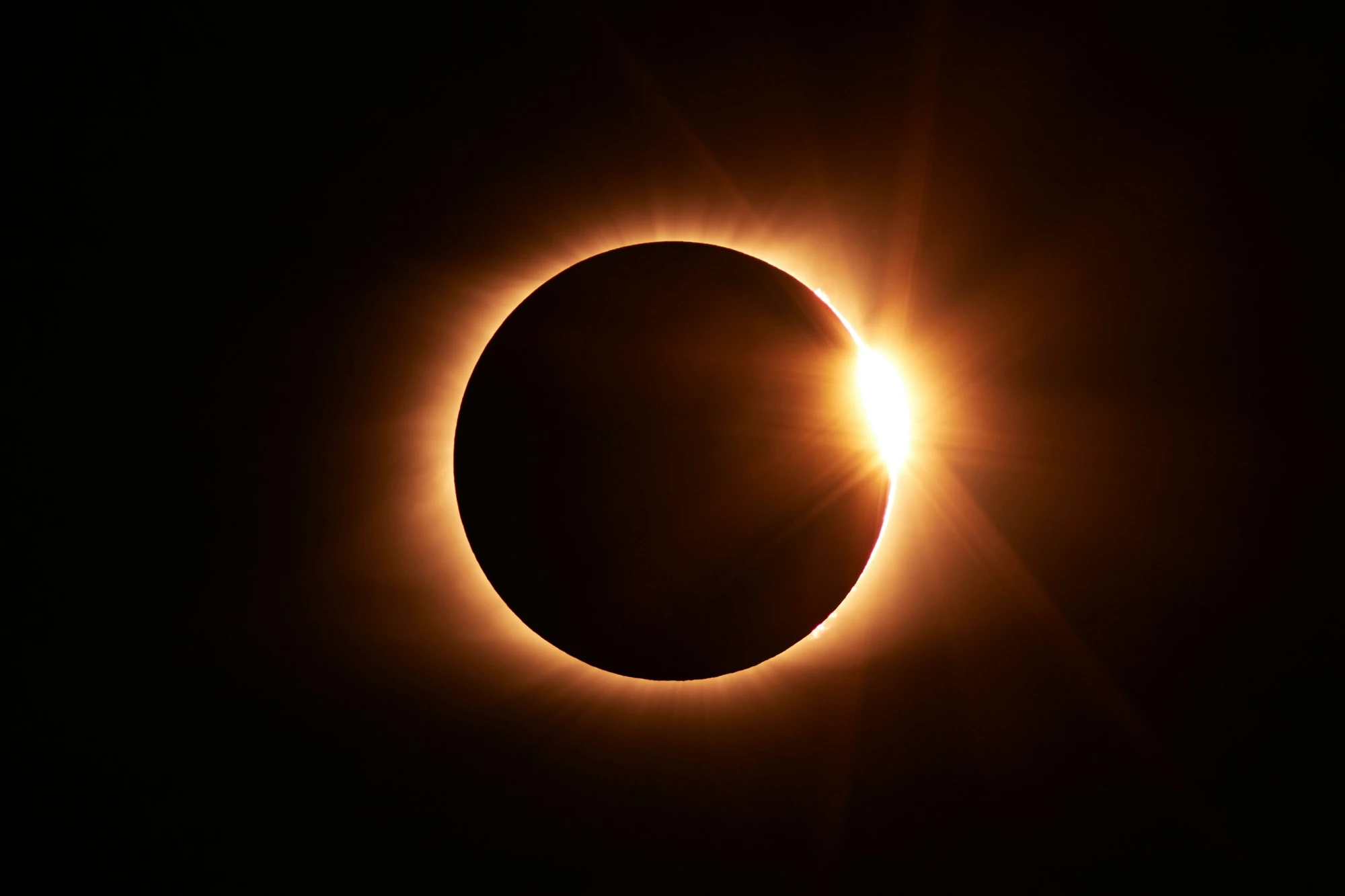
Viewing the August 2026 Total Solar Eclipse in Madrid
The August 12, 2026 total solar eclipse coincides precisely with sunset over Madrid. Catching the moment of totality as the sun drops below the horizon requires a clear, westward-facing vantage point rather than a narrow street or enclosed plaza. From the wide meadows of Valdebebas Forest Park to the elevated terraces of the Hotel Riu Plaza España, choosing the right location dictates whether you see the darkened sky or just the silhouettes of buildings.
Culture • Practical Tips • History • 4 min. read
Last edited:
On August 12, 2026, astronomy enthusiasts and travellers in Spain will have the opportunity to witness a historic event: the first total solar eclipse visible from the Iberian Peninsula in over a century. While the nearby Sierra Norte mountains offer prime viewing, those staying within the capital can also experience this rare natural spectacle. This guide focuses on the best observation spots within Madrid, allowing you to enjoy the eclipse comfortably without leaving the city limits.
The August 12, 2026 Total Solar Eclipse in Madrid
A total solar eclipse occurs when the Moon passes directly between the Earth and the Sun, completely obscuring it for a few moments. During totality, the sky darkens as if night is falling, the air temperature drops slightly, and the sun’s corona becomes visible. In Madrid, this astronomical event is particularly special because it will coincide with the sunset. Because the sun will be low on the horizon as it disappears, choosing a location with an unobstructed view to the west is essential for the best experience.
Eclipse Timeline: When to Watch
While the exact timing may vary slightly depending on your specific observation point in Madrid, there is a reliable reference schedule for the evening. The partial phase of the eclipse will begin at 7:30 p.m. The moment of maximum eclipse, known as totality, is expected to occur briefly between 8:30 and 8:32 p.m. The event will conclude as the sun sets completely between 9:17 and 9:19 p.m. To secure a comfortable spot, it is highly recommended to arrive at your chosen location between 7:00 and 7:15 p.m., as popular viewpoints will likely fill up quickly.
What Makes a Good Observation Spot?
You do not need to climb a mountain to see the eclipse, but selecting the right urban location is important. The most critical factor is a clear, unobstructed horizon facing west, where the sun will set. Look for open spaces with few tall buildings blocking the view. Ideal spots will offer enough room to sit comfortably and avoid dense crowds. Finally, ensure the location has good access to public transport. If you have specific timing or accessibility needs during your trip, a private custom tour guide can also help arrange a tailored city route that ends near an ideal viewing spot for the evening.
Top Free Parks and Viewpoints in the City
Madrid offers several excellent outdoor spaces for viewing the eclipse. The Madrid City Council's top recommendation is the Valdebebas-Felipe VI Forest Park, which will serve as an official viewing point due to its wide meadows and clear western visibility. Another popular option is the Temple of Debod, though large crowds are expected.
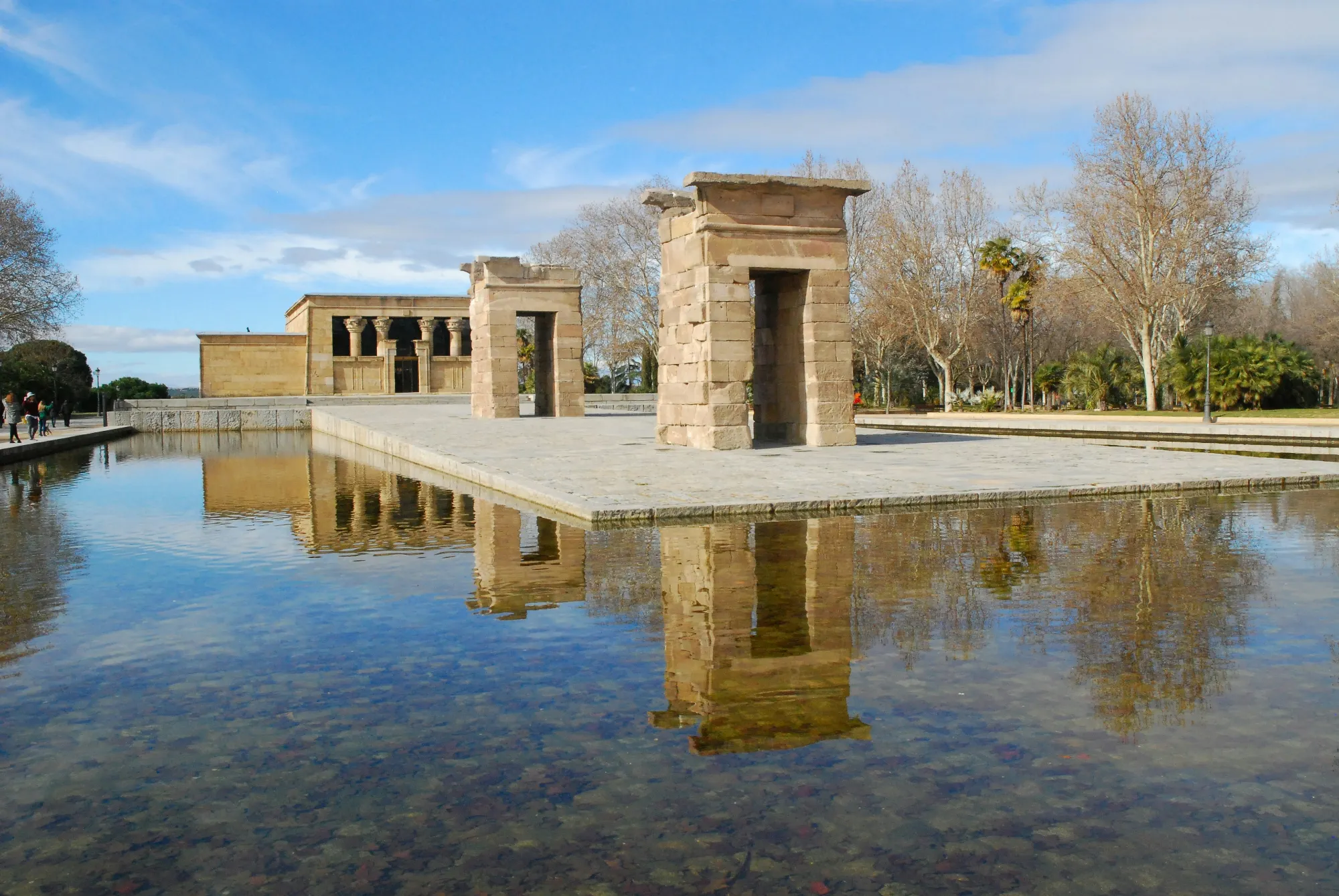
For elevated panoramic views, Cerro del Tío Pío (Parque de las Siete Tetas) and Cerro Garabitas in Casa de Campo provide sweeping, westward-facing vistas. Madrid Río near the Puente del Rey area offers central, open spaces, while Mirador de la Playa in Barajas will distribute eclipse glasses between 8:00 and 9:00 p.m.
Experiencing the Eclipse from Madrid's Rooftops
If you prefer a more curated experience with amenities, Madrid’s famous rooftop terraces provide excellent vantage points. The rooftop at the Círculo de Bellas Artes offers an iconic setting in the city centre. Another prominent alternative is the 360º Rooftop Terrace of the Hotel Riu Plaza España.
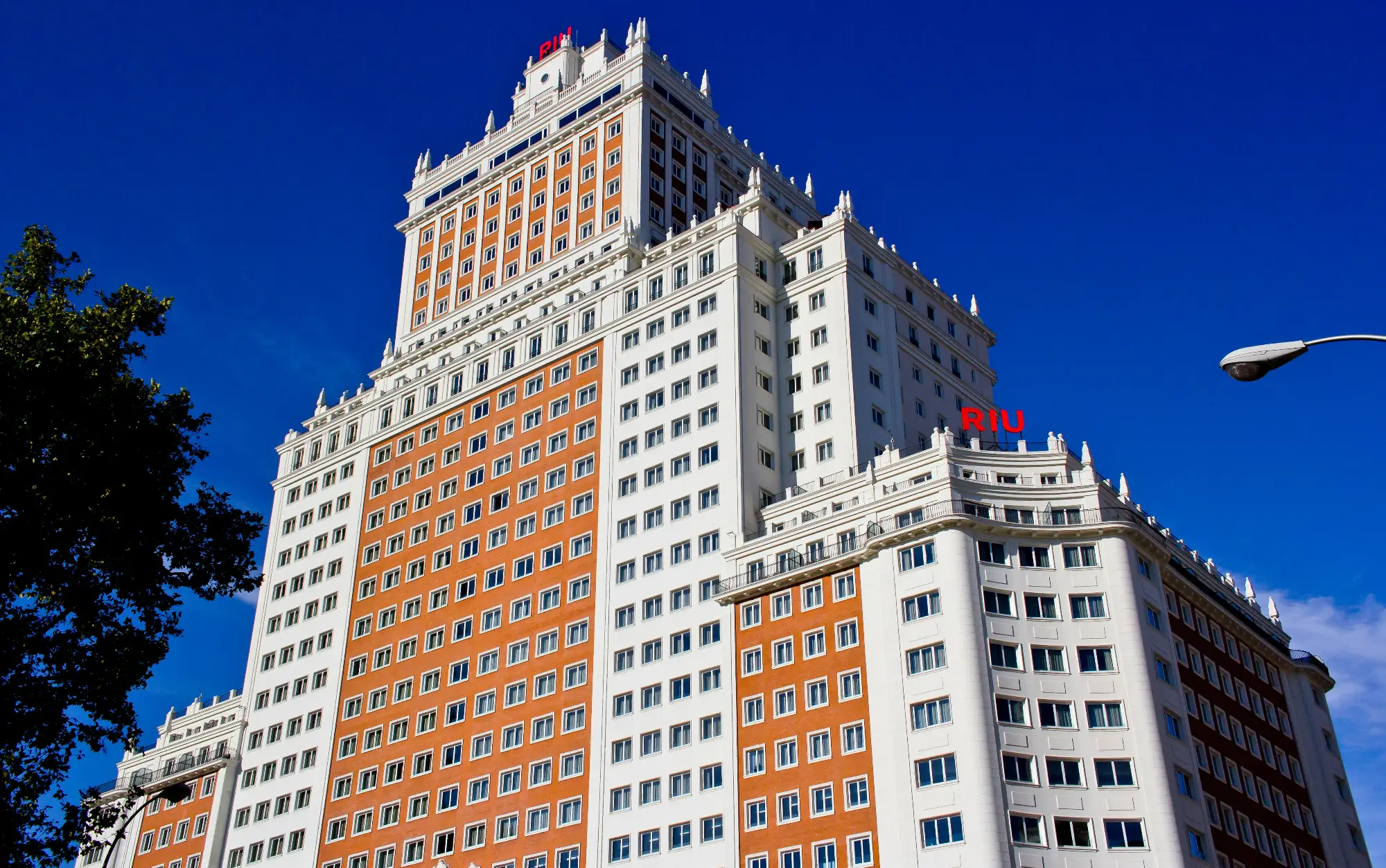
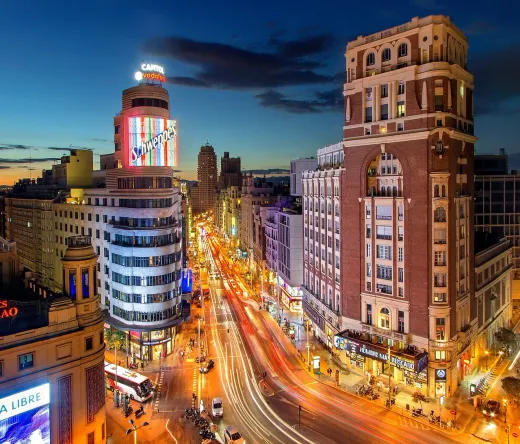
Because this hotel sits right on Plaza España—a landmark you might recognize if you've explored the area on our 20th Century Madrid walking tour—it boasts spectacular, unobstructed views of the horizon. Both venues require paid admission and will face exceptionally high demand, so booking tickets well in advance through their official websites is essential.
How to View the Eclipse Safely
Witnessing a solar eclipse is a memorable experience, but safety must be your top priority. You must never look directly at the sun without proper eye protection during the partial phases of the eclipse. Standard sunglasses, even very dark ones, are not safe for viewing. You must use specialized eclipse glasses that are officially certified to meet the EN ISO 12312-2 international safety standard. Ensure your glasses are free of scratches or damage before use to protect your eyes.
With a bit of planning and the right protective eyewear, the August 2026 eclipse will be a spectacular addition to your Madrid itinerary. Whether you choose the lively atmosphere of a central park, a quiet hillside, or a reserved rooftop terrace, arriving early and knowing what to expect will help you make the most of this rare astronomical event.
Related stories
Culture • History • 5 min. read
A Guide to Madrid’s Museums: Art, History, and Royal Splendor
Explore Madrid’s top museums: Prado’s Las Meninas, Reina Sofía’s Guernica, Archaeological Museum mosaics, plus Cerralbo and Royal Palace.
Practical Tips • History • 5 min. read
Best Parks and Places to Relax in Madrid: A Local’s Guide
Discover Madrid’s best parks and calm spots to unwind, from grand gardens to quiet corners, with practical local tips for a relaxed break.

Culture • Practical Tips • 5 min. read
Experiencing the Jam Session Scene in Madrid
Late nights at Intruso Bar and Thursday Afrobeat sets at El Sótano anchor the improvisational live music circuit in Madrid. Across the city, basement stages and historic jazz clubs provide spaces where musicians collaborate without a setlist. Navigating these open-stage events simply requires knowing which venues host specific genres on any given night.

Culture • Food • 5 min. read
Madrid Adventures: Fun for All Ages!
Explore Madrid with family-friendly walking adventures, local stories, and sights for all ages. Easy pace, practical tips, no fuss.
Culture • History • Tours • 6 min. read
Madrid’s Historic Neighborhoods: Architecture, Art, and Local Culture
The 1776 palace of the Marquis of Matallana in Chueca and the 1980s retro streets of Malasaña offer two very different perspectives on local history. Moving beyond the major museums, a walk through central Madrid connects centuries of royal architecture with modern neighborhood avenues. From the open-air stalls of the El Rastro market to the traditional courtyard corralas of Lavapiés, these districts outline how the capital took shape.