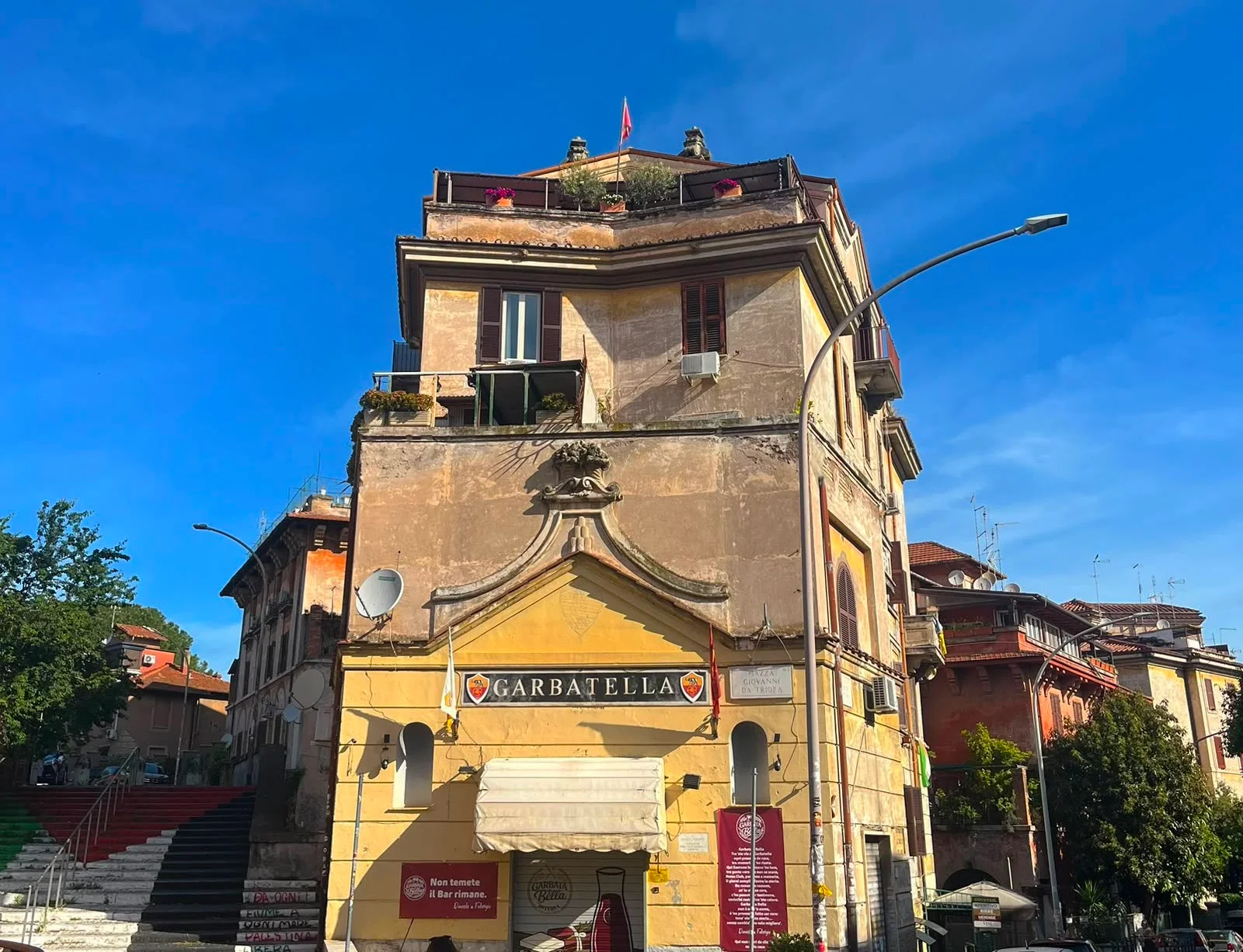
Discovering Garbatella — A Journey Into Rome’s Most Characterful Neighbourhood
Discover Garbatella, Rome’s distinctive 1920s neighbourhood, where lush courtyards, picturesque architecture and village-like streets create a world away from the city’s well-trodden tourist routes. Explore the rich urban history and stories that have shaped Rome’s most atmospheric and distinctive neighbourhood.
Culture • History • 11 min. read
Most visitors to Rome have never heard of Garbatella, a neighbourhood that rose south of Rome on the eastern bank of the Tiber River in the 1920s. It has long been preserved by Romans, far away from the well-known monuments and tourist routes of the centre. At its heart, it offers something completely authentic and unique compared with the historic centre: a bygone, rustic, lush and quiet, village-like atmosphere, made all the more charming by its picturesque, distinctive architecture, artistic character, and vibrant sense of community — a world that seems forgotten by time itself. It also has a youthful, vibrant and bohemian side, with cultural events filling its community spaces, squares and student bars in the evenings. If you’re looking for a deeply local and intimate side of Rome, steeped in urban history, this is where you find it. So come along, and let’s discover the courtyards, streets and stories that give Garbatella its unique character.
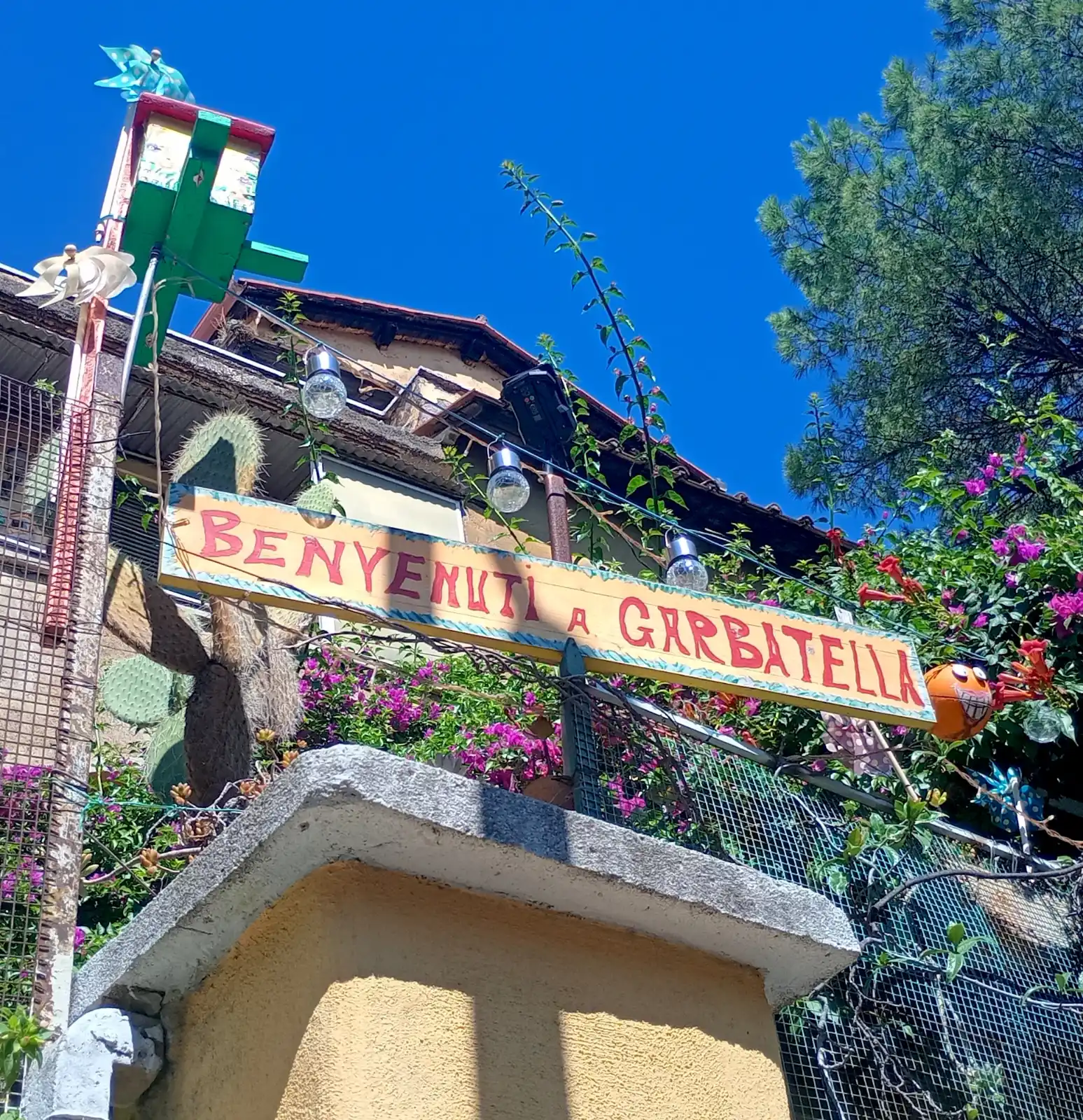
At the very beginning of the 20th century, the area was still largely rural countryside. Its main lifeline was the Cammino delle Sette Chiese, an ancient pilgrimage route that passed by the papal Basilica of San Paolo fuori le Mura before continuing towards Rome’s seven most important churches.
The origins of the name Garbatella are surrounded by several theories, but the most popular among locals is a story about a hospitable innkeeper named Carlotta, who was known as a “garbata ostella” — a gracious hostess. According to legend, she ran an inn and restaurant that catered mainly to pilgrims and workers travelling towards Rome. So welcoming were her manners, and so admired was her beauty, that travellers were said to linger on their way simply to enjoy her warm presence.
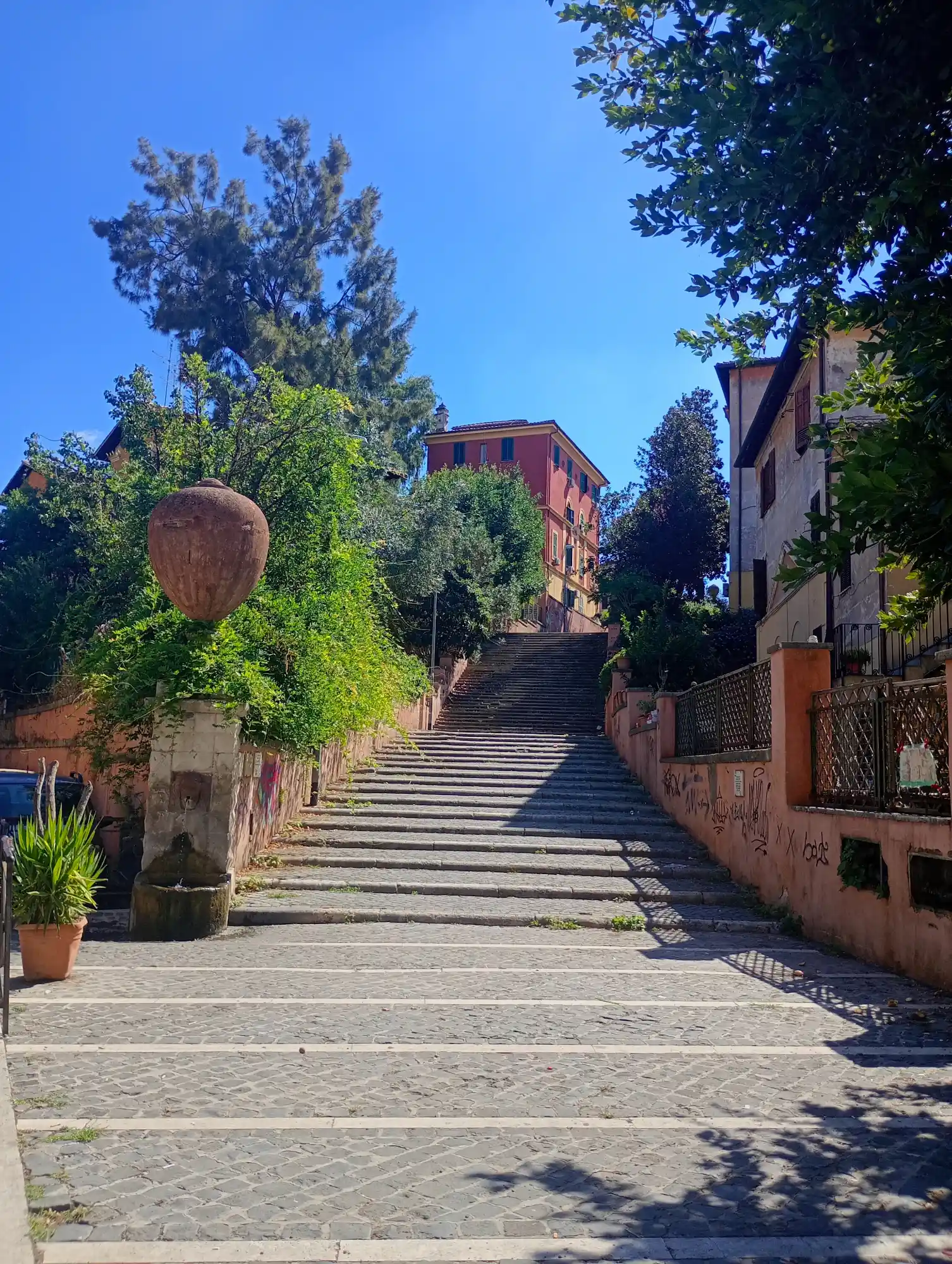
Over time, Carlotta became a semi-mythical figure, embodying the hospitality and gentle character traditionally associated with the neighbourhood. Even today, her likeness can be found in several murals around Garbatella, as well as in the small fountain in Piazza Ricoldo da Montecroce, tucked into the corner of the Scalinata degli Innamorati (Lovers’ Staircase).
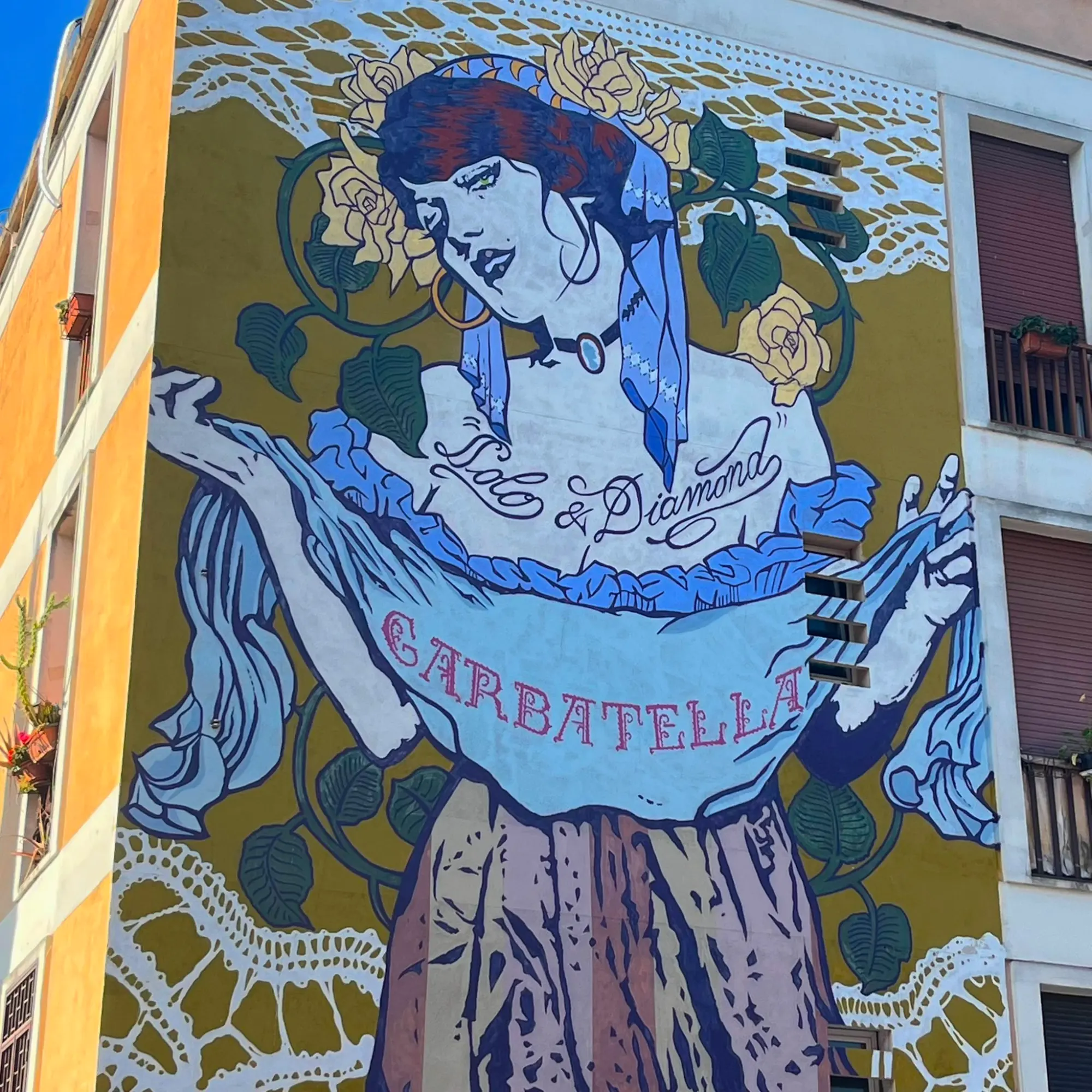
After Italian unification, Rome needed to be transformed into a modern European capital, and that meant industry. One of the city’s major plans was the development of the Porto Fluviale river port and the Ostiense industrial area to the south. After the First World War, amid rapid urban growth, Rome was facing overcrowding and a growing housing crisis. The city needed large-scale, low-cost housing for the working-class families who were moving into these newly industrialised areas.
The answer was the idea of a “borgata giardino” — a garden suburb — with green courtyards, varied types of housing and shared community facilities. The concept was inspired by Ebenezer Howard’s Garden City movement: an attempt to combine the best of rural life with the conveniences of an urban setting. This was particularly fitting for Garbatella, as many of its new residents had recently moved from the countryside to Rome.
Large residential complexes, known as lotti, were built alongside smaller villas, or villini, arranged around gardens and courtyards. The result was something quite unusual for a rapidly expanding capital: a neighbourhood designed to feel almost like a village, where greenery and communal life were woven into the urban fabric.
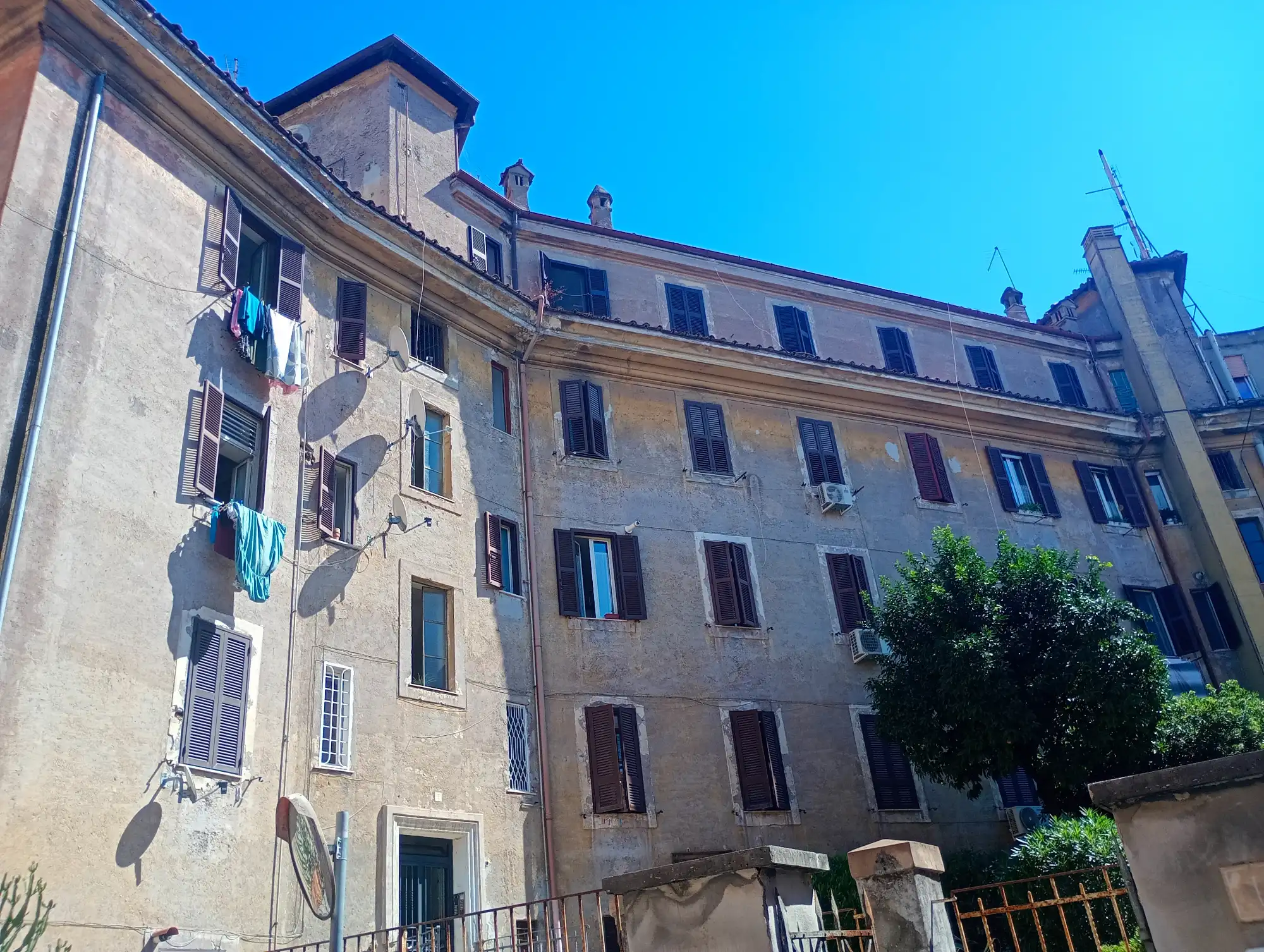
The project was led by the Istituto Case Popolari (ICP), Rome’s public housing institute, whose initials can still be found on the gates and walls of many buildings throughout the neighbourhood. Among the architects involved was Gustavo Giovannoni, the principal master planner and one of the pioneers of the barocchetto romano (Roman little-baroque) style. Beginning in 1920, he designed the initial layout and the first lotti around Piazza Benedetto Brin, overlooking the planned river port on the Tiber — a port that, in the end, was never completed.
Another key figure was Innocenzo Sabbatini, who went on to design some of Garbatella’s most distinctive housing blocks, communal spaces and the large suburban alberghi suburbani, or “suburban hotels”.
If you start your exploration from Piazza Benedetto Brin, also known as the “Pincetto” (little Pincio terrace), the first thing you notice, after taking in the view to the west, is the large residential complex of Lotto No. 5, designed by Innocenzo Sabbatini. Walk through the gate and, on the right-hand corner, you’ll find a plaque commemorating the laying of the neighbourhood’s first foundation stone on February 18, 1920, by King Victor Emmanuel III. Just inside, there is also a small madonnella, a shrine dedicated to the Madonna.
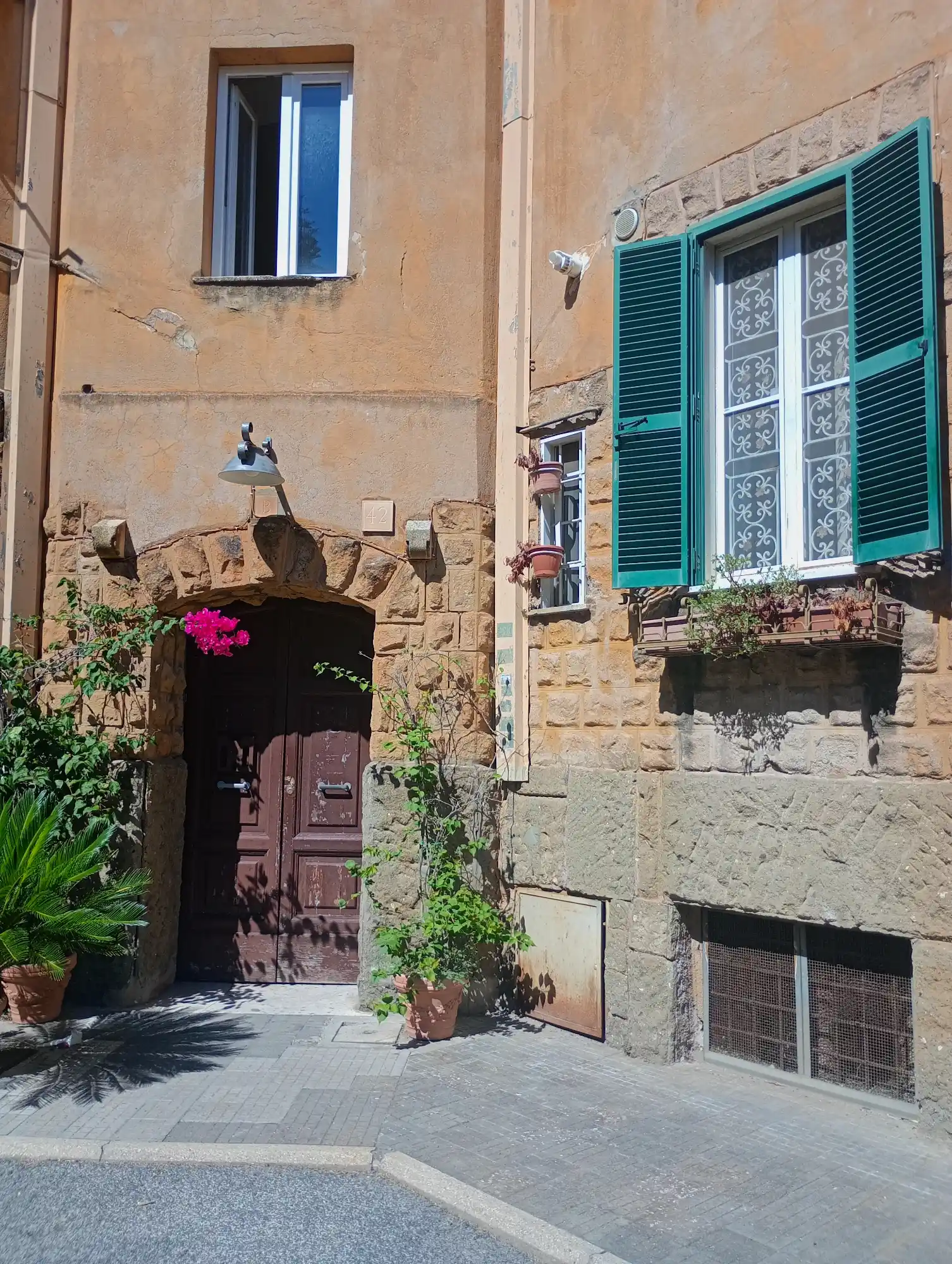
Once you reach the inner courtyard, you begin to appreciate the building’s truly peculiar, asymmetrical character, often regarded as a striking example of barocchetto romano architecture. It is an experimental mixture of different styles, where hardly a single corner looks quite the same, yet somehow the whole composition still manages to feel almost symmetrical. It’s almost as if your eyes are left searching for some kind of coherence, trying to work out exactly which architectural box to put it in.
The entrance arch evokes a medieval Italian village, while the gargoyle-like animal reliefs serving as waterspouts bring to mind a dark Gothic church. Elsewhere, the shapes and terraces seem to merge Baroque influences with touches of Art Nouveau. With its slightly overgrown gardens, picturesque doorways and windows with plants spilling from them, there is even something almost Hobbit-like about its cosiness. Together, these eccentric details create the impression of a slightly quirky fantasy world, with the whole complex seeming to open its arms and invite you inside.
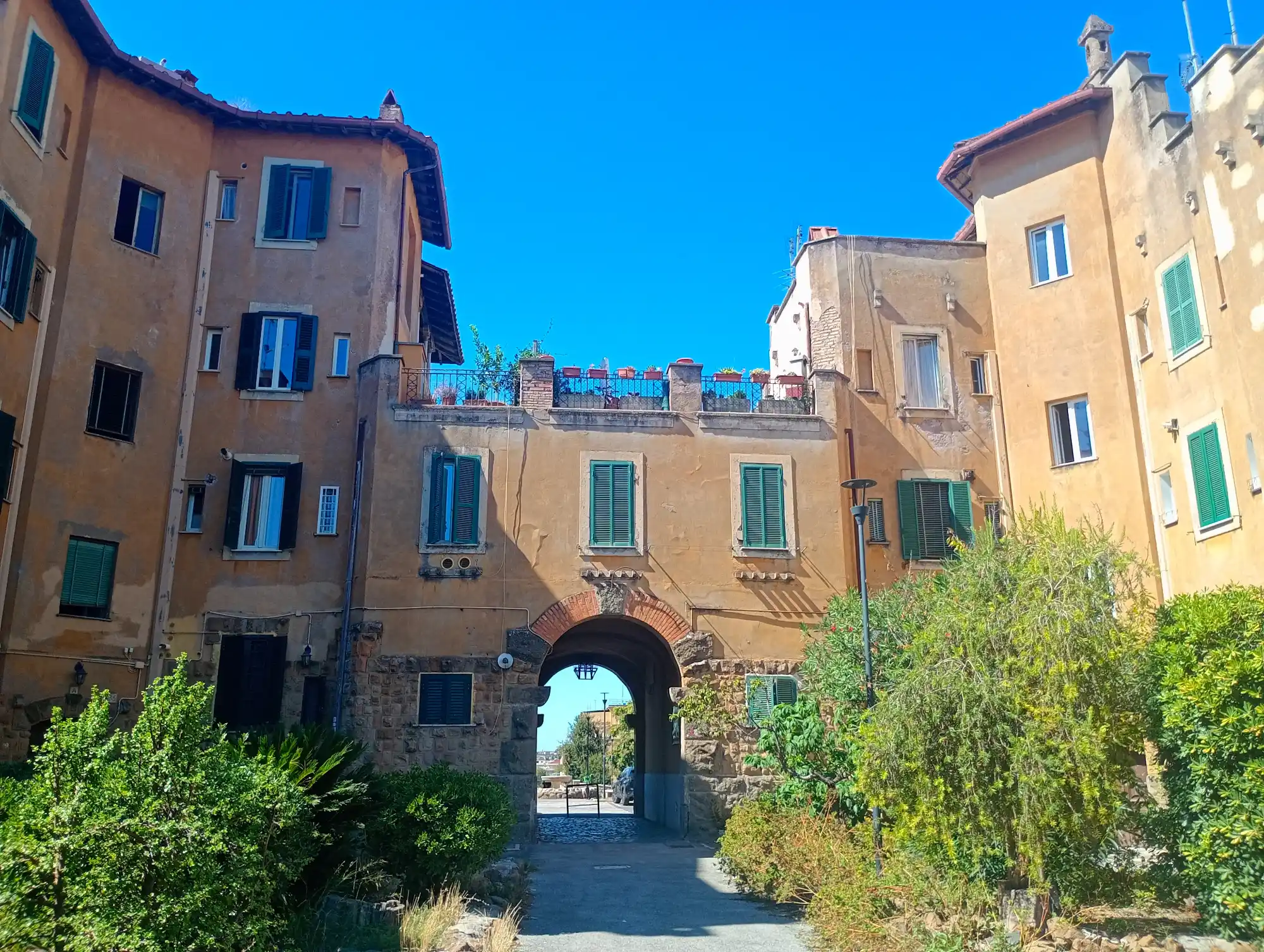
Continue down Via Luigi Orlando, and you’ll find yourself surrounded by the typical Garbatella villini — shared villas — set among gardens and built in the same spirit. These homes were originally designed to accommodate two or more families, with communal spaces shared between several households under the same roof. Although the people and families have changed over the decades, that strong tradition of communal living has endured. It is perhaps this lasting sense of community, more than anything else, that has preserved the distinctive soul of Garbatella.
Another important part of Garbatella’s character is its activist spirit. The neighbourhood has a notable history as a base for the partisan Resistance in Rome and later became an important centre of the working-class movement. This history is still reflected in the area’s strongly left-leaning political identity and its many cultural and social spaces.
At Casetta Rossa (“Red Cabin”), a former public building turned community space, you can eat, drink, attend a film screening or book presentation, bake bread together in the communal wood-fired oven, or take part in one of its many mutual-aid initiatives. Among them is the pasto sospeso, where people can donate meals for those who cannot afford them.
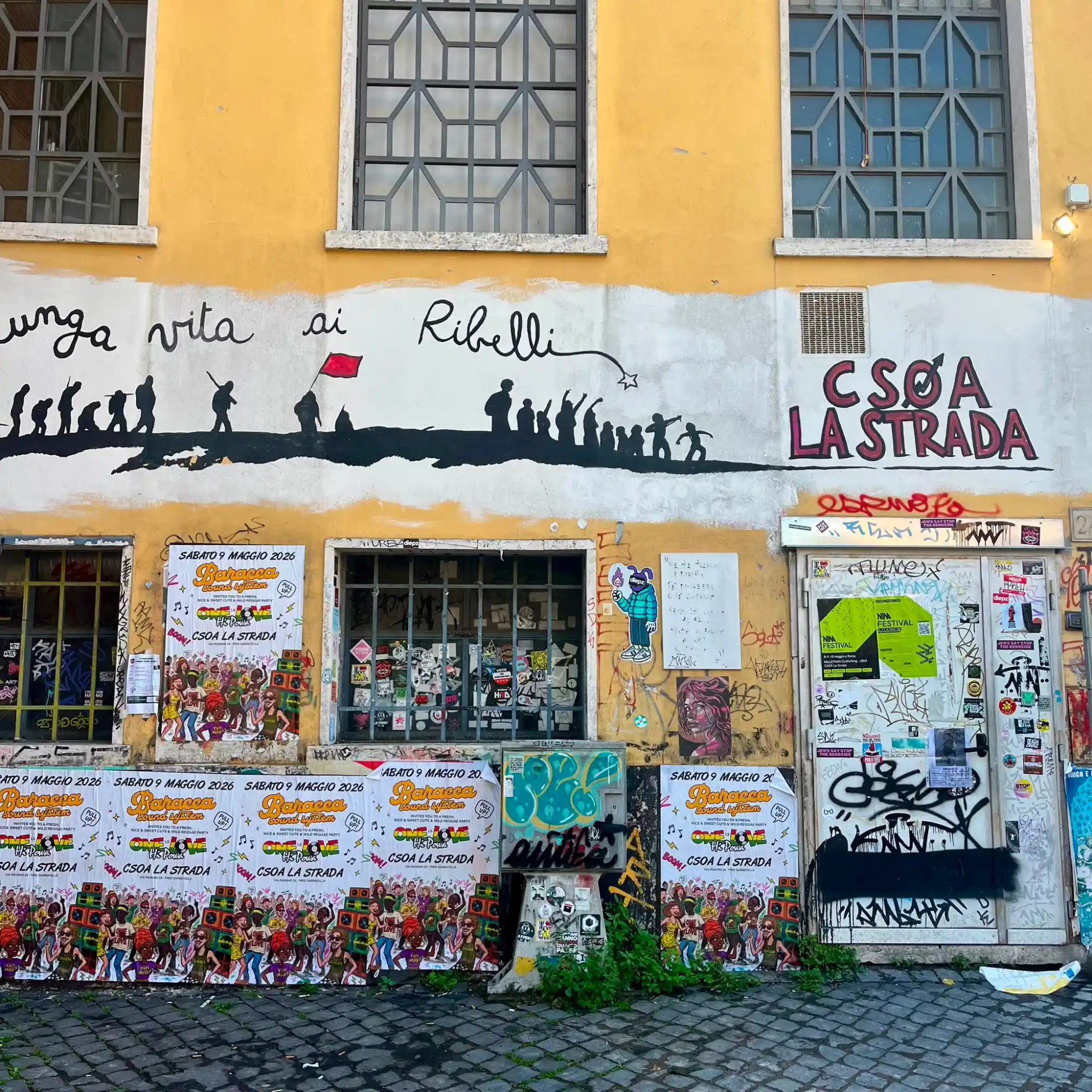
Further along, CSOA La Strada — a long-running centro sociale occupato e autogestito, or self-managed social centre — combines concerts, theatre, film screenings, workshops, education, social assistance and community projects. Its Scuola Popolare Piero Bruno, bicycle workshop and various solidarity initiatives are all part of the same community-oriented spirit. The centre also has a distinctly political identity, with a long-standing commitment to antifascism, antiracism and antisexism, as well as involvement in housing activism, migrant solidarity and international campaigns. You don’t have to look far to see this history written across the neighbourhood: just keep an eye out for the murals, posters and political writing covering its walls.
Under Mussolini, public housing and social institutions became part of the facist regime’s broader system of social organisation and control. Garbatella was incorporated into this system and, during this period, became home to many families displaced by the large-scale demolitions that transformed central Rome — including those carried out to create Via dei Fori Imperiali beside the Colosseum and Roman Forum.
One of the best-known examples is the Albergo Rosso (“Red Hotel”), together with the buildings around Piazza Michele da Carbonara and Piazza Eugenio Biffi. Despite their names, these were not hotels in the modern sense, but housing complexes intended to provide temporary accommodation for people removed from their homes by the regime’s urban redevelopment. In practice, however, the shortage of new housing meant that many of these supposedly temporary residents stayed for years, turning temporary accommodation into permanent homes. Some buildings consisted of private rooms, while others included communal facilities such as kitchens, laundries, childcare and other services.
Garbatella experienced some of its biggest changes after the Second World War. However, the neighbourhood was not rebuilt from scratch: the pre-war Garbatella remained largely intact, but was gradually surrounded and supplemented by post-war public housing. Before the war, it had been relatively isolated on the southern edge of Rome. New roads, public transport and housing developments slowly closed in around it, transforming what had once felt like a semi-rural neighbourhood. At the same time, the industrial landscape of Ostiense gradually fell into decline and was eventually abandoned.
By the 1990s, Garbatella was beginning to attract a new generation of artists, filmmakers and intellectuals, drawn to its distinctive and somewhat forgotten beauty. Its streets and courtyards became familiar backdrops on screen, most famously in I Cesaroni and Caro Diario, among many other films and series. This helped cement Garbatella in the hearts of Romans and reinforced its reputation as one of the city’s last truly Roman neighbourhoods, while the growing artistic community brought a new sense of vibrancy.
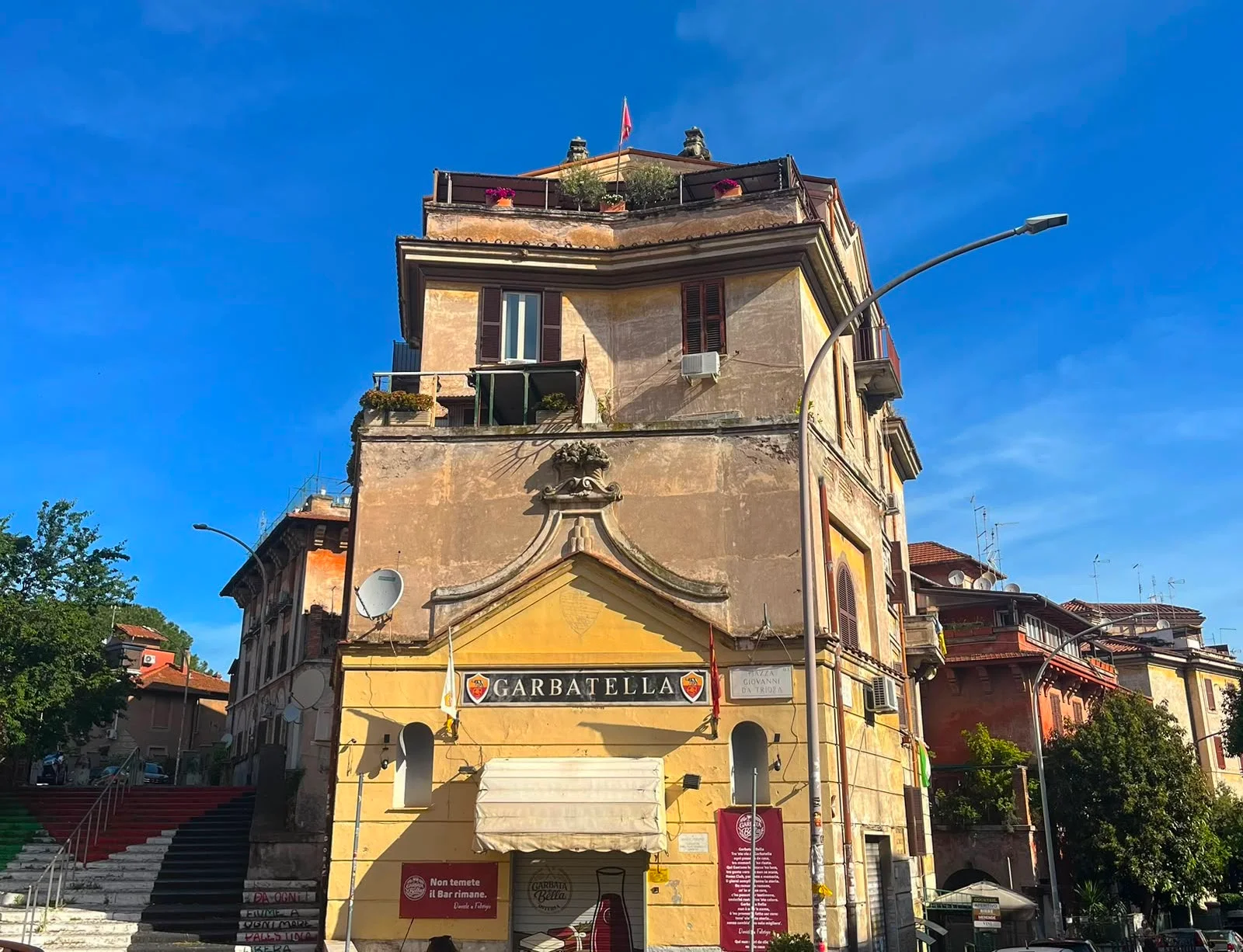
Today, you’ll find plenty of welcoming bars and authentic, unfussy Roman trattorias and osterias, many still largely known to locals. Pull up a chair at a street-side table, settle into one of the neighbourhood squares with an aperitivo, and for a moment, you can become part of Garbatella’s community yourself.
The best way to understand Garbatella’s charm is to wander through the many courtyards of its lotti, most of which are freely accessible. Many of these buildings and housing complexes are still state-owned today. Unfortunately, this is also part of the reason why some of the buildings have fallen into disrepair. Cracked walls and weathered façades reveal the lack of public funding invested in preserving and developing the area. In a sense, we arrive at Garbatella’s great paradox: its beauty lies in being frozen in time, even as time itself slowly wears it away.
Yet the local community is remarkably creative, active and committed to preserving the neighbourhood they love. And here, preservation means more than protecting its buildings and courtyards from decay. It also means safeguarding a way of life—the sense of community, intimacy and everyday spontaneity that gives Garbatella its unmistakable character.
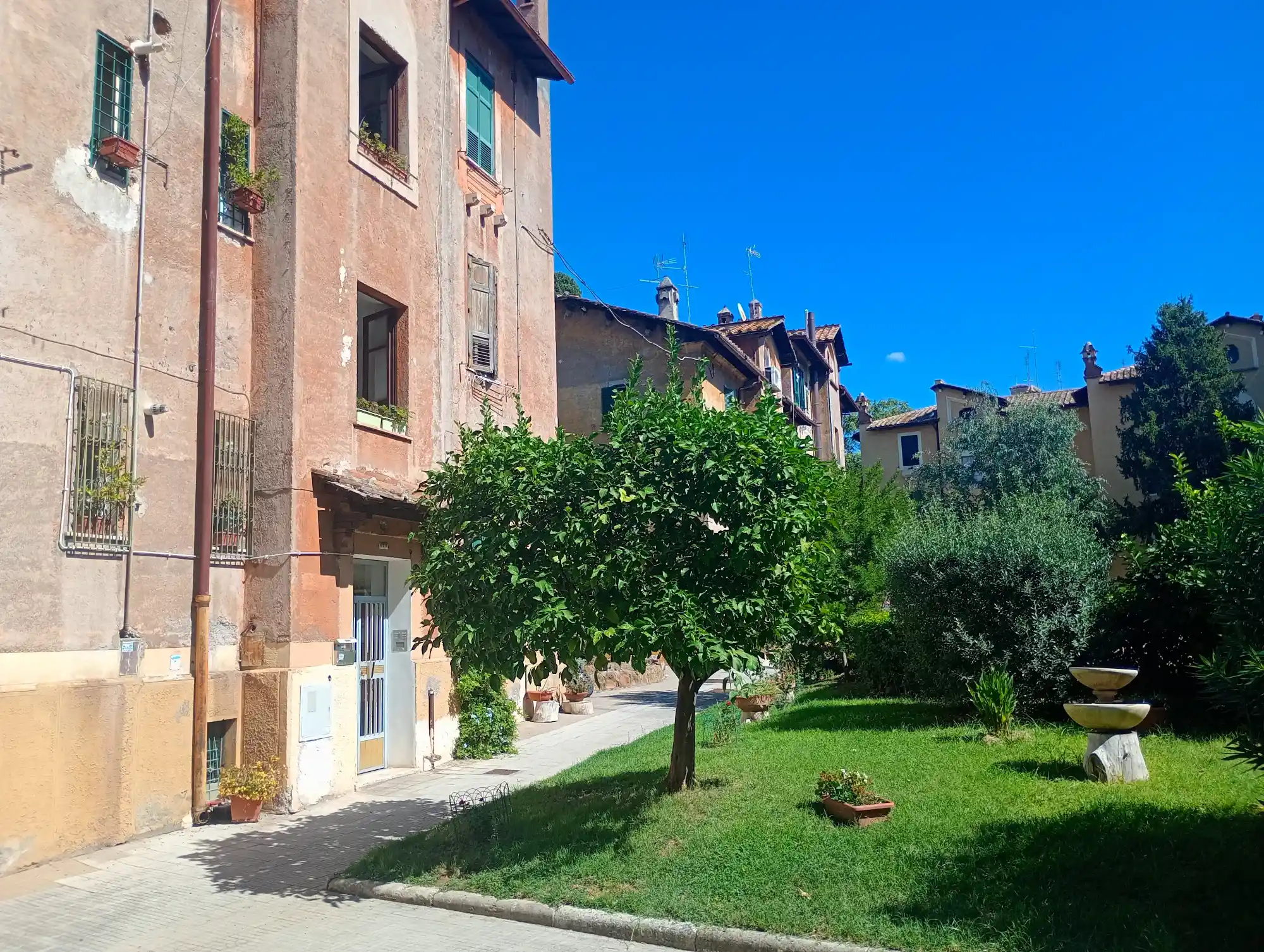
Just take a moment to be there. The city suddenly seems to fall quiet. There is little more than birdsong, an occasional conversation, the murmur of a television, or the gentle clinking of cutlery drifting through open windows at lunchtime or dinner. Just people living their everyday lives.
It is something so simple and essential, yet so easily overlooked. And perhaps it is precisely in these quiet, ordinary moments that you discover the unique soul of Garbatella: bold and proud, seemingly indifferent to the passage of time, yet warm and welcoming in its weathered beauty.
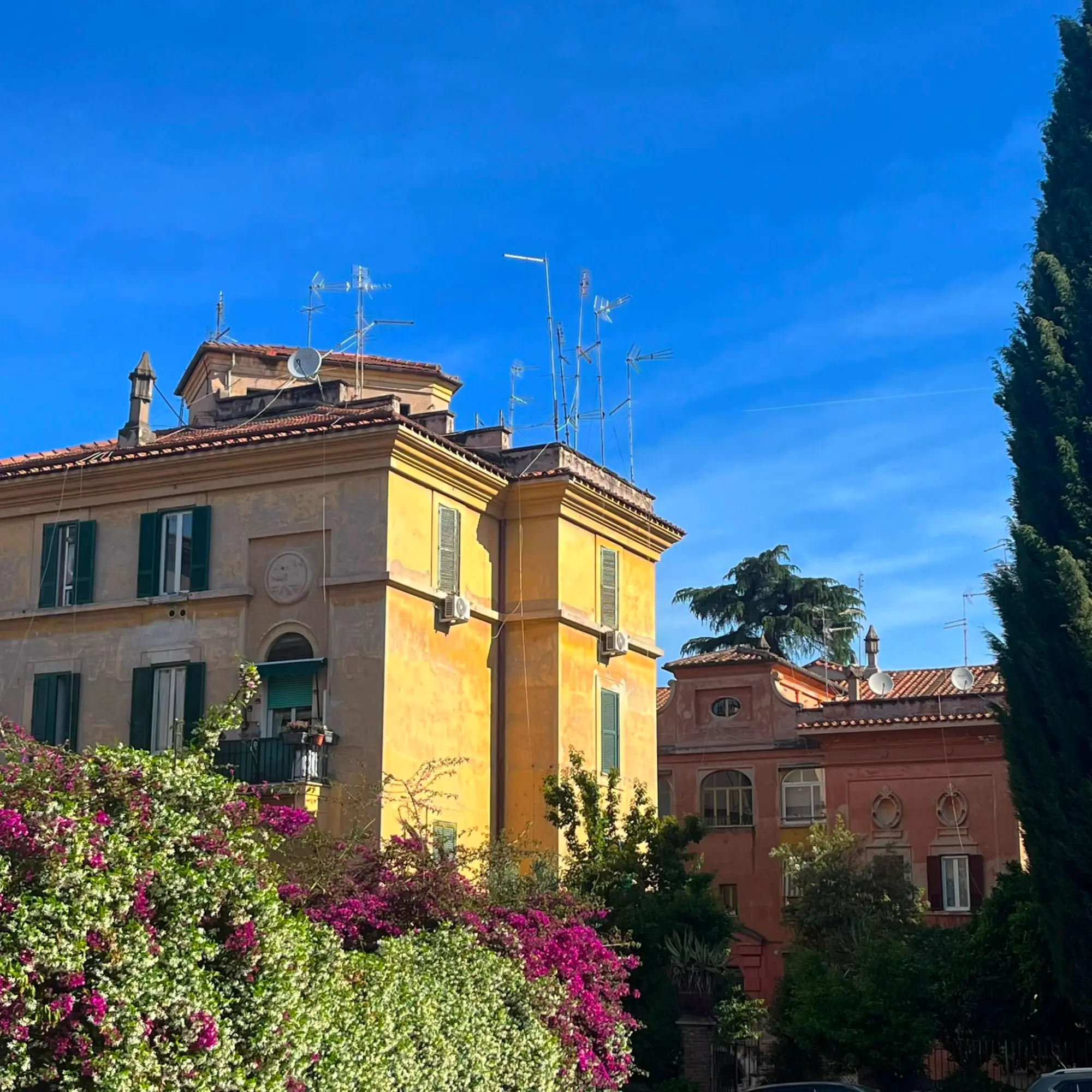
Places to add to your Garbatella itinerary:
Piazza Damiano Sauli — Garbatella’s lively social heart and a popular spot for an aperitivo. In the early evening, the square becomes an open-air living room for locals.
Scalinata degli Innamorati & Fontana della Carlotta — One of Garbatella’s most charming corners, long associated with young couples. The nearby fountain was once an essential source of water for local residents and is closely connected to the neighborhood’s name.
Piazza Benedetto Brin & Il Pincetto — A small terrace offering views towards Ostiense and a great starting point for exploring Garbatella’s distinctive lotti—clusters of homes built around shared courtyards.
Gli Alberghi Suburbani — At Piazza Carbonara and Piazza Biffi, these early housing complexes reveal Garbatella’s original vision of creating close-knit communities around shared spaces.
Piazza Bartolomeo Romano — A fascinating glimpse into everyday life in historic Garbatella. The square is dominated by Teatro Palladium, opposite a former public bathhouse, now turned into a cultural space.

Written by
Anya
A history and culture enthusiast, often found exploring museums, archaeological sites, villages, cities, landscapes, and lesser-known corners of Italy. I’m drawn not only to the extraordinary beauty of this country, but also to understand the complex—and sometimes controversial—history, culture, and society behind it.
Related stories
Culture • Practical Tips • History • Food • 8 min. read
Day Trips from Rome: Seaside and Historic Towns
During the warmer months, residents of Rome often leave the city behind to swim in the volcanic basin of Lake Bracciano or walk through the shaded Renaissance gardens of Villa d'Este. The surrounding Lazio region is defined by these quiet retreats, ranging from papal summer residences in the Castelli Romani to ancient Etruscan burial mounds. Relying on the local regional trains makes it straightforward to reach these hilltop villages and coastal towns in under an hour.
Practical Tips • 7 min. read
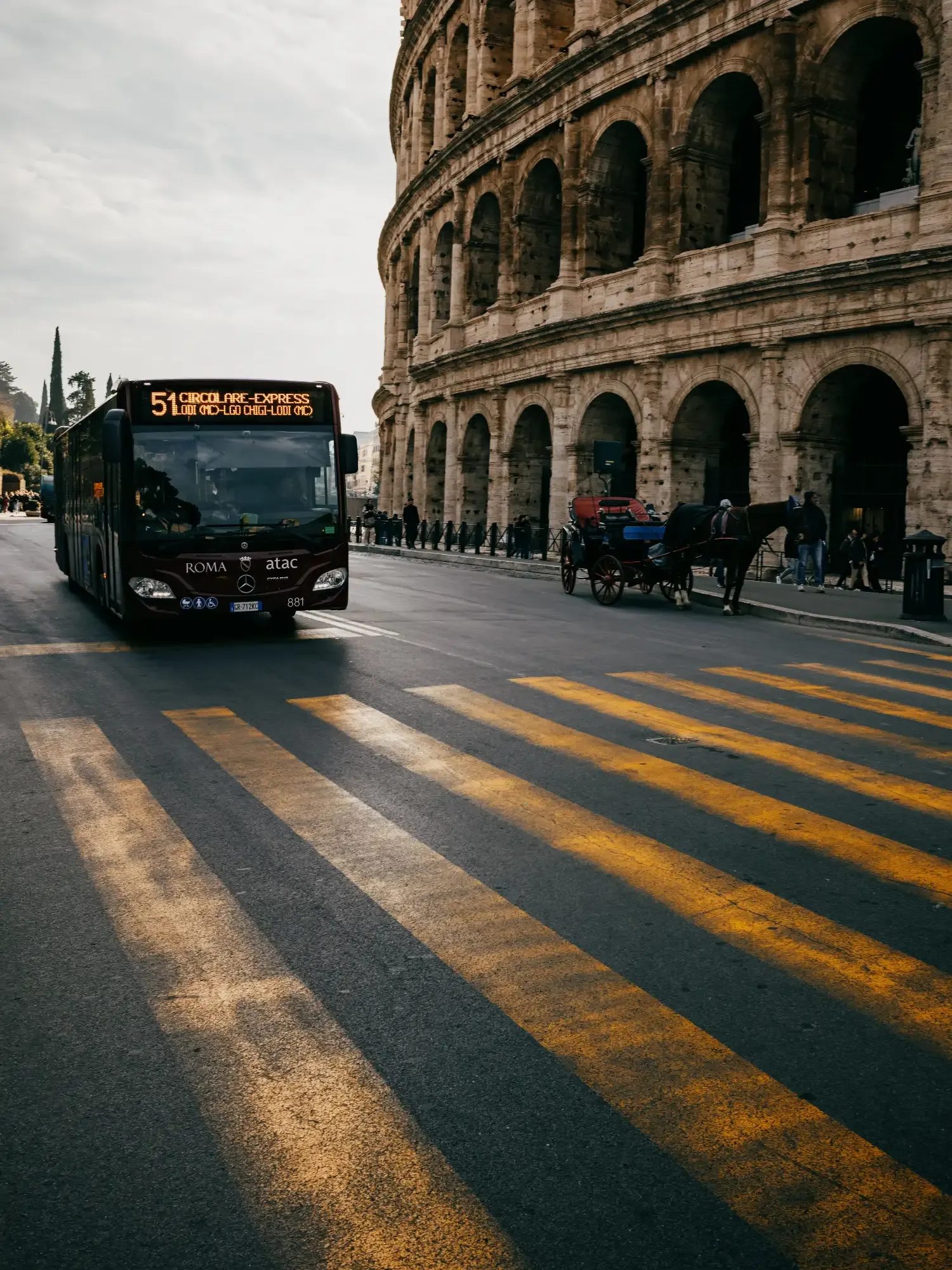
A Practical Guide to Rome's Public Transport and Airport Transfers
Arriving at Fiumicino Airport and figuring out how to reach central Rome does not have to be complicated. From the quick Leonardo Express train to affordable regional options, the city offers several reliable ways to get into town. Once you drop your bags, navigating the metro lines and busy ATAC bus routes is much easier when you know how to use the contactless Tap & Go system.
Culture • Practical Tips • History • 7 min. read
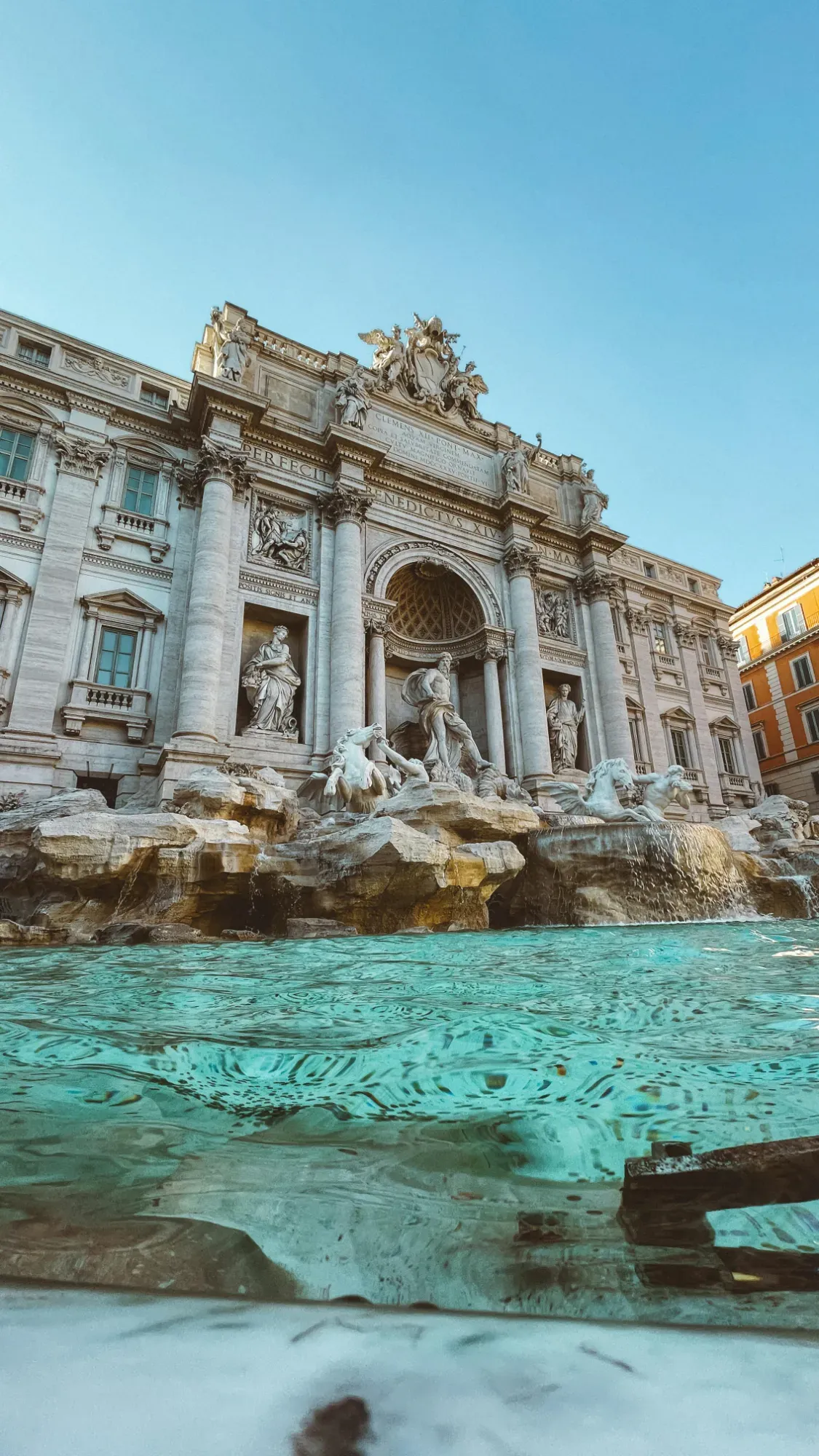
Exploring the Ancient Roots of Rome's Water System and Free Fountains
Explore Rome's enduring water legacy. From ancient aqueducts to modern free nasoni fountains, discover how this unbroken engineering tradition still quenches the city's thirst today.
Culture • Practical Tips • History • Tours • 14 min. read
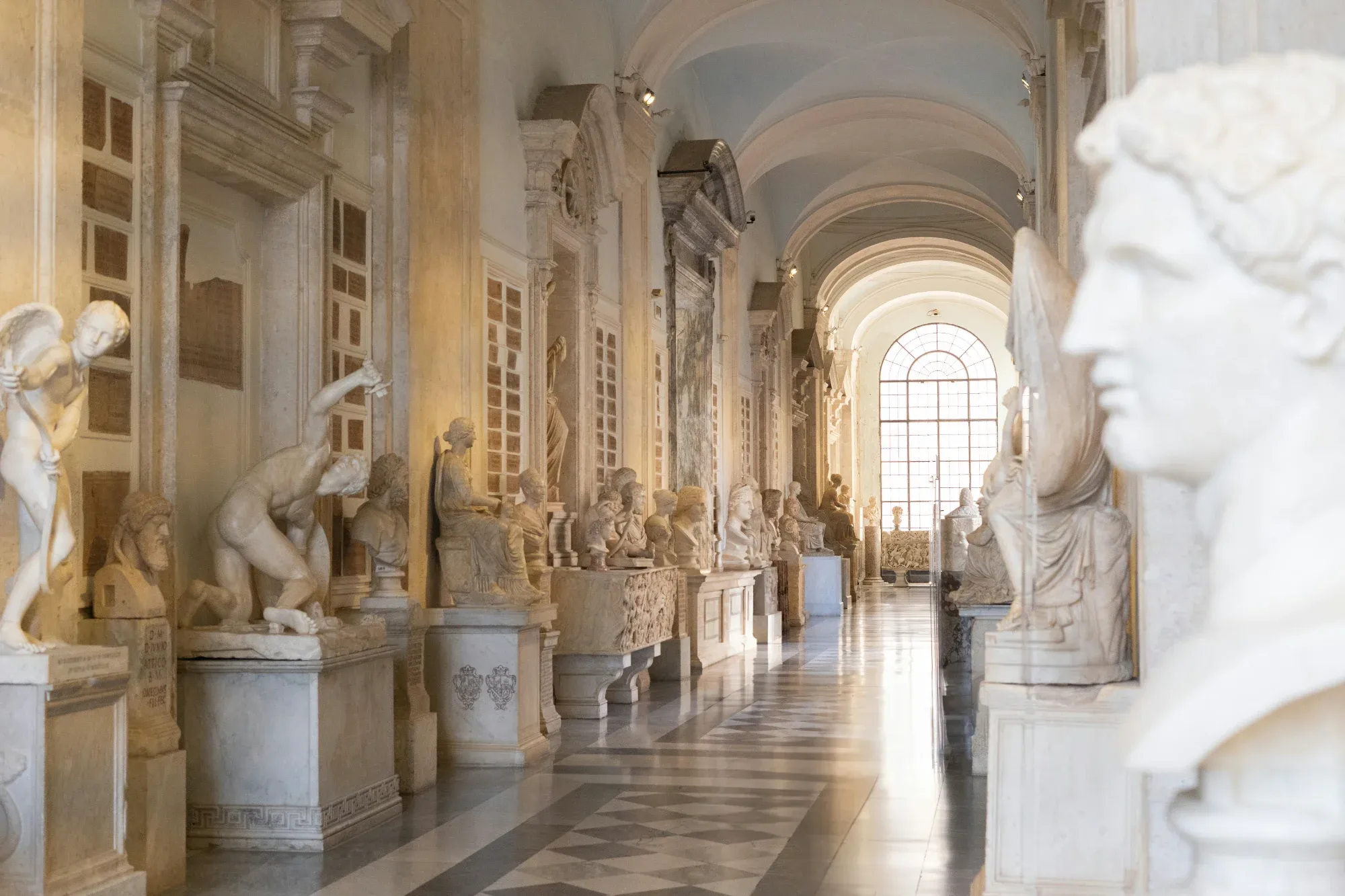
Rome's Essential Museums: The Vatican, Capitoline, Borghese and Beyond
Beyond the open-air ruins of the Forum, the true scale of the ancient and Renaissance worlds survives indoors. The Doria Pamphilj palace still holds gold-adorned private galleries, while the Capitoline preserves imperial bronze sculptures just steps from where they were originally displayed. Sorting through these vast collections requires knowing exactly what you want to see before arriving in Rome.
History • 10 min. read
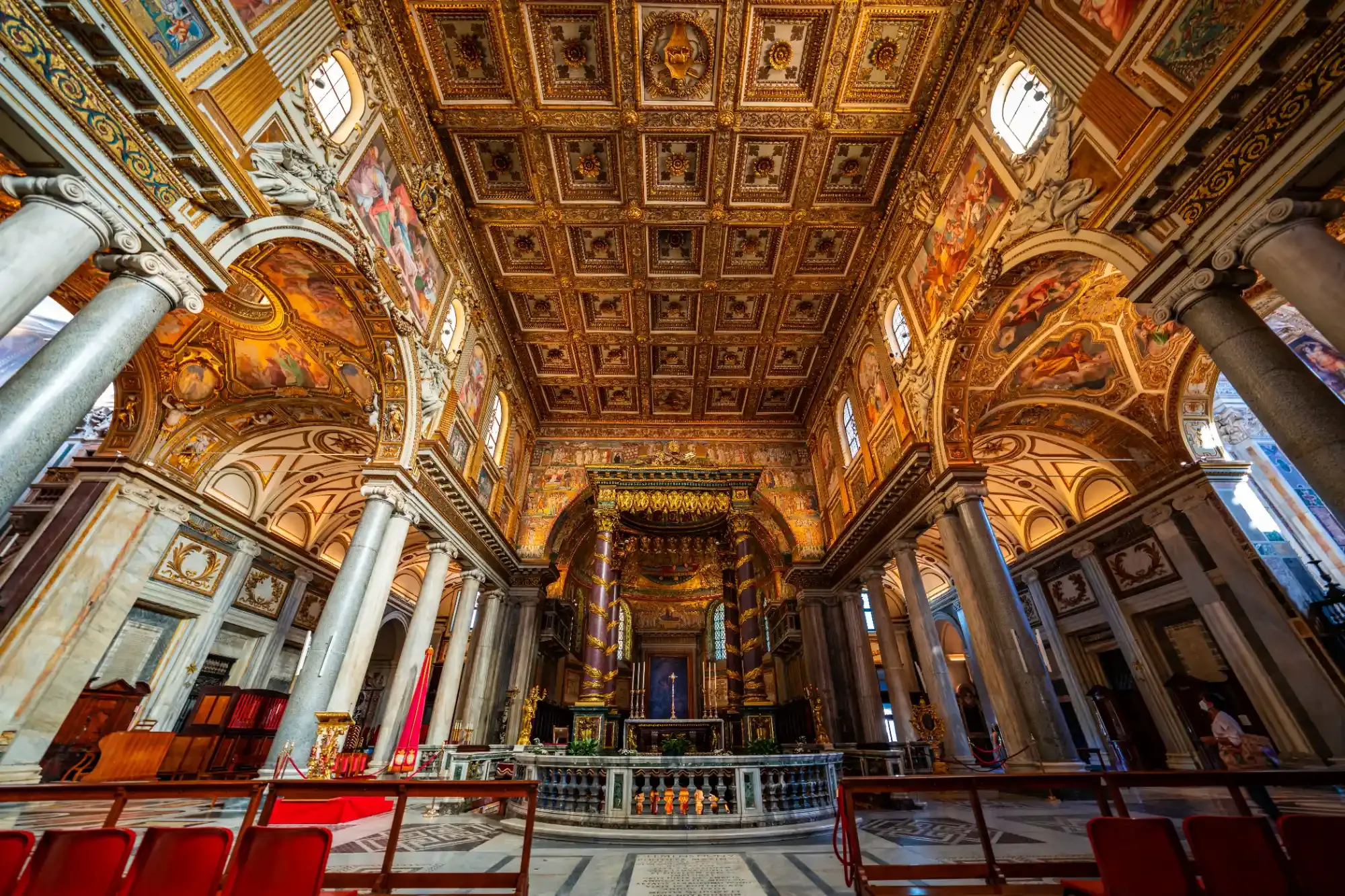
A Guide to Rome's Major Papal Basilicas and Historic Churches
Much of the finest art in Rome is not kept behind museum glass, but inside the chapels of active churches and ancient basilicas. You can stand beneath the 5th-century mosaics of Santa Maria Maggiore or study Caravaggio’s mastery of light in San Luigi dei Francesi just by walking through the doors. This guide outlines which religious sites hold significant Renaissance and Baroque works, and how to fit them into your visit.