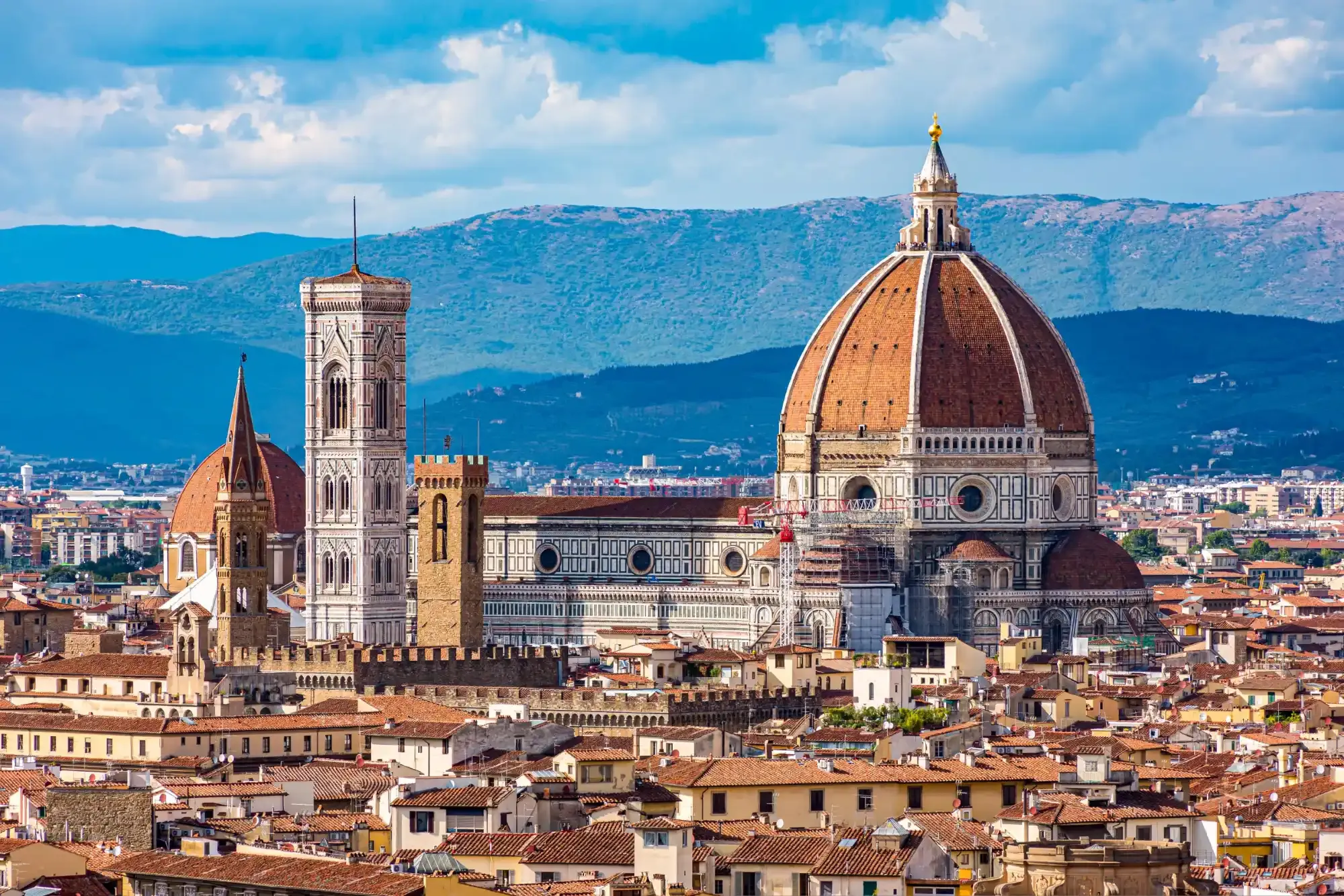
The best free walking tours and paid tours in Florence. Personally verified by Walkative team.
Florence wears its Renaissance history in public: a marble cathedral, a square lined with sculptures and a bridge still home to jewellers’ shops. Brunelleschi’s dome rises above the rooftops, while the Uffizi brings you face to face with Botticelli’s paintings. Cross the River Arno to explore the Oltrarno—the neighbourhoods on its southern bank—for craft workshops and local life, or pause over Tuscan food and a glass of wine. Behind the masterpieces are stories of Medici power, artistic rivalries and generations of skilled makers. Join us for a walk and discover the people who helped shape Florence.
Walking tours in Florence
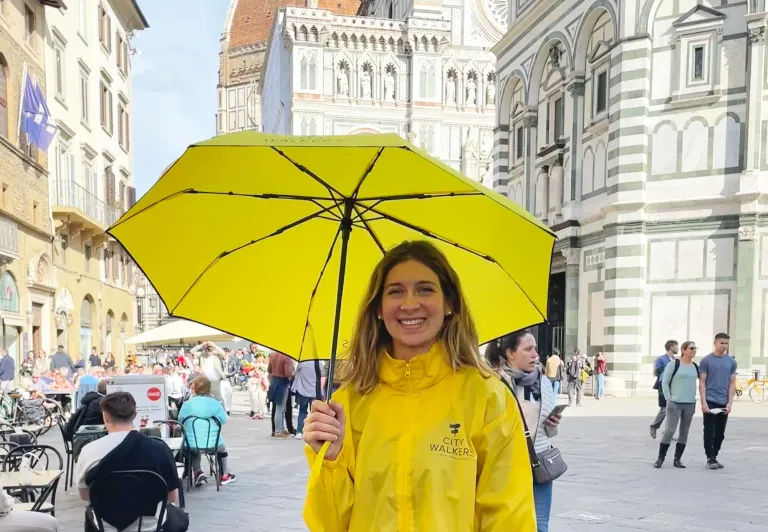

Upcoming tours in Florence
0Tuesday, 10th November 2026 · Day 1 of 18
No tours available on this day in selected language
FAQ
Florence
Florence is a compact city with an unusually rich public history. Its streets connect medieval towers, Renaissance palaces, working churches, artisan workshops, and busy food markets. Brunelleschi’s dome rises above the historic centre, while the River Arno cuts through the city beneath the Ponte Vecchio. In Florence, art is not hidden away in museums only. It appears in squares, church façades, courtyards, and stone details at street level. A visit here is most rewarding when you understand the stories behind the beauty: Medici politics, artistic ambition, local trade, religious life, and the daily rhythm of a Tuscan city.
Why Visit Florence?
- 🎨 See Renaissance art where it was created. Florence is closely linked with Botticelli, Michelangelo, Brunelleschi, Donatello, and many other artists.
- ⛪ Walk through a city shaped by churches and guilds. Santa Maria del Fiore, Santa Croce, and Santa Maria Novella still define the historic centre.
- 🌉 Cross the Ponte Vecchio. This medieval bridge is still lined with jewellers’ shops and remains one of Florence’s most recognisable places.
- 🏛️ Understand the Medici legacy. The family influenced politics, banking, art patronage, and the city’s visual identity for centuries.
- 🍷 Enjoy Tuscan food in its natural setting. Florence is a good place to try ribollita, bistecca alla fiorentina, crostini, and local wines.
- 🚶 Explore on foot with ease. The historic centre is compact, and many key sights sit within a comfortable walking distance.
Why Choose a Walkative Free Walking Tour in Florence?
Florence can feel simple at first glance. The cathedral, the river, and the main squares are easy to find. Yet the city becomes far more meaningful when someone explains what you are seeing.
A Walkative Free Walking Tour helps you connect Florence’s landmarks with the people, conflicts, and decisions behind them. You do not only hear names and dates. You learn why the dome mattered, how the Medici built influence, and why art became a form of power.
Our tours are designed for travellers who want clear orientation and reliable context. Florence has many famous sites, but it also has small details visitors often miss. A guide can point out symbols, street patterns, old trade areas, and local habits that make the city easier to read.
The free walking tour model is simple. You join the tour without paying a fixed ticket price in advance. At the end, you decide what the experience was worth to you. This makes the tour accessible and keeps the focus on quality guiding.
Walkative tours are useful at the start of your stay. You can ask practical questions, understand the layout, and plan museum visits with better context. A guide can also help you avoid common mistakes, such as underestimating reservation needs for major museums.
Florence rewards slow attention. Join a Walkative tour to see the city with more confidence, not just a checklist.
Top Things to See & Do in Florence
Cathedral of Santa Maria del Fiore and Brunelleschi’s Dome
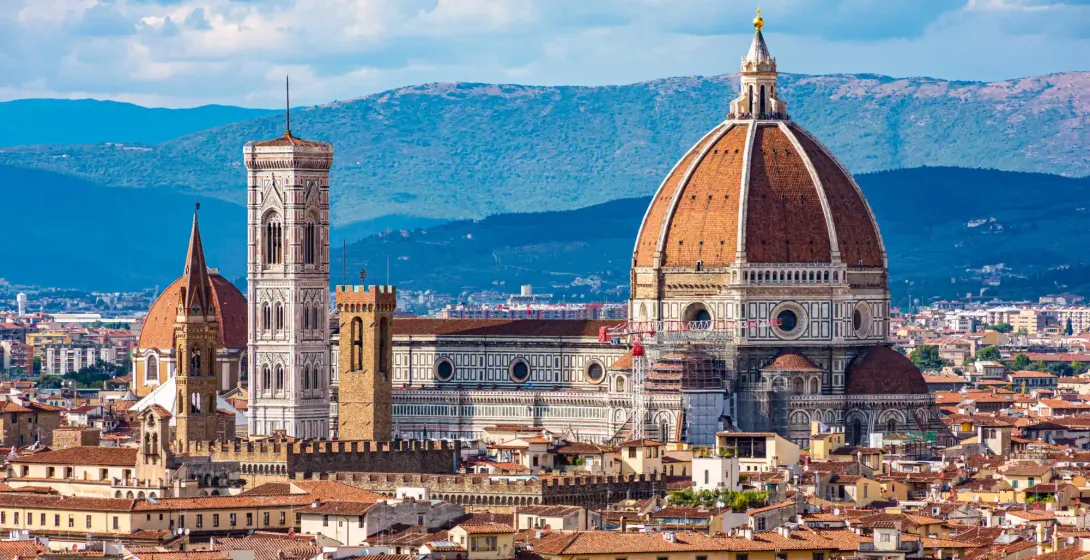
The Cathedral of Santa Maria del Fiore is Florence’s central landmark. Its marble façade, bell tower, baptistery, and vast dome dominate the historic centre. Brunelleschi’s dome remains a major achievement of Renaissance engineering.
You can admire the cathedral from the square without a ticket. Access to different parts of the complex depends on current ticket options. Check official information before planning a climb or museum visit.
Piazza della Signoria
Piazza della Signoria is Florence’s historic political square. It sits beside Palazzo Vecchio, the city’s medieval town hall. The square is also an open-air lesson in sculpture and civic power.
Here you can see the Loggia dei Lanzi, a copy of Michelangelo’s David, and statues connected with Medici rule. The square is busy, but it remains essential for understanding public life in Florence.
Ponte Vecchio
The Ponte Vecchio crosses the River Arno at one of the city’s most photographed points. Unlike most bridges, it is lined with shops. Today, many are jewellers.
The bridge has changed over time, but its commercial character remains visible. Early morning and late evening are usually calmer times to walk across.
Oltrarno
Oltrarno means “beyond the Arno.” This area lies on the southern bank of the river and feels different from the most crowded central streets. It includes artisan workshops, quieter lanes, and local squares.
Places such as Santo Spirito and San Frediano are often linked with craft traditions and neighbourhood life. Oltrarno is a good area for wandering without rushing.
Santa Croce
Santa Croce is one of Florence’s most important churches. It is associated with Franciscan history and contains notable tombs and memorials. Figures connected with Italian culture and science are commemorated here.
The surrounding area has lively streets, food places, and leather shops. As with all active churches, visitor access may vary due to services or events.
Mercato Centrale and San Lorenzo
The San Lorenzo area is known for food, market activity, and Medici history. Mercato Centrale has food stalls, fresh produce, and places to eat. Nearby streets are busy with shops and market stands.
The area also includes the Basilica of San Lorenzo and Medici-related sites. It is a useful stop for travellers who want both history and a practical food break.
Piazzale Michelangelo
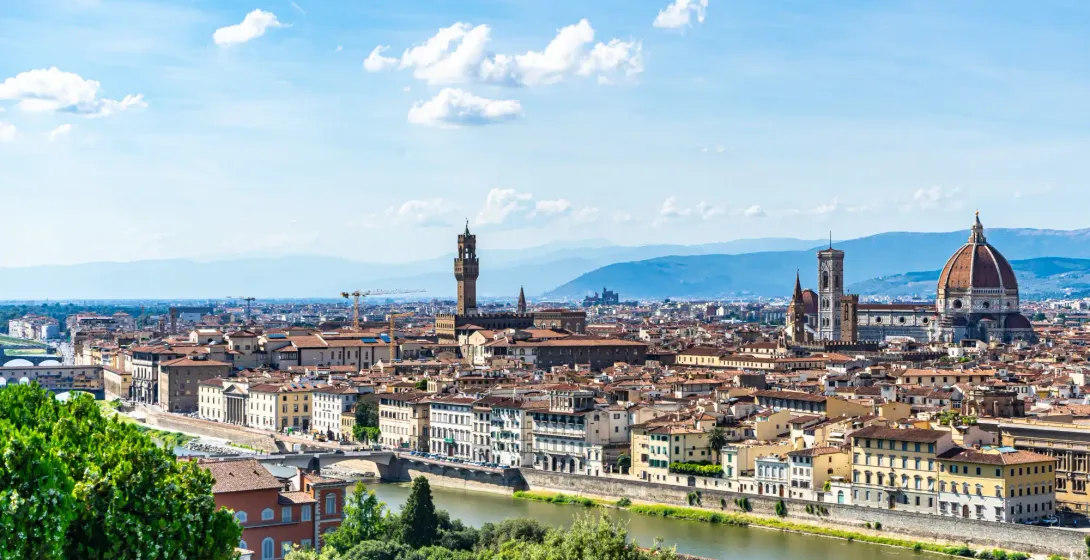
Piazzale Michelangelo offers one of the best-known views over Florence. From here, you can see the cathedral dome, Palazzo Vecchio, the Arno, and surrounding hills.
The walk uphill takes effort, especially in warm weather. You can also reach the area by local transport or taxi. Sunset is popular, so expect crowds.
Getting Around Florence
Florence is one of the easier Italian cities to explore on foot. The historic centre is compact, and many major landmarks are close together. Walking is often the most practical way to move between sights.
There is no metro system in Florence. Instead, the city uses buses, trams, taxis, and regional trains. Public transport details can change, so check current routes before travelling.
The tram network is useful for some journeys outside the central pedestrian area. It connects areas including Florence Airport and the main railway station, Santa Maria Novella. It is not usually needed for short walks inside the historic core.
Buses serve many neighbourhoods and can be helpful for longer distances. Ticket rules may change, and validation is important in Italian public transport. Always check local instructions before boarding.
Santa Maria Novella station is the main rail hub. It is close to the city centre and connects Florence with other Tuscan cities. It is also useful for day trips to Pisa, Lucca, Bologna, and other destinations.
Taxis in Florence usually work from official taxi ranks or by phone and app services. You generally do not hail them in the street as in some cities. Confirm the fare system locally if you have luggage or travel late.
Driving in central Florence is not recommended for most visitors. The historic centre has restricted traffic zones, known as ZTL areas. Entering without permission may lead to fines.
If you stay outside the centre, check transport links before booking. A hotel near a tram stop or station can make your visit easier. If you stay inside the historic centre, choose luggage-friendly streets when possible.
The Best Museums in Florence
Uffizi Gallery
The Uffizi Gallery is one of Florence’s most important museums. It is especially known for Renaissance painting. Works by Botticelli, Leonardo da Vinci, Michelangelo, and other major artists are associated with the collection.
The museum is popular throughout the year. Advance booking is strongly recommended, especially in busy seasons. Check current rules, ticket options, and entry times before visiting.
Galleria dell’Accademia
The Galleria dell’Accademia is best known for Michelangelo’s David. Seeing the original sculpture gives a different impression than seeing copies in public squares.
The museum also includes other works connected with Florentine art. Like the Uffizi, it can be very busy. Timed entry may be useful.
Palazzo Pitti
Palazzo Pitti is a large Renaissance palace on the Oltrarno side of the river. It is connected with Medici and later court history. Today, it houses several museum collections.
The palace is also linked with the Boboli Gardens, a historic garden behind the building. Visiting both can take several hours. Check the current ticket structure before planning.
Bargello National Museum
The Bargello is an important museum for sculpture. It is housed in a medieval building that was once connected with civic authority and justice.
The collection includes works by artists such as Donatello and Michelangelo. It is often less crowded than the Uffizi, though visitor numbers still vary.
Museo dell’Opera del Duomo
The Museo dell’Opera del Duomo explains the cathedral complex in depth. It contains original artworks and architectural elements from the Duomo, Baptistery, and related buildings.
This museum is especially useful if you want to understand how the cathedral was built and decorated. It adds important context to what you see outside.
Day Trips from Florence
Pisa
Pisa is an easy and popular day trip from Florence by train. Its main attraction is the Piazza dei Miracoli, home to the Leaning Tower, cathedral, baptistery, and cemetery.
The famous tower attracts many visitors, but the whole square is worth time. If you plan to climb the tower, check current ticket availability in advance.
Siena
Siena offers a different Tuscan city experience. Its historic centre is known for brick architecture, steep streets, and Piazza del Campo. The city also has a strong medieval identity.
Siena can be reached from Florence by bus or train, depending on your plans. Travel times and routes vary, so compare options before choosing.
Lucca
Lucca is a calm and walkable Tuscan city. It is known for its preserved city walls, narrow streets, churches, and relaxed pace. The walls form a pleasant walking and cycling route.
Lucca is suitable for travellers who want a quieter day than Pisa or Siena. Train connections from Florence are available, but journey times vary.
Join a Walkative Free Walking Tour in Florence
Florence is beautiful without explanation, but it becomes more interesting with context. A Walkative Free Walking Tour helps you understand how the city works, not only where its monuments stand.
Join us to explore Florence through its streets, squares, river views, and historical layers. Hear how banking, family rivalry, faith, architecture, and art shaped the city’s identity.
A guided walk is a practical first step before visiting museums or planning day trips. It gives you orientation, useful local insight, and a clearer sense of what to explore next.
Book your place on a Walkative Free Walking Tour in Florence, check the current schedule, and meet the city at street level. Bring comfortable shoes, water in warm weather, and your questions.
Florence is compact, but its history is dense. Walk with someone who can help you read it clearly.