Warsaw and World War II: Navigating a City of Remembrance
Sandstone plaques on residential buildings and a massive hill built from wartime rubble define the physical memory of Warsaw today. The city's landscape of remembrance extends far beyond museum walls, integrating the tragedies of the 1943 Ghetto uprising and the 1944 resistance into everyday streets. Understanding this layered history transforms a casual walk through the capital into a deep encounter with its endurance.
History • Tours • 5 min. read
Warsaw is a city deeply defined by its twentieth-century history, wearing the scars and memories of conflict on nearly every corner. For visitors seeking to understand the Polish capital, exploring its landscape of remembrance offers a window into the endurance of its people. Walking through its streets is a profound historical experience, where past and present are woven closely together in everyday urban life. By observing these quiet monuments alongside bustling modern avenues, travellers can better grasp how Warsaw rebuilt itself from near-total destruction while keeping its memories intact.
Warsaw and World War II: A City of Remembrance
September holds a profound weight in Polish historical memory, marking the dual invasion that triggered the outbreak of World War II in 1939. In Warsaw, the legacy of this conflict is inescapable. While the tragic 1944 Warsaw Uprising is the most internationally recognized chapter of the city's wartime experience, the capital's commemorative landscape is much broader. Monuments, plaques, and preserved ruins are integrated directly into the modern urban fabric, rather than being confined to museums.
These markers serve as active sites of historical education, honoring the varied facets of resistance, suffering, and survival that define Warsaw's narrative. Because understanding these overlapping events can be complex, exploring the city on a historical walking tour often helps visitors properly contextualize the sheer scale of the conflict that reshaped the capital.
Street-Level History: The Tchorek Plaques and Nike Monument
Exploring Warsaw on foot reveals history embedded intimately at street level. Scattered across the city are the Tchorek Plaques—distinctive sandstone tablets designed in 1949 by sculptor Karol Tchorek. Adorned with a central cross, these markers identify specific locations where civilians and resistance fighters were executed during the German occupation. Their presence on modern residential buildings ensures these localized tragedies remain visible in the daily routine of the city.
Near the Old Town, on a larger scale, stands the Monument to the Heroes of Warsaw, commonly known as the Nike Monument. Featuring the classical goddess of victory charging forward with a raised sword, this striking sculpture honors all those who fought and died for the city between 1939 and 1945. It serves as a unifying, powerful tribute to Warsaw’s collective defiance and resistance.
Commemorating Distinct Tragedies: Ghetto Heroes and the Katyn Stone
Warsaw also dedicates significant public space to specific atrocities that shaped the war. The Monument to the Ghetto Heroes stands in the Muranów district, a powerful stone and bronze tribute to the fighters of the 1943 Warsaw Ghetto Uprising and the broader tragedy of the Holocaust. Designed by Nathan Rapoport, its contrasting sides evoke both the grim reality of deportation and the immense courage of the Jewish resistance.
Across the city, the Katyn Stone provides a quiet but historically crucial space for reflection. It commemorates the thousands of Polish military officers and intelligentsia executed in the Katyn Forest by Soviet forces in 1940. Because this history was strictly suppressed by communist authorities for decades, the physical memorial stands today as an important symbol of historical truth and national memory.
Honoring the Military: The Unknown Soldier and the Aviator
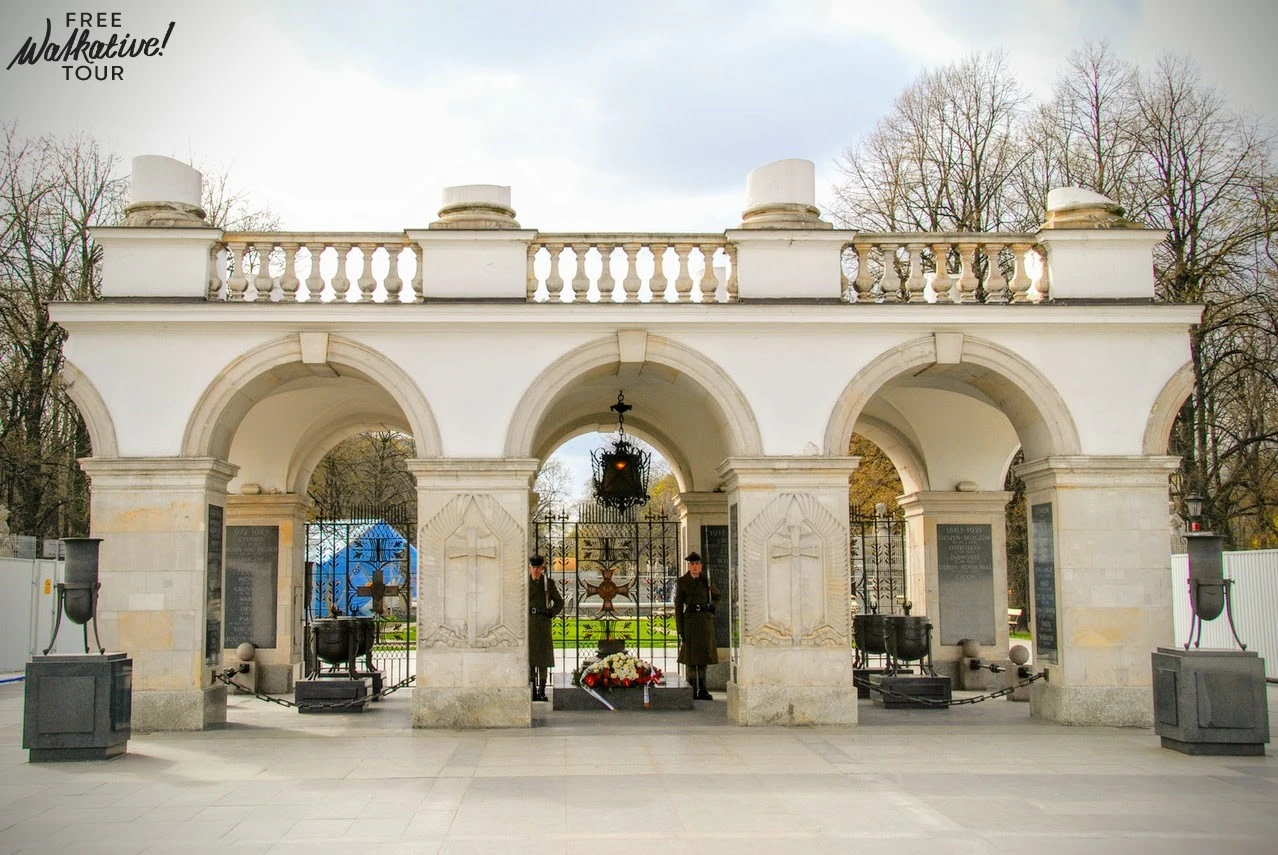
Traditional military commemoration remains a focal point of Warsaw's public spaces. The Tomb of the Unknown Soldier, located in Piłsudski Square, is arguably the most important national shrine in Poland. Housed within the only surviving fragment of the Saxon Palace—which was systematically destroyed by retreating forces in 1944—it contains urns of soil from various battlefields where Polish soldiers fought. A continuous honor guard maintains a vigil here, with a solemn changing of the guard ceremony held every Sunday.
Another key military tribute is the Aviator Monument. Originally unveiled before the war and reconstructed after being destroyed, it honors the contributions of the Polish Air Force. The monument reminds passersby of the pilots who defended the skies over Poland in 1939 and later played crucial roles in Allied campaigns, including the Battle of Britain.
Echoes of 1944: The Uprising Mound and Fallen Unconquered
The physical remnants of the 1944 Warsaw Uprising are memorialized through distinct, solemn monuments. The Booby-Trap Tank Monument in the Old Town remembers a tragic event where an abandoned German explosive vehicle detonated, killing hundreds of civilians and insurgents. In the Wola district, the Fallen Unconquered memorial stands in the Warsaw Insurgents Cemetery, guarding the ashes of tens of thousands of unnamed victims of the brutal Wola massacre.
Perhaps the most striking echo of this destruction is the Warsaw Uprising Mound in the Czerniaków district. Constructed in the post-war years from the actual rubble of the destroyed capital, this artificial hill physically connects the modern landscape to the city's ruined past. Joining a guided walking tour to these specific sites offers deeper insight into the staggering human cost of 1944.
Understanding Warsaw requires acknowledging this landscape of memory. These monuments, from towering bronze figures to small street-corner plaques, offer a clear perspective on the human cost of the conflict. By maintaining these sites and integrating them into the modern city, Warsaw ensures its complex wartime history remains accessible, dignified, and present for all who walk its streets. Taking the time to pause at these memorials transforms a simple city visit into a meaningful journey through Poland’s enduring spirit.
Related stories
Culture • History • 6 min. read
5 must-visit museums in Warsaw: your ultimate cultural guide
Explore Warsaw’s top museums: Warsaw Rising Museum, POLIN, Royal Castle, Wilanów Palace and the funny one about life under communism.

Culture • History • 6 min. read
9 movies you should watch before or after visiting Warsaw
Explore Warsaw's history on screen. See films on the Ghetto, the Uprising, and the Cold War like The Pianist, Kanał, and Jack Strong before you visit.
History • Tours • 4 min. read
The Warsaw Uprising: Fighting for Sovereignty in 1944
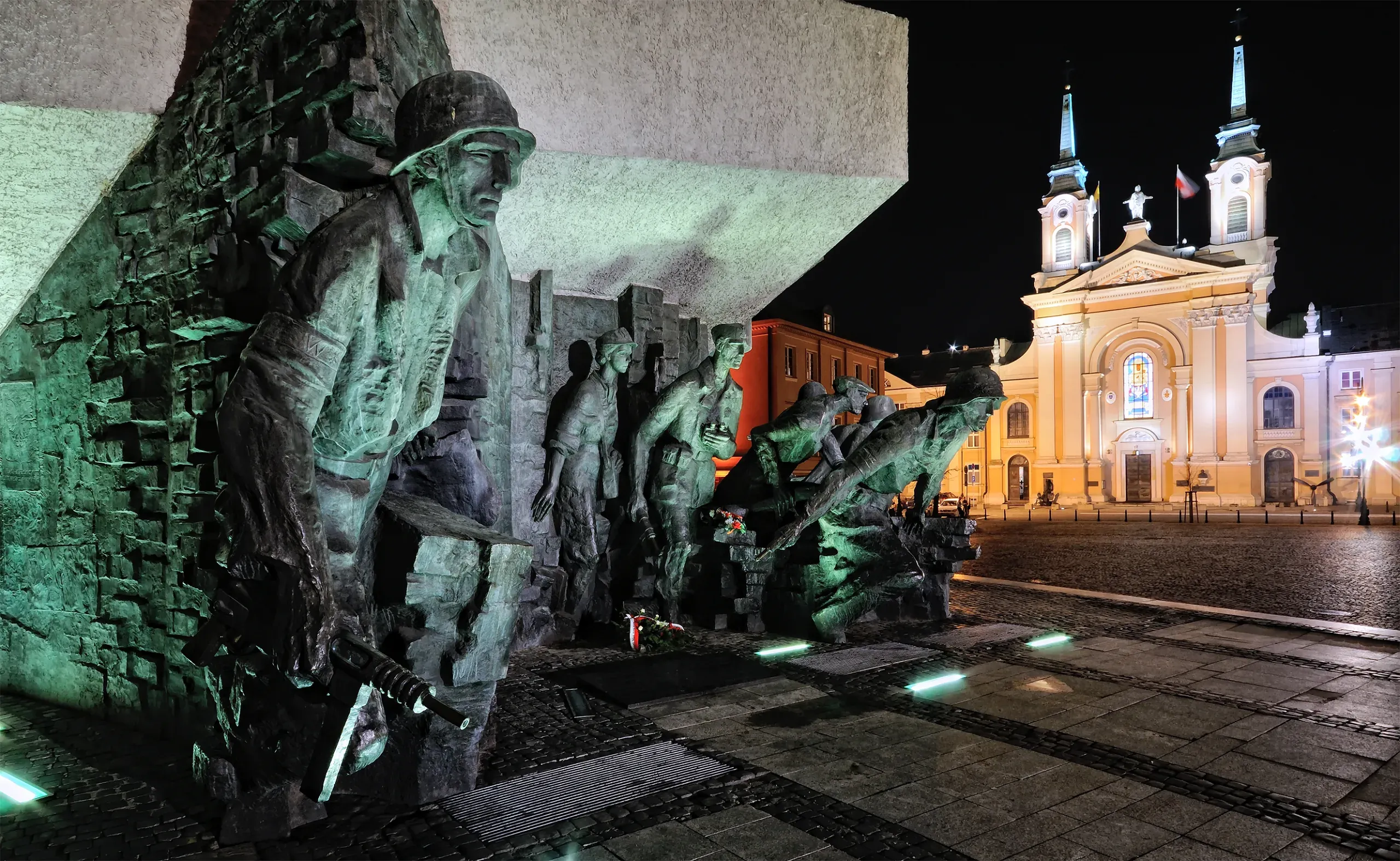
Explore the history of the 1944 Warsaw Uprising. Learn about W-Hour, the Rising Museum, and the monuments that honor the city's fight for sovereignty.
Practical Tips • History • 10 min. read
What to do and see in Warsaw – main attractions and places to visit
Warsaw highlights: Palace of Culture 30th-floor terrace, Royal Castle museum, guard change at Tomb, Old Town, Praga, Nożyk Synagogue, Uprising Museum.

Culture • History • 4 min. read
April 19th in Warsaw: Why the City Turns Yellow for the Ghetto Uprising
Visiting Warsaw in April? Discover the moving history behind the yellow paper daffodils worn on April 19th to honor the 1943 Ghetto Uprising.