Discover Berlin-Wedding: Seven Must-Visit Places in One of Berlin's Most Authentic Neighbourhoods
History, culture, architecture, local food and hidden gems in Berlin's fascinating northern district.
Culture • History • Food • 8 min. read
Last edited:
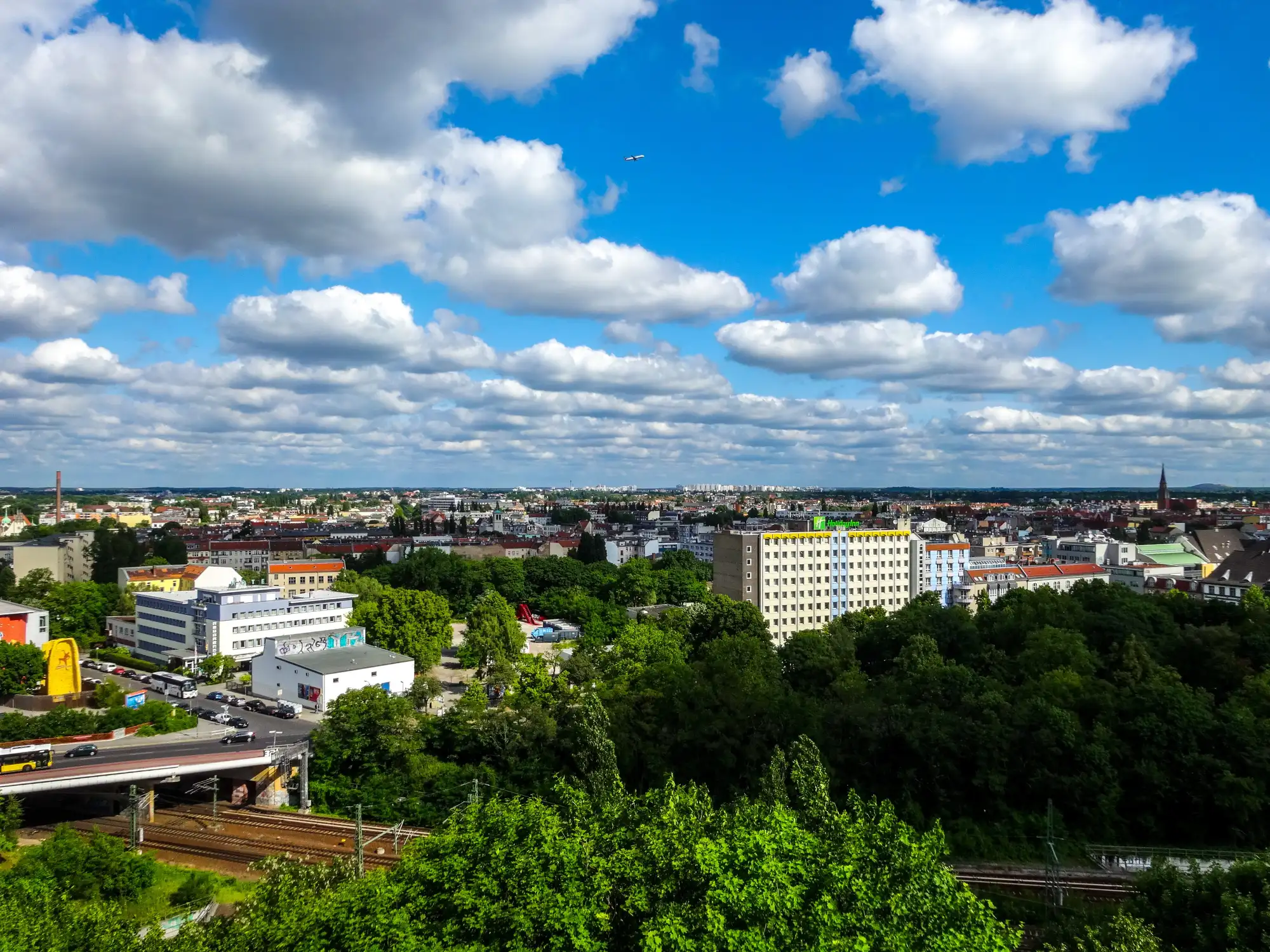
Often overlooked by first-time visitors, Wedding is one of Berlin's most interesting and underrated neighbourhoods. Situated just north of Mitte, it offers a fascinating combination of industrial heritage, contemporary art, historic landmarks, multicultural food and authentic Berlin street life.
Unlike the more polished streets of Prenzlauer Berg or the busy tourist areas of Mitte, Wedding has retained much of its original character. It is a neighbourhood of independent cafés, traditional pubs, artists' studios, historic buildings and lively local markets. There is plenty to discover, and much of it tells an important story about Berlin's past.
While preparing for your adventure in Berlin check out our tours there -->
A little history: From working-class district to creative neighbourhood
Wedding's history dates back to medieval times. The name has sadly nothing to do with weddings or marriage. It's derived from the settlement of Weddinge which was first documented in 1251, when the area was still largely agricultural and outside the historic city of Berlin.
During the nineteenth century, industrialisation transformed the neighbourhood. Factories, engineering companies and manufacturing businesses attracted thousands of workers, while dense residential buildings were constructed to accommodate the growing population.
Wedding became known as Roter Wedding (Red Wedding) because of its strong working-class identity and left-wing political movements. During the Weimar Republic, it was an important centre of labour activism and political resistance.
After the Second World War, Wedding became part of the French sector of West Berlin. Its position close to the Berlin Wall had a profound influence on the neighbourhood for almost three decades.
Immigration, particularly from Turkey during the 1960s and 1970s, helped shape the multicultural community that remains one of Wedding's greatest characteristics today.
Following reunification, the neighbourhood gradually attracted artists, students, independent businesses and creative organisations. Today, Wedding is an interesting mixture of old and new Berlin, with its working-class roots still very much visible.
The seven must-visit places in Wedding
1. Volkspark Humboldthain and the Flak Tower
A beautiful park with a remarkable wartime history
One of Wedding's most impressive green spaces is Volkspark Humboldthain. Created between 1869 and 1876, the park was designed to provide local residents with much-needed recreational space away from the increasingly industrialised and densely populated neighbourhood.
However, its history took a dramatic turn during the Second World War, when enormous anti-aircraft bunkers, known as Flaktürme, were constructed here between 1941 and 1942.
These massive concrete structures housed anti-aircraft guns and provided shelter for thousands of civilians during Allied air raids.
After the war, the bunkers were partially demolished by the Allies, and much of the remaining rubble was used to create the artificial hills that now form part of the park.
Today, visitors can climb the Humboldthöhe for wonderful panoramic views across Berlin.
The park also features rose gardens, woodland paths and an outdoor swimming pool.
2. Bösebrücke – Where the Berlin Wall Came Down
One of the most important locations in modern German history
At the northern edge of Wedding, the Bösebrücke bridge at Bornholmer Straße is a place of enormous historical significance.
On the evening of 9 November 1989, following an announcement about new East German travel regulations, thousands of East Berliners gathered at the border crossing here, demanding permission to cross into West Berlin.
Under enormous pressure from the crowds, the border guards eventually opened the barriers at approximately 10.30 pm.
It was the first crossing point where the Berlin Wall opened that evening, marking the beginning of the end of Berlin's division.
Images of people celebrating, embracing and crossing the bridge became some of the most memorable pictures of the twentieth century.
Today, visitors can stand on the historic bridge and explore the remaining traces of the former border crossing. A memorial stone and information panels explain what happened that night.
3. Anti-War Museum (Anti-Kriegs-Museum)
A small museum with a powerful message
Located on Brüsseler Straße, the Anti-War Museum is one of Wedding's most interesting and thought-provoking attractions.
Founded in Berlin in 1925 by pacifist and writer Ernst Friedrich, it was the world's first museum dedicated specifically to opposing war.
Its original exhibitions used shocking photographs from the First World War to challenge the glorification of military conflict. In 1933, the Nazis destroyed the museum and forced Friedrich and his family into exile.
The museum was re-established in Wedding in 1982 and continues to promote peace, international understanding and opposition to war.
Its exhibitions include historical photographs, documents and objects from both world wars, as well as an original Second World War air-raid shelter.
There is also a Peace Gallery featuring changing exhibitions by international artists.
4. Eschenbräu – A Traditional Berlin Brewery and Beer Garden
Good beer, local atmosphere and a taste of old Berlin
No visit to Wedding would be complete without spending some time at Eschenbräu, one of the neighbourhood's best-known independent breweries.
Hidden away in a courtyard near the U-Bahn station Seestraße, this traditional brewery is a favourite among locals and visitors looking for something a little different.
Eschenbräu produces its own beers, including Pils, Dunkel and seasonal varieties. The beer garden is particularly popular during the warmer months, while the indoor brewery pub provides a cosy alternative in winter.
The atmosphere is relaxed and unpretentious, making it an excellent place to meet friends and experience local Berlin pub culture.
There is also a small food selection, including Flammkuchen and pretzels.
5. Leopoldplatz – Markets, Local Life and the Christmas Market
The social heart of Wedding
Leopoldplatz, affectionately known as Leo by locals, is one of the district's main meeting places.
Surrounded by cafés, shops and neighbourhood businesses, the square offers an interesting glimpse into everyday life in Wedding. At its centre is the historic Alte Nazarethkirche, designed by the famous Prussian architect Karl Friedrich Schinkel and completed in 1835.
Leopoldplatz is also known for its regular markets and community events.
The popular Weddingmarkt brings together local designers, artists, craftspeople and food vendors. Visitors can discover handmade jewellery, ceramics, illustrations, photography, street food and much more.
And with Christmas approaching, Leopoldplatz is also getting ready for its seasonal Winter Weddingmarkt.
The 2026 winter market is scheduled for 29 November and the Advent Sundays of 6 and 13 December, with additional dates on 19 and 20 December. Expect independent designers, handmade gifts, festive food and a relaxed neighbourhood atmosphere.
6. silent green Kulturquartier
From historic crematorium to contemporary cultural hotspot
One of Wedding's most unusual cultural destinations is silent green Kulturquartier on Gerichtstraße.
The complex was originally built between 1909 and 1910 as Berlin's first crematorium. It operated for almost a century before closing in 2002.
Following extensive restoration, the historic buildings were transformed into an independent cultural centre, opening its doors to creative organisations and artists from 2014 onwards.
Today, silent green hosts concerts, film screenings, exhibitions, performances, discussions and other cultural events.
Its impressive domed ceremonial hall, historic architecture and atmospheric courtyard make it particularly special.
The site also houses creative organisations, music companies and film institutions, making it an important part of Wedding's contemporary cultural scene.
There is also MARS, a café and restaurant tucked away within the complex.
7. Siedlung Schillerpark
Discover Berlin's UNESCO-listed modernist architecture
For architecture lovers, Siedlung Schillerpark is one of Wedding's most interesting attractions.
Designed by renowned architect Bruno Taut and constructed between 1924 and 1930, this residential estate represents an important chapter in Berlin's architectural and social history.
The development was part of a progressive movement to create healthier and more affordable housing for ordinary working families.
Its distinctive red-brick buildings, green courtyards and carefully planned residential spaces were inspired partly by Dutch architecture.
One particularly interesting detail is that all the apartments originally included their own bathrooms, something that was far from standard in working-class housing at the time.
Siedlung Schillerpark is one of the six Berlin Modernism Housing Estates recognised as a UNESCO World Heritage Site.
After exploring the estate, take a walk through the nearby Schillerpark, another lovely green space in the neighbourhood.
Final thoughts: Why Wedding deserves a visit
Wedding may not have the famous landmarks or postcard-perfect streets of central Berlin, but that is precisely what makes it special.
It is a neighbourhood with a fascinating history, a strong local identity and a thriving creative community. From the historic events at Bösebrücke to the remains of wartime bunkers in Humboldthain, from independent breweries to contemporary cultural spaces, Wedding offers visitors a different perspective on Berlin.
For visitors, it is an opportunity to discover the city beyond the usual tourist attractions and experience a neighbourhood that continues to evolve while retaining its distinctive character.
Our recommendation: Give Wedding at least half a day, ideally a full day. Explore its history, visit its cultural spaces, enjoy a beer at Eschenbräu and, if you are visiting in December, make time for the Christmas market at Leopoldplatz. You might just discover one of Berlin's best-kept secrets.

Written by
Jules Graf
Jules (Juliane) is a Berlin-based tour guide who was born in the GDR to a family of historians. She holds degrees in Cultural Studies, Northern European History, and German Literature from Humboldt University. Having previously guided in London, Athens, and Munich, Berlin remains her favorite city.
Related stories

Practical Tips • History • 12 min. read
A Guide to Public Transport in Berlin
Metro, Trams, Busses, Trains: Everything you need to know about public transport in the German capital!
Culture • Food • 9 min. read
Food in Berlin: 11 traditional German dishes
Explore food in Berlin with this guide to 11 traditional German dishes. Learn about authentic local meals and what to eat during your visit.
Practical Tips • 5 min. read
Is Berlin Good for Families? A Guide to Parks, Museums, and Transport
Planning a family trip to Germany's capital? Discover Berlin's spacious parks, interactive museums, and practical tips for navigating public transport with kids in this helpful guide.
Culture • 4 min. read
Post-Wall Berlin: The Origins of Alternative Culture
Discover how the fall of the Wall in 1989 transformed Berlin into a hub of street art, techno, and alternative culture through abandoned spaces.
Culture • Practical Tips • 4 min. read
The 7 best souvenirs to buy in Berlin
Your guide to Berlin's best souvenirs. Find authentic GDR memorabilia, Ampelmann figures, Currywurst sauce, and local street art prints.