
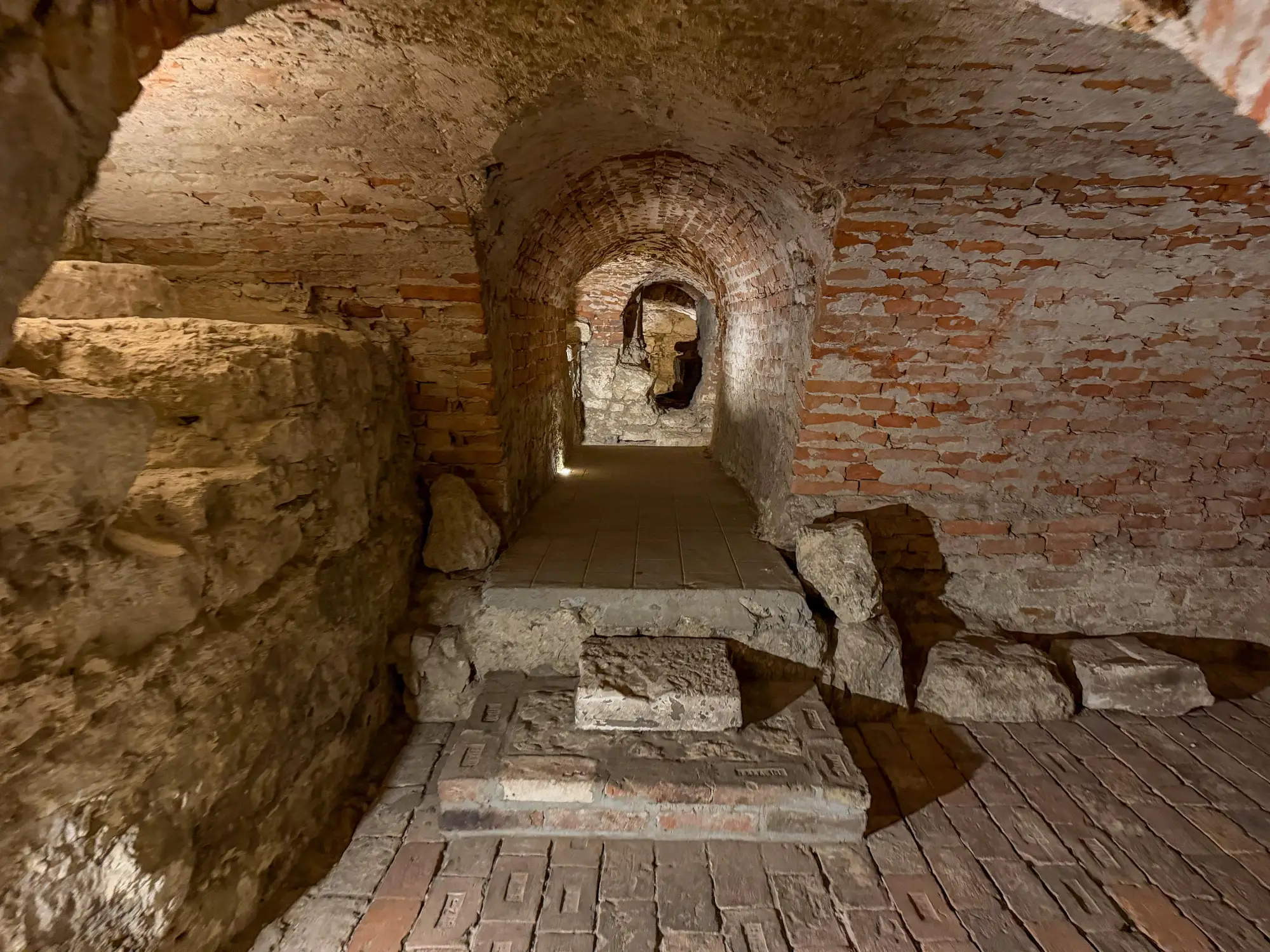
Inside the Lviv Garrison Church: Jesuit History, Crypts, and Military Sanctuary
What if we told you that some of Lviv’s oldest surviving architectural remains are hidden beneath one of its most recognizable churches? While most visitors admire the impressive Baroque interior of the Garrison Church of Saints Peter and Paul, there is another world waiting downstairs. Ancient walls, mysterious crypts, miniature cities, and historical objects tell the story of Lviv across centuries — from its princely beginnings to the city we know today. And the best part? You don’t need a time machine to explore it. Just head underground!
Culture • Practical Tips • History • Tours • 6 min. read
Last edited:
A Jesuit Legacy and Military Sanctuary
The Garrison Church of Saints Peter and Paul, located on Teatralna Street, was originally built as a Jesuit church. Construction began in 1610, and the church was consecrated in 1630. The Jesuits were not only a religious order but also important educators, establishing schools and colleges across Europe. Their presence in Lviv left a significant mark on the city’s religious, educational, and architectural history.
But why is it called a garrison church?
For centuries, the church served soldiers and their families, including during the Austrian and Polish periods. It became a place where military personnel could pray, attend religious services, and mark important moments in their lives.
The 20th century brought dramatic changes. After the Second World War, the church was closed, and during the Soviet period, its vast interior was used as a book depository for the Vasyl Stefanyk National Scientific Library. Imagine millions of books filling a monumental Baroque church!
In 2011, the church reopened for worship and became an important spiritual center for Ukrainian military personnel and their families. Today, military chaplains serve here, and the church provides spiritual support to Ukraine’s defenders.
This makes the building more than just a historical monument. Its military connection is not something that belongs exclusively to the past — it remains part of the church’s everyday life.
Stepping Down Into Medieval Lviv
Descending into the church's lower levels reveals a sharply different atmosphere. The bright, ornate nave above gives way to dimly lit corridors with thick brick walls and low arched ceilings. These vaulted cellars highlight the practical engineering required to support heavy stone churches in early modern Europe, but excavations have uncovered much older secrets.
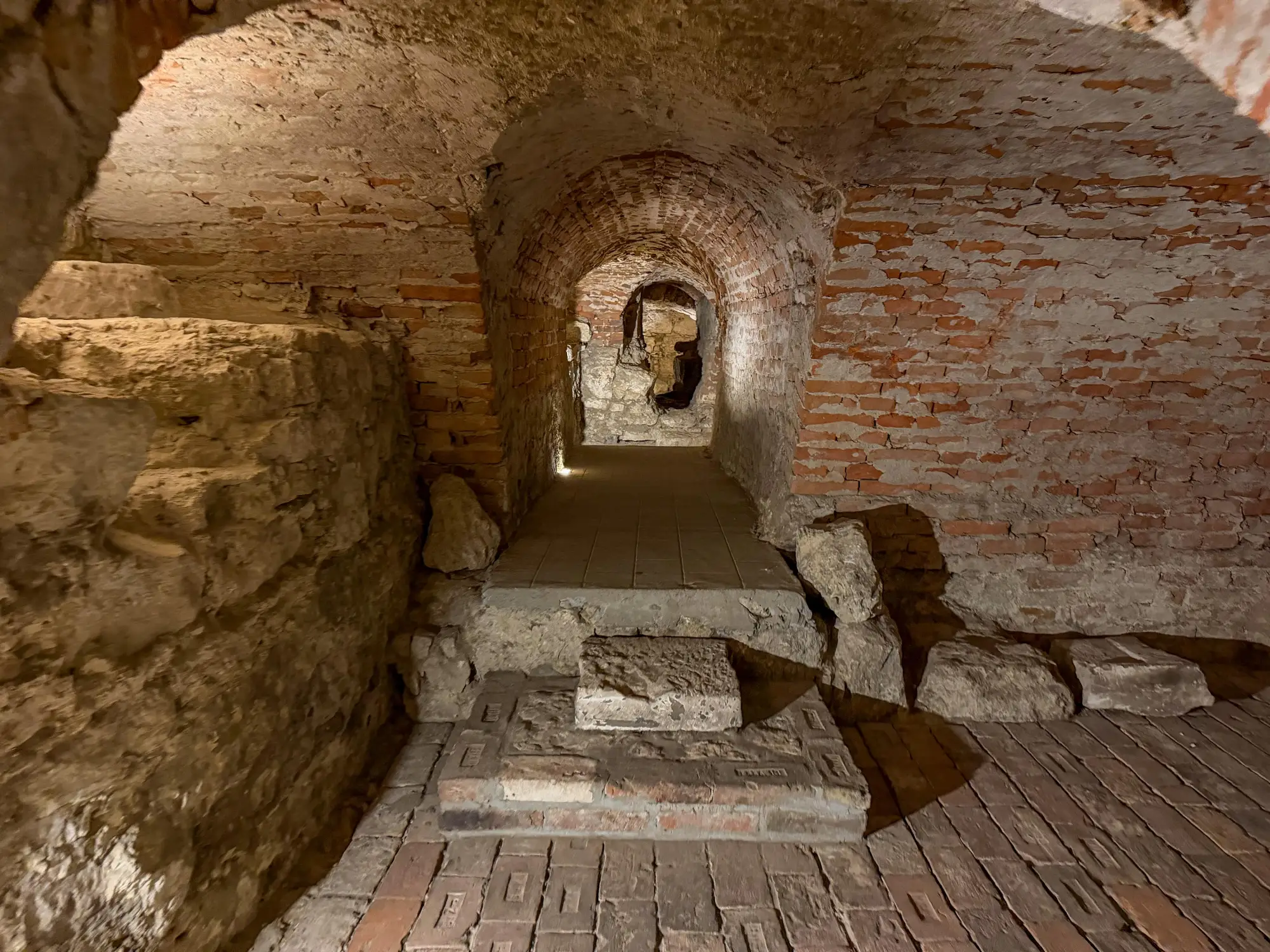
Beneath the 17th-century brickwork, archaeologists discovered the remains of 14th-century residential walls and the stone foundations of a 15th-century city school. Walking across the cobblestone floors, visitors can observe these excavated structures, which demonstrate how the grand Baroque complex was physically built directly on top of older, medieval urban layers.
The Crypts: Burial Traditions and History
One of the most intriguing parts of the underground complex is its burial spaces.
The church’s crypts were associated with the traditional practice of burying members of the clergy and other prominent individuals beneath religious buildings. In earlier centuries, being buried inside a church was a significant privilege, reflecting a person’s religious standing, social position, or connection to the institution.
The undergrounds preserve traces of this funerary history, including a historic sarcophagus. It is one of those objects that immediately makes you pause and wonder about the person for whom it was made.
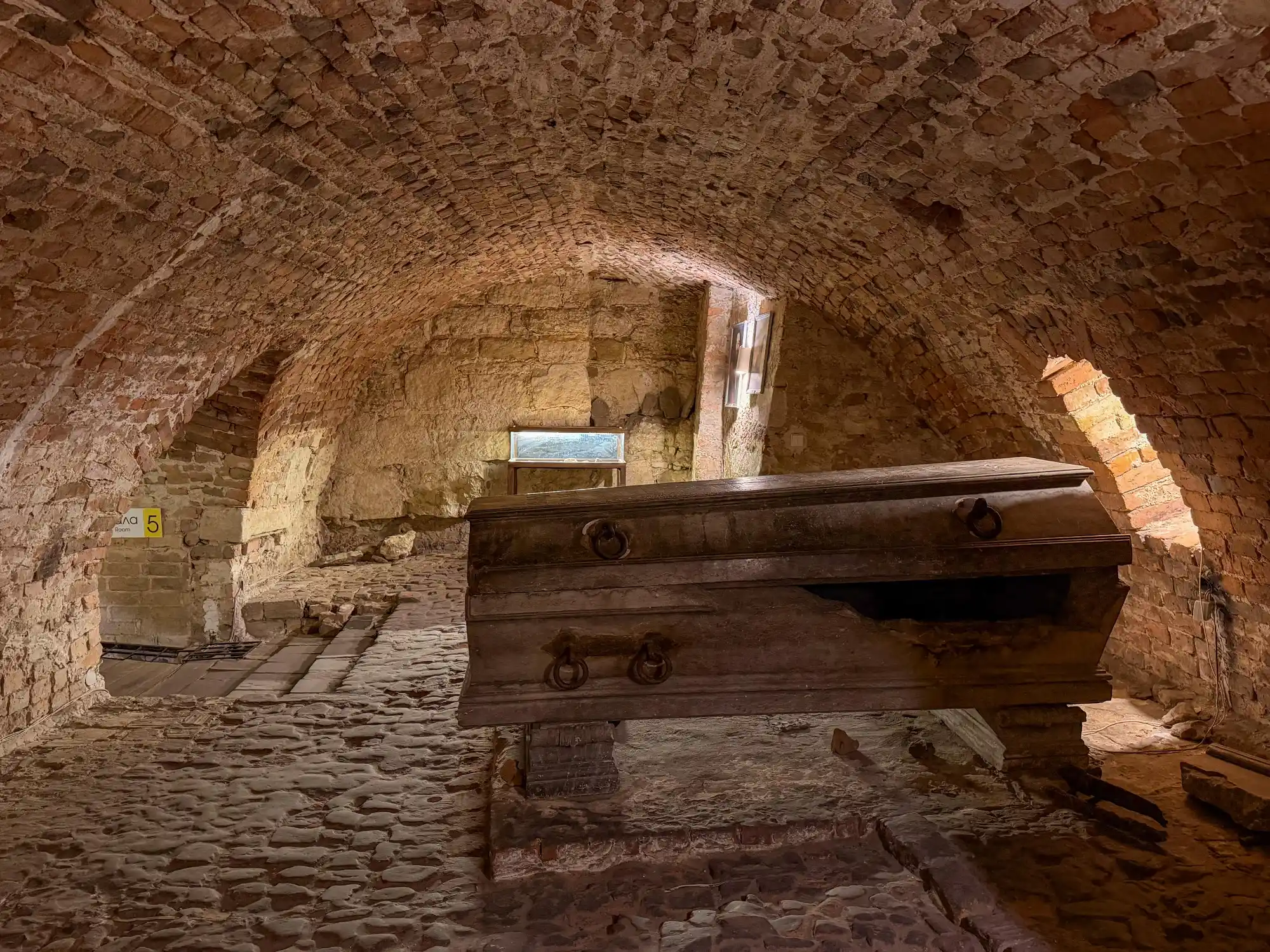
While the crypts were largely cleared out and reorganized during later Austrian sanitary reforms, these remaining stone coffins serve as quiet reminders of the city’s historical inhabitants. The detailed inscriptions and stonework illustrate the religious traditions that dictated final resting arrangements for the elite clergy.
Lviv in Miniature: Tracing the City's Evolution
The undergrounds are also home to highly detailed architectural scale models that map Lviv’s urban development. These miniature reconstructions allow visitors to visualize the city's layout starting from its early princely era, when wooden fortifications characterized the settlement.
Three miniature models in the underground exhibition of the Garrison Church reveal how dramatically Lviv has changed over the centuries. The first takes us back to the 13th century, when King Danylo of Galicia founded the city and his son, Prince Lev, continued its development.
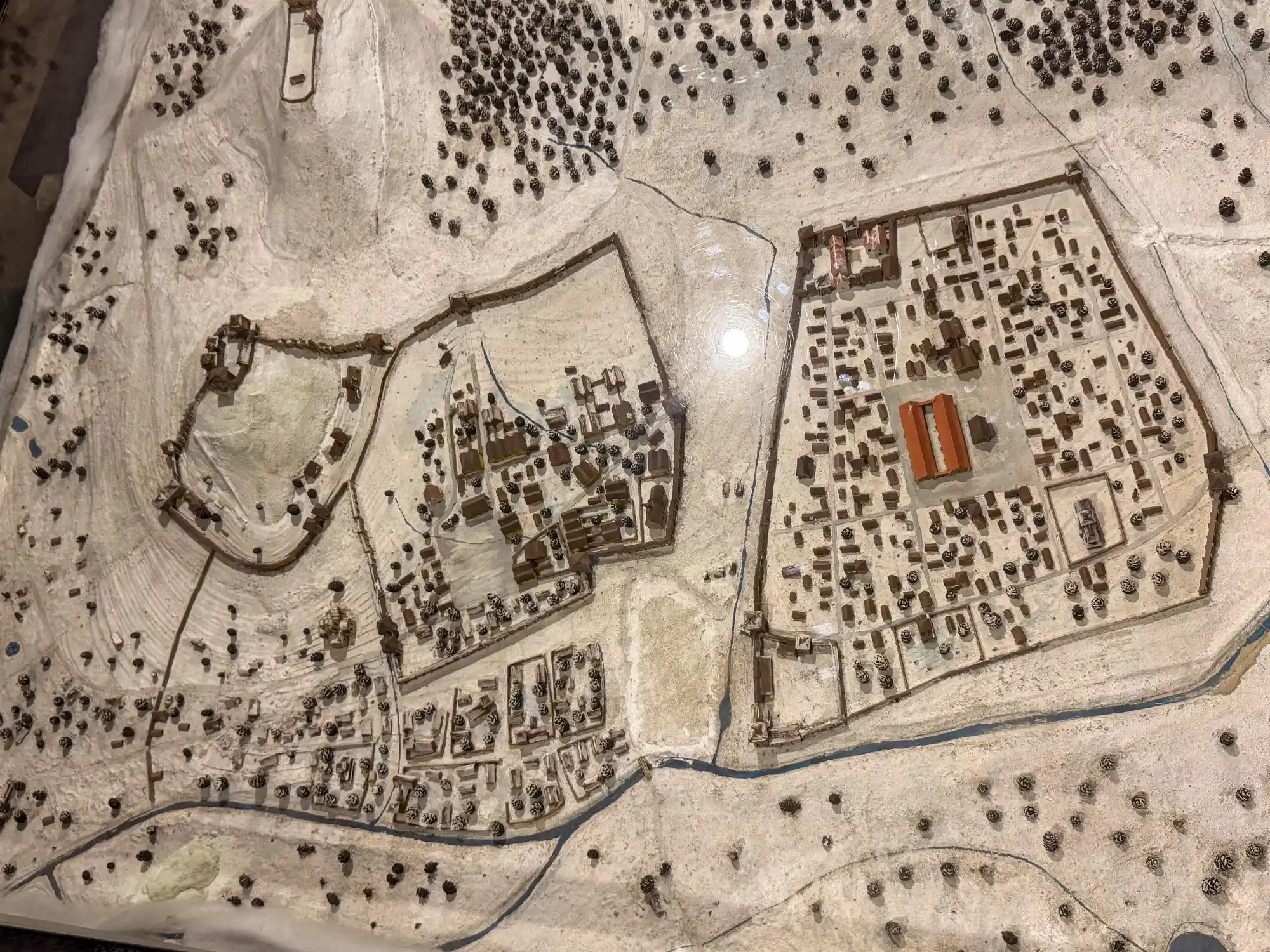
The next one shows a fortified Gothic town shaped by Magdeburg law, with the Market Square at its heart, when Lviv was part of the Kingdom of Poland and later the Polish-Lithuanian Commonwealth.
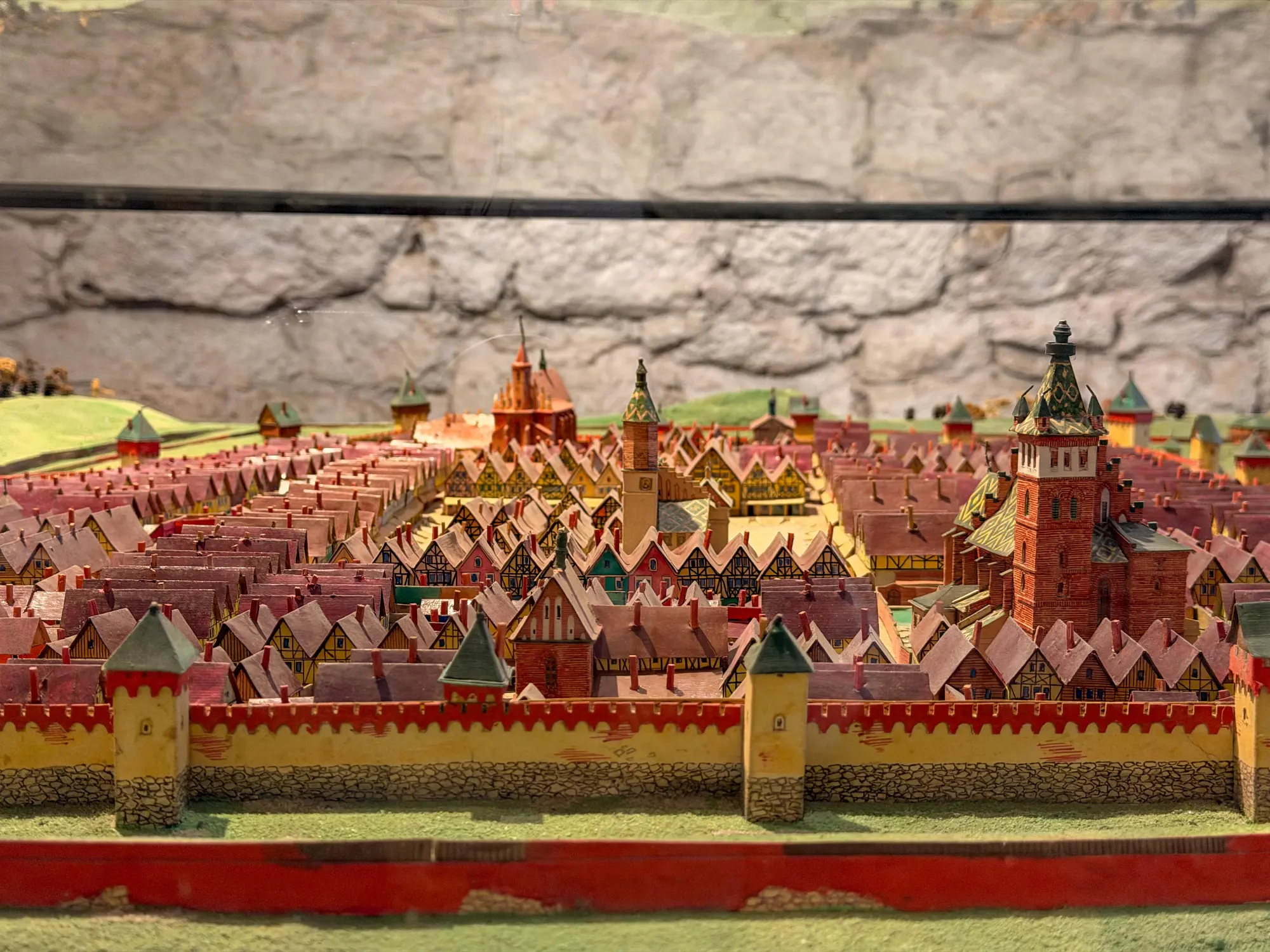
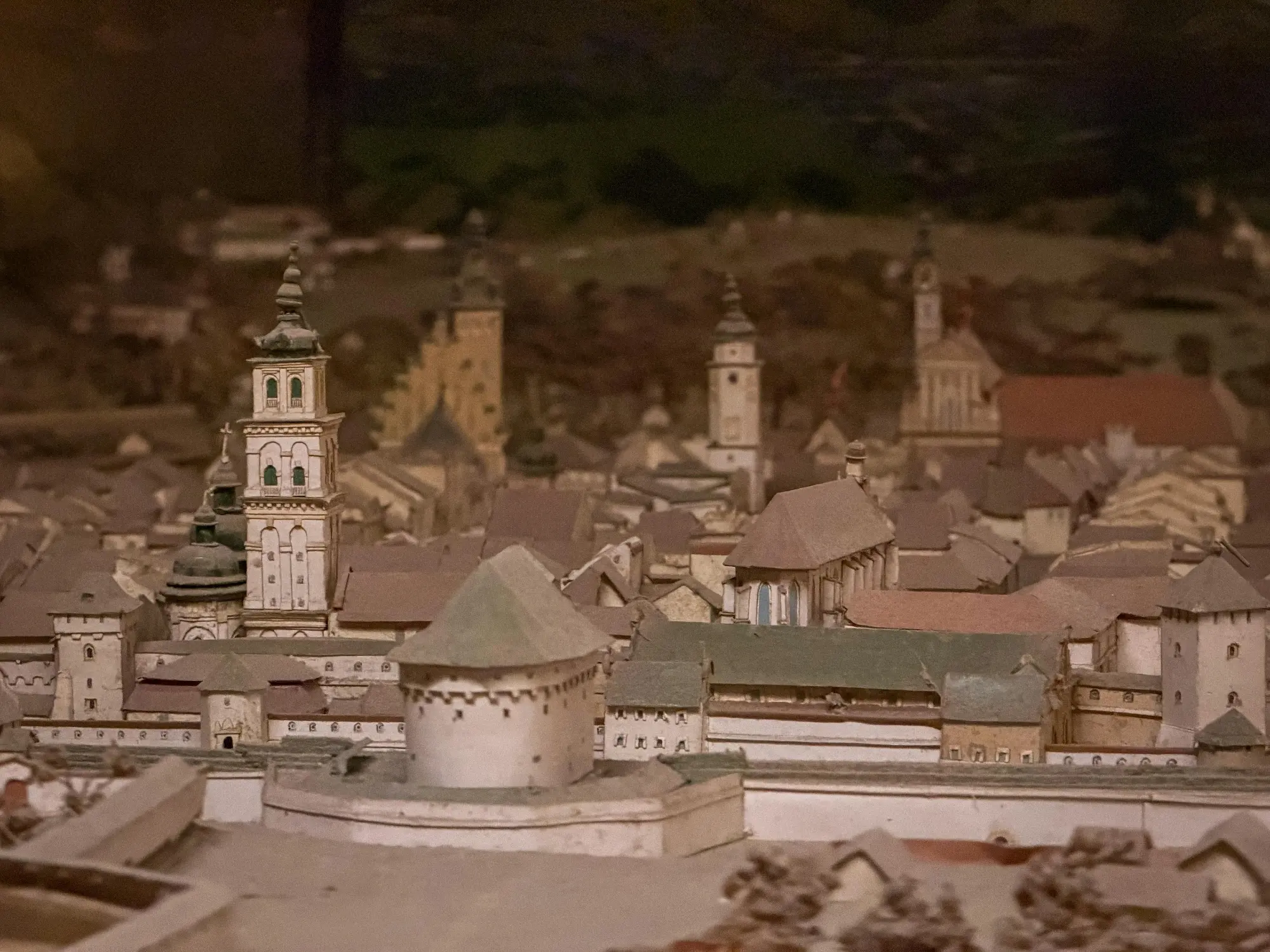
But the great fire of 1527 destroyed almost the entire medieval city, paving the way for Renaissance and Baroque architecture that shaped the Lviv we admire today. Under Habsburg rule, from 1772, Lviv expanded beyond its old fortifications, modernized, and grew into an important administrative, cultural, and intellectual center.
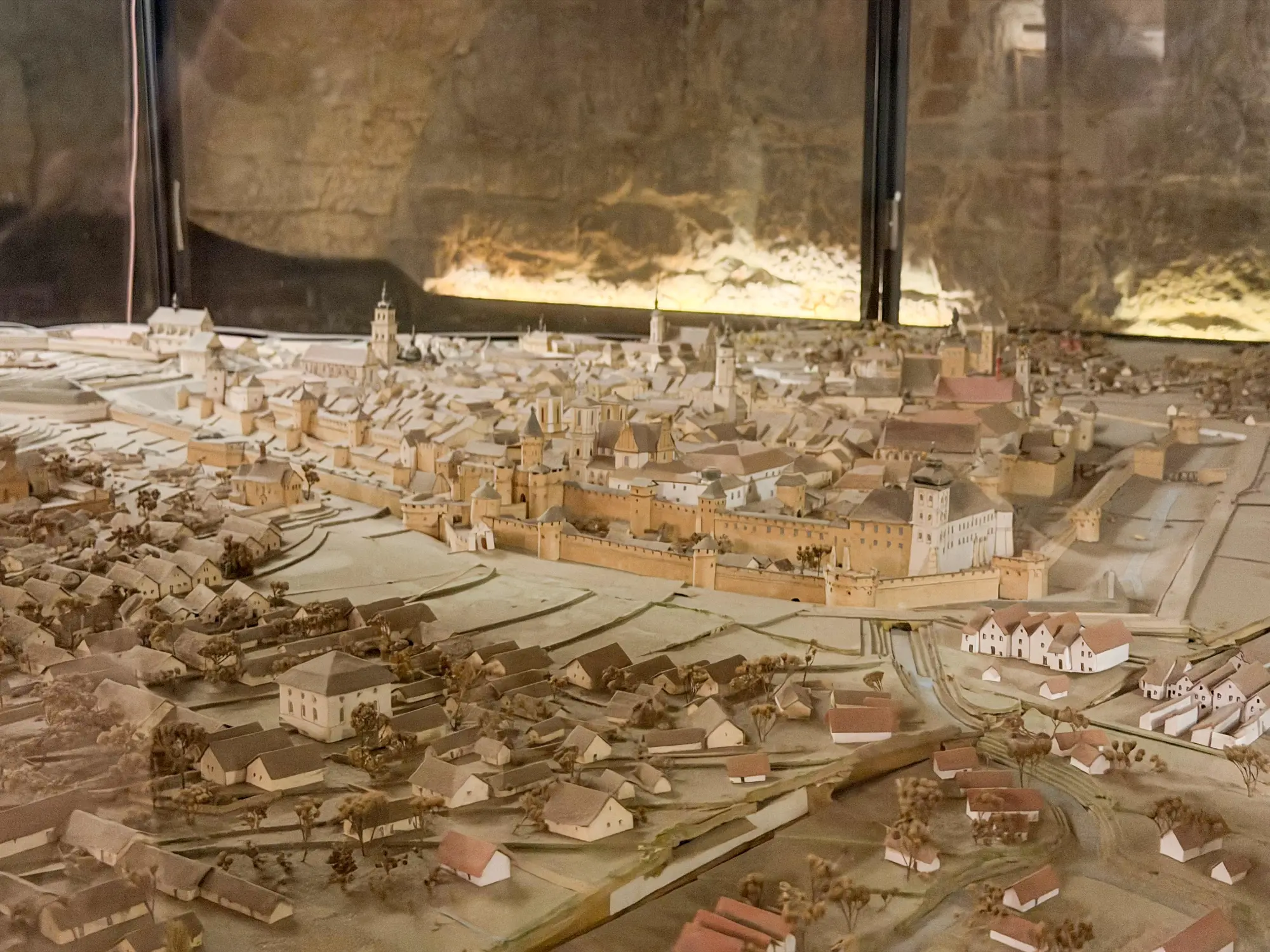
You can explore these stages of the city’s history with your own eyes in the undergrounds of the Garrison Church!
Symbols of Service: Modern Military Exhibits
Reflecting its current role as the Garrison Church, part of the underground museum is actively dedicated to Ukraine's contemporary military community. Display cases set within the historic stone vaults hold a collection of military flags, unit patches, and insignia.
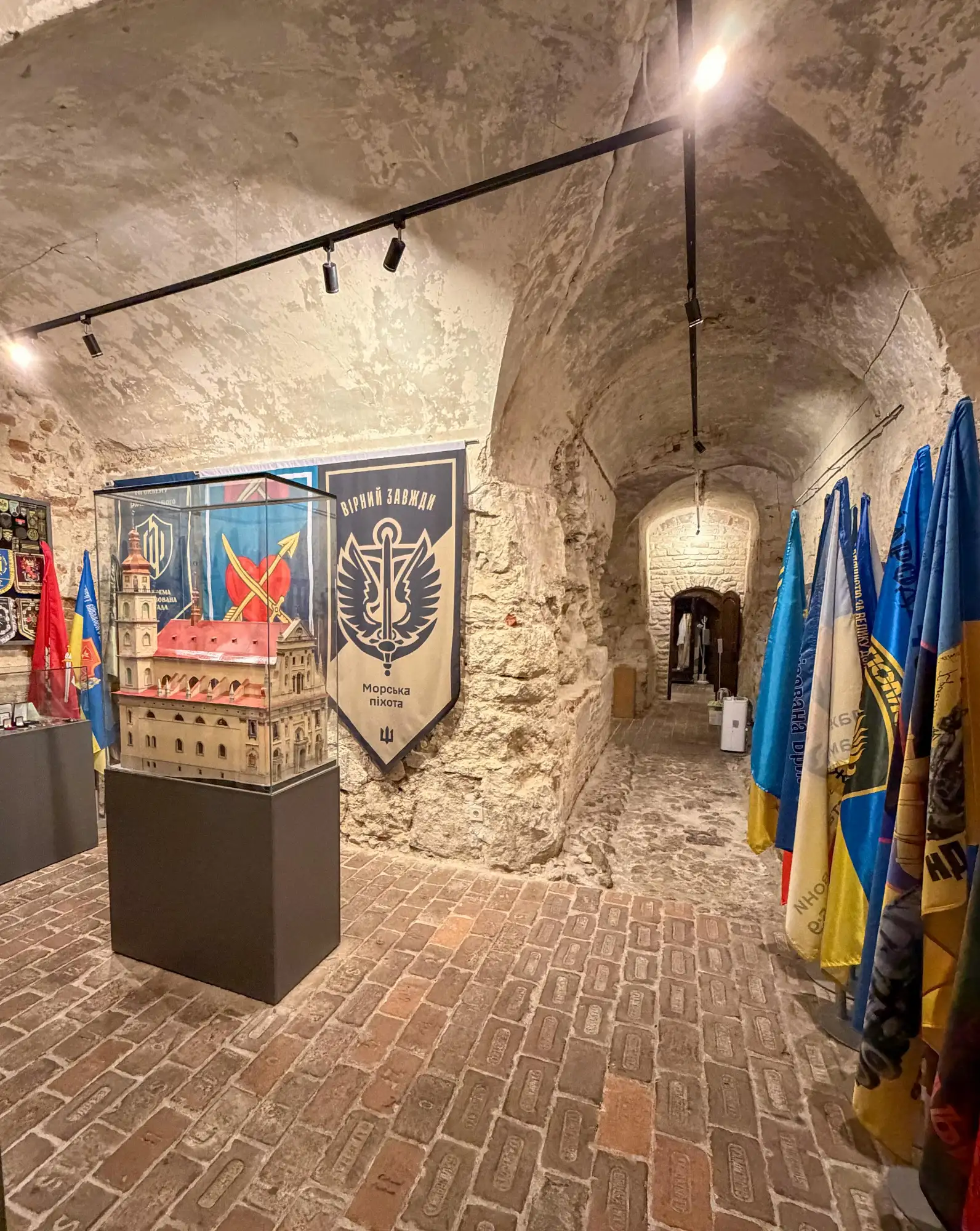
These items, often left by soldiers or their families, represent different units of the Armed Forces of Ukraine, transforming the ancient cellar into a space of modern remembrance. This intersection of 17th-century architecture and ongoing history highlights the enduring cultural and social importance of the building to the people of Lviv today.
Invitation for the tour into the Undergrounds with Walkative
Exploring the subterranean spaces of the Garrison Church offers a unique perspective on Lviv’s past and present. For those who want to navigate these layered histories with expert context, joining a guided walking tour provides a structured and informative experience.
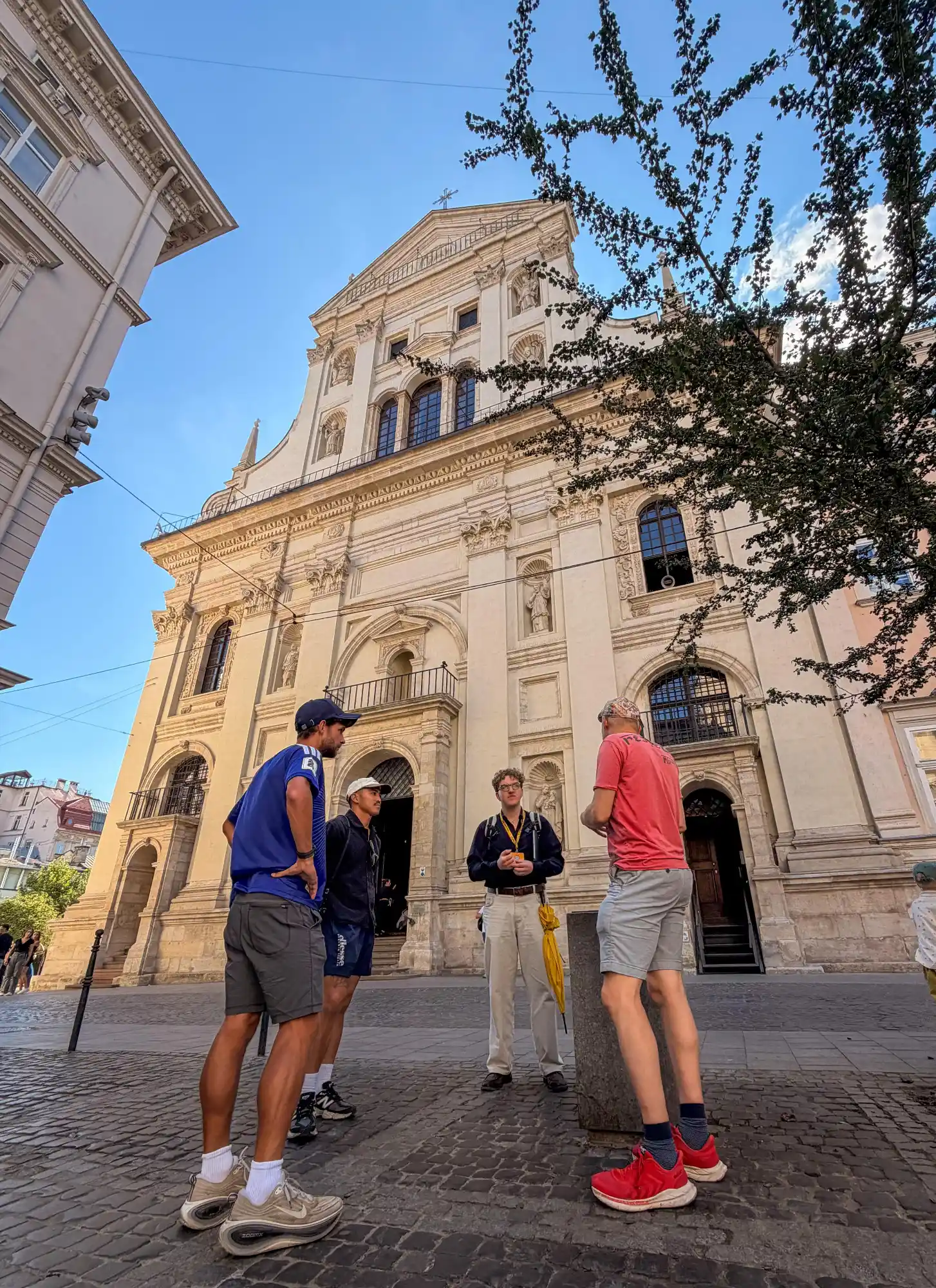
Our guides will take you to places where history comes alive, share fascinating stories about Lviv’s past, and help you discover the layers of history hidden beneath the city’s streets.
Get in touch with us to learn more and plan your visit!
Stay Walkative! 💛

Written by
Halyna Vyliika
Halyna has been working as a guide since 2014, focusing on the complex and multicultural history of Ukraine and Galicia, particularly the 20th century. Today, her work goes beyond guiding: she develops tours and materials about Lviv & Ukraine’s history, culture and everyday life, exploring trauma and the culture of memory while helping foreign guests better understand Ukraine today.
Related stories
Culture • Practical Tips • History • Tours • 4 min. read
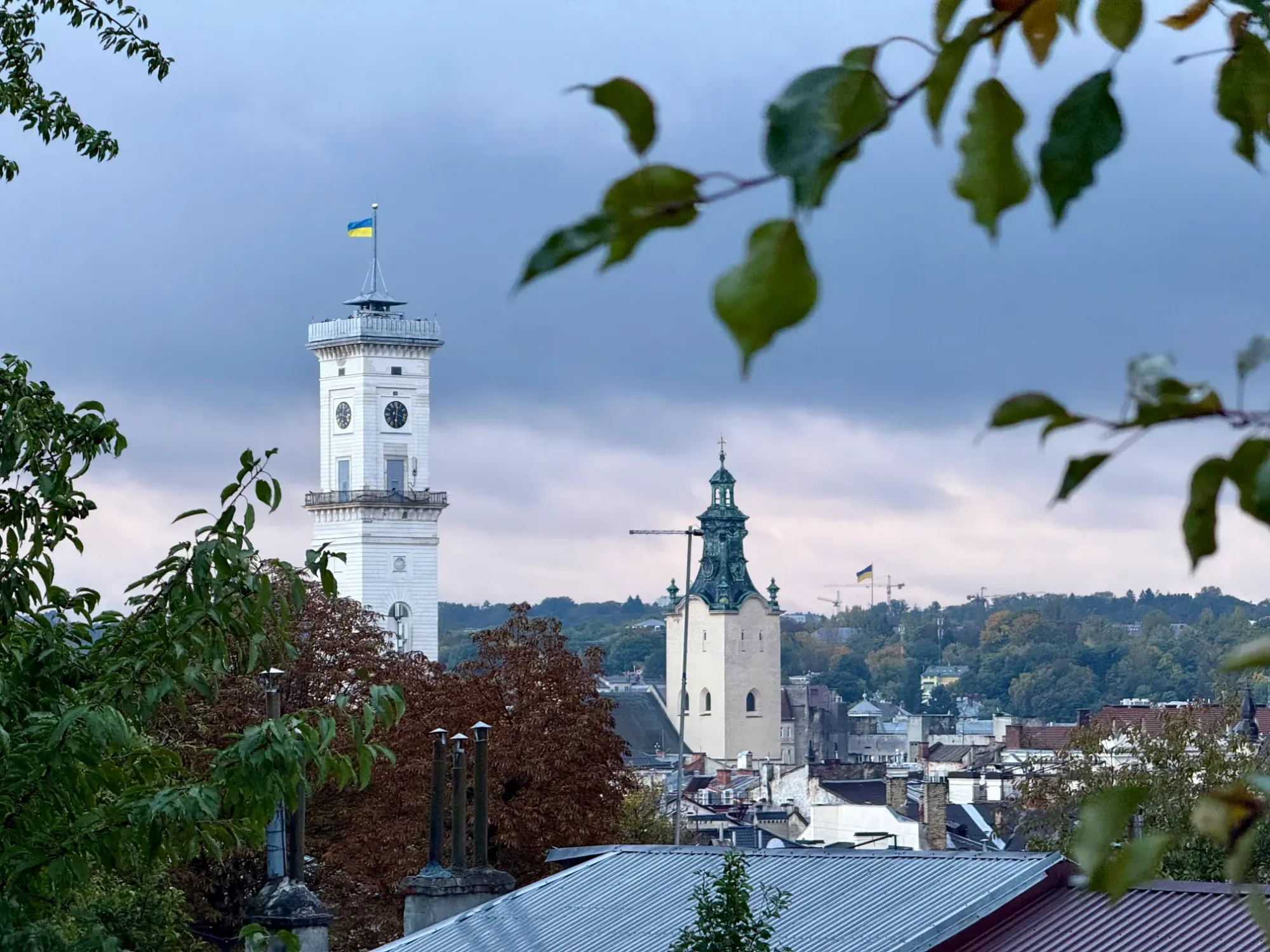
Lviv's Hilly Landscape: A City of Ups and Downs
Viewing a city from above changes how you understand its layout, and the shifting elevations of Lviv make this an everyday occurrence. Between the modern terraces of the Heavenly Hundred Memorial and the quiet paths of Lychakiv Cemetery, street-level walks frequently give way to open panoramas. Catching a clear vantage point over the historic church domes often requires little more than ascending the right cobblestone avenue.

Culture • Practical Tips • History • Tours • Newsletter • 8 min. read
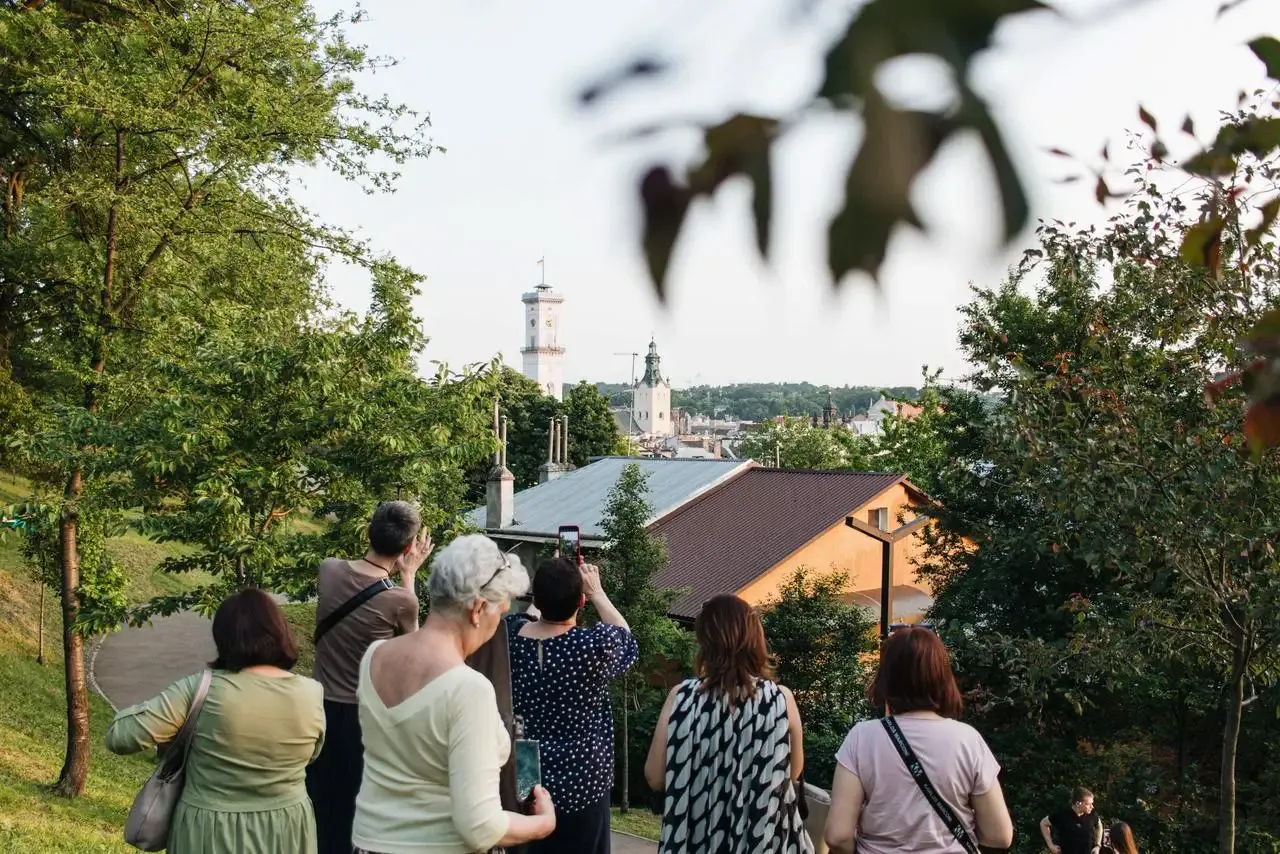
Nature, History and Music: Why We Love Stryiskyi Park 🍂
If you ask anyone in Lviv where to go when the autumn leaves turn gold, we’ll probably give you the same answer without missing a beat: Stryiskyi Park. There’s something special about this place when the paths fill with golden leaves, and the trees become a little more colourful every day. Covering around 52 hectares, Stryiskyi Park is one of Lviv’s largest and most beautiful green spaces. And the best part? It’s just a lovely walk away from the city centre. Whether you’re looking for a quiet bench, a romantic walk beneath the trees, or a little local history to go with your autumn coffee, this park has plenty to offer. So, put on your headphones with your favourite songs, and let’s explore one of Lviv’s favourite places.
Culture • Practical Tips • History • Tours • 6 min. read
Understanding Lviv Today: Wartime Travel and Solidarity
Beneath the bustling cafes and quiet parks of western Ukraine, a massive rehabilitation effort is constantly at work. Visiting Lviv today means stepping into a city that functions as a sanctuary, where thick-walled historic basements double as shelters during air raid sirens. For travelers deciding whether to cross the border, understanding this daily contrast is the first step toward arriving with respect and offering genuine solidarity.
Culture • Practical Tips • History • Tours • 4 min. read
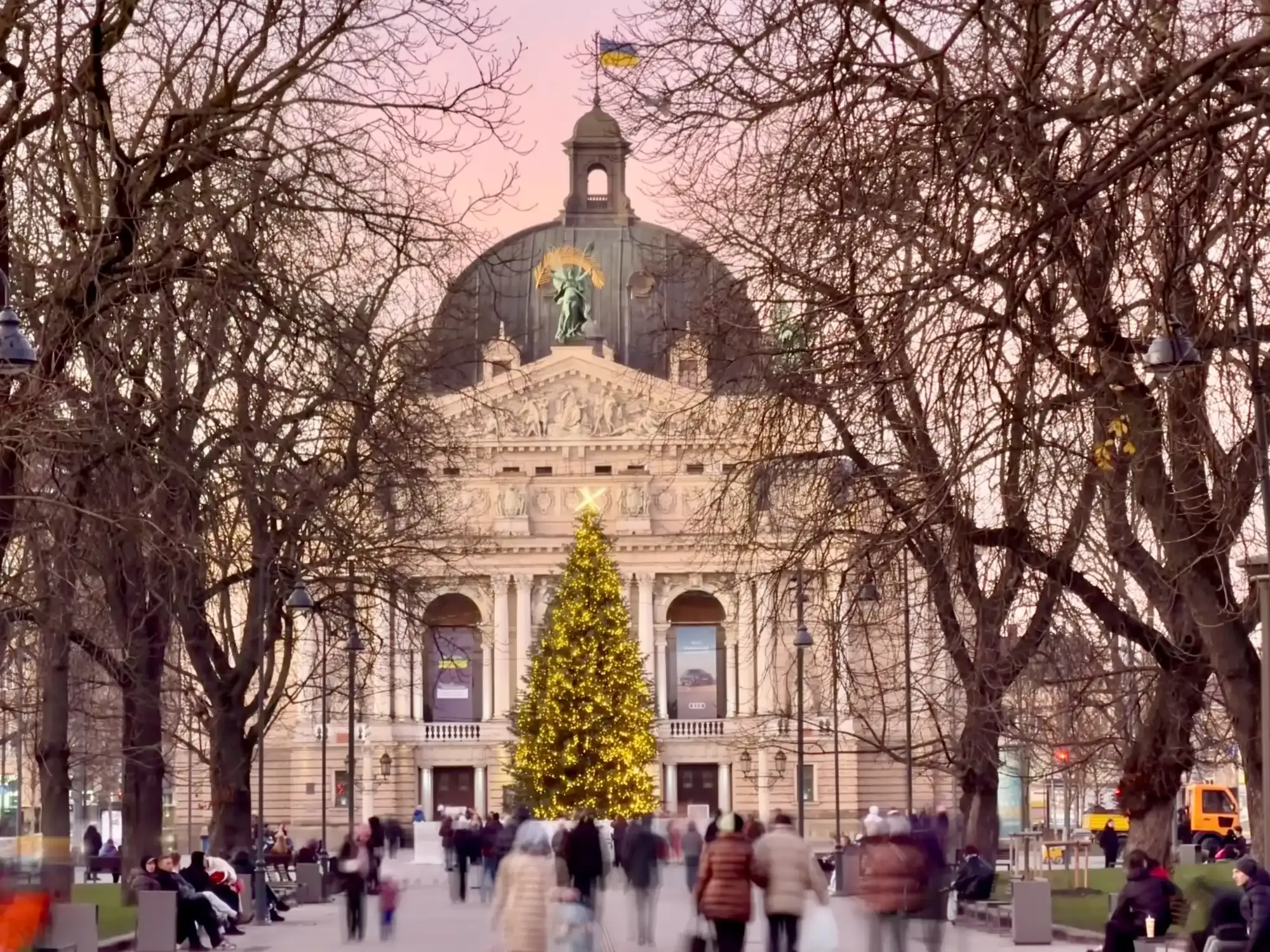
Visiting Lviv and Ukraine in 2026: Witnessing History in a Resilient City
Discover the reality of life in Lviv today. From safety logistics to vibrant culture, read our guide on witnessing history in this resilient Western Ukrainian city.
Practical Tips • 6 min. read
Safety in Lviv and Ukraine: Current Realities and Practical Travel Advice
Understand the realities of visiting Lviv today. We cover air alerts, shelters, and blackout protocols to help you stay informed and navigate the city safely.


